



Your Phone: A Window to the Universe
It might seem surprising, but modern smartphones are perfectly equipped for amateur astronomy. They combine GPS to know your precise location, a compass to understand your orientation, and powerful processors to render a real-time map of the heavens.
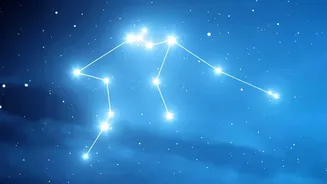
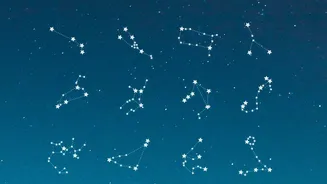
When you point your phone at the sky, these apps use augmented reality (AR) to overlay information directly onto your view, identifying stars, planets, and constellations instantly. What was once a faint dot becomes Jupiter, and a random cluster of stars is revealed as the Orion constellation. This technology transforms a simple glance upwards into an interactive and educational experience.
Top Apps to Start Your Journey
Choosing an app can be overwhelming, but many excellent options are available for both iOS and Android, with powerful free versions. Star Walk 2 is a fantastic choice for beginners, celebrated for its beautiful graphics and intuitive design. Its free version is robust, guiding you across the sky with AR overlays and providing details on celestial objects. SkyView Lite is another top contender, praised for its simplicity and ability to function without a Wi-Fi or GPS signal, making it perfect for off-grid adventures. For those wanting a slightly more detailed and realistic map, Stellarium Mobile offers a free version that is a favourite among amateur astronomers for its accuracy and comprehensive star catalogue.
Tips for the Best Viewing Experience
To make your stargazing session truly magical, a little preparation goes a long way. First, escape the city glow. Light pollution washes out most stars, so find a park, a rural area, or any spot away from bright city lights for the best view. Second, give your eyes time to adapt to the darkness—it can take up to 20 minutes for your night vision to fully kick in. Most stargazing apps include a 'night mode' that casts the screen in a red tint. This is crucial, as red light is less disruptive to your night vision than the standard white or blue light from your screen. Finally, check the weather and the lunar calendar; a clear, moonless night will always offer the most spectacular celestial show.
Go Beyond Just Looking
Once you've mastered the basics of identifying constellations, you can explore the more advanced features these apps offer. Many allow you to track satellites in real-time, sending you alerts for when the International Space Station (ISS) will be visible from your location. You can use the 'time machine' feature, found in apps like Star Walk 2, to see how the sky will look hours, days, or even years in the future, which is perfect for planning around events like meteor showers or eclipses. Some apps even provide the history and mythology behind the constellations, adding a rich layer of storytelling to your observations.
A Brief Foray into Astrophotography
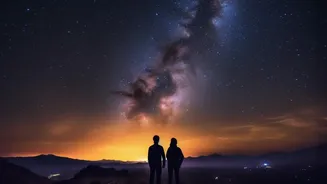
Capturing the night sky is also within reach. While you won't be taking Hubble-quality images, modern smartphones with dedicated 'night sight' or 'astrophotography' modes can produce surprisingly good results. For the best outcome, a small, portable smartphone tripod is essential to keep the phone perfectly still for a long exposure shot. You can also download specialty camera apps that give you manual control over settings like ISO and shutter speed. With a steady hand and a bit of patience, you can capture everything from the faint glow of the Milky Way to bright planets and even passing meteors, creating a lasting memory of your night under the stars.