







Understanding the Delta Aquariids
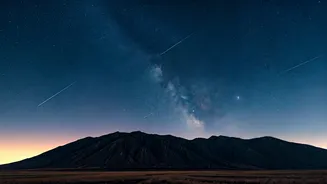
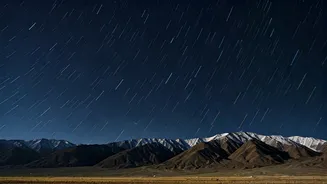
The Southern Delta Aquariids are active from mid-July to late August, with a peak expected around July 29-30, 2026. Unlike more dramatic showers like the Perseids, the Delta Aquariids are known for being faint and steady, producing about 15 to 20 meteors
per hour under ideal conditions. These meteors originate from the debris trail of Comet 96P/Machholz. For 2026, viewing the peak will be challenging due to a bright, nearly full moon that will wash out many of the fainter meteors. However, the shower rambles along, so watching in the pre-dawn hours during the moon-free week before the peak (around July 21-26) offers a better chance. The best viewing window is typically after midnight, around 2 a.m. to 3 a.m., when the radiant point in the constellation Aquarius is high in the southern sky.
Why Ladakh Is a Stargazer's Paradise
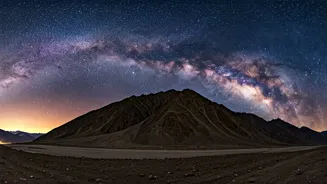
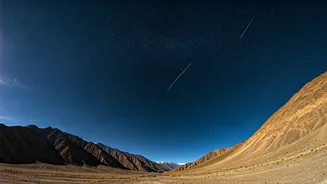
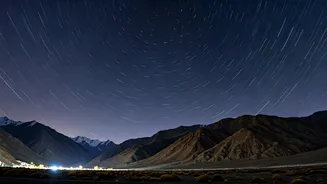
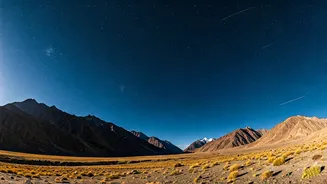
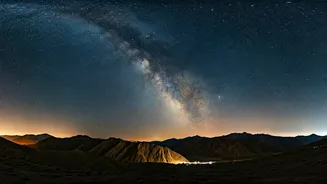
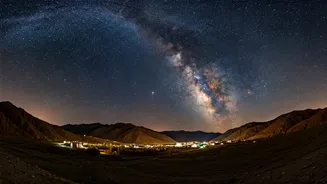
Ladakh's unique geography makes it one of the world's premier stargazing destinations. Its high altitude, averaging over 3,000 metres, places observers above a significant portion of the Earth's hazy atmosphere. This, combined with extremely low levels of light and air pollution, results in exceptionally clear and dark skies. On a typical night in Ladakh, the Milky Way is often visible to the naked eye, a sight rarely seen from urban centres. The dry, arid climate means fewer clouds and more nights of pristine viewing conditions, making it the perfect setting to catch even the faint streaks of the Delta Aquariids.
Prime Viewing Locations
To maximise your chances of a spectacular show, head to the most remote corners of Ladakh. Hanle, home to the Indian Astronomical Observatory, is designated as India's first Dark Sky Reserve, making it the absolute best choice. Its location at 4,500 metres ensures an almost complete absence of light pollution. Another excellent option is Pangong Tso. The high-altitude lake, situated at 4,250 metres, offers a stunning backdrop, with the potential to see stars reflected on its calm surface. Similarly, Tso Moriri, a less crowded but equally beautiful lake, provides a tranquil setting for uninterrupted stargazing. The Nubra Valley, at a slightly lower altitude, is also a great spot, offering vast, open skies with minimal light interference.
Essential Tips for High-Altitude Stargazing
Stargazing in Ladakh requires preparation, both for the environment and the activity itself. The most critical factor is acclimatisation. If flying into Leh (3,500 metres), you must rest for at least 48 hours to allow your body to adjust to the low oxygen levels and prevent Acute Mountain Sickness (AMS). Drink plenty of water—at least 3-4 litres daily—and avoid alcohol. Even in summer, night temperatures at high altitudes plummet, so pack multiple layers of warm clothing, including thermal wear, jackets, gloves, and a hat. For viewing, find a spot away from any village lights, lay back on a blanket or chair, and allow your eyes about 30 minutes to fully adapt to the darkness. A red-light torch is helpful for seeing without ruining your night vision, and while not essential, a pair of binoculars can enhance the view of the star fields.