



The Lifeline Under Strain
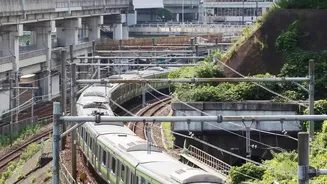
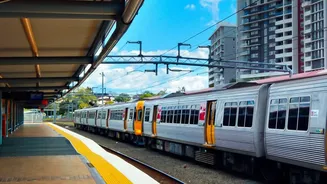
Mumbai's suburban railway is the city's lifeline, carrying millions of passengers daily. Every day, over 6 million people travel on the Central and Western lines, a figure that highlights the network's immense importance and its overwhelming burden. This
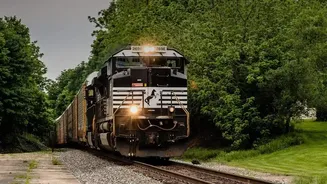
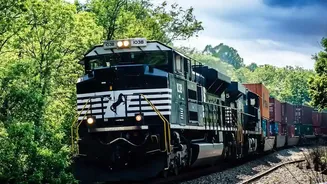
has led to the infamous 'super dense crush load', a term coined to describe the reality of 14-16 people crammed into a single square metre during peak hours. These trains share tracks with long-distance passenger services and, crucially, goods trains. This mixed traffic is a primary cause of delays and limits the number of local services that can be run. Freight trains, being slower and lower priority, often hold up the entire network, compounding the daily woes of commuters. The system operates at its absolute limit, where even minor disruptions can have a cascading effect on punctuality and crowding.
A Game-Changer Arrives: The WDFC
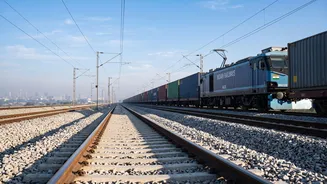
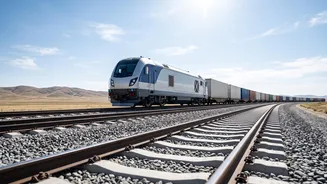
After nearly two decades in the making, the Western Dedicated Freight Corridor (WDFC) is now fully operational. This 1,506-kilometre-long, electrified double-line track is a freight-only superhighway, stretching from Dadri near Delhi to the Jawaharlal Nehru Port (JNPT) in Navi Mumbai. It was built by the Dedicated Freight Corridor Corporation of India (DFCCIL) with a singular purpose: to separate goods traffic from passenger traffic. The final sections connecting key industrial hubs directly to JNPT were inaugurated on September 8, 2026, marking the completion of a project designed to overhaul India's logistics backbone. Unlike conventional lines shared with passenger trains, the WDFC is engineered for speed and capacity, allowing for double-stack container trains to run at speeds up to 100 km/h.
How Freight Corridors Help Commuters
The logic is simple but transformative. By moving goods trains from the congested passenger network onto their own dedicated tracks, a huge amount of capacity is freed up. Currently, freight trains occupy valuable slots on the same lines used by Mumbai's local trains, particularly on approaches to the city and port area. The WDFC effectively creates a bypass for all this goods movement. With freight trains rerouted, the existing tracks become available for what Mumbai needs most: more local train services. This decongestion is the core benefit for the everyday passenger. Railway authorities will have the flexibility to increase the frequency of suburban trains, reduce the headway between services, and improve the punctuality that is often compromised by mixed traffic.
The Tangible Payoff for Mumbai
The most significant payoff for Mumbaikars will be a more reliable and hopefully less crowded journey. With freight trains off the main lines, the railways can introduce more services, especially during peak hours. This could lead to a reduction in the 'super dense crush load' conditions that define the city's commute. Furthermore, the segregation of traffic enhances safety and reduces the chances of delays caused by freight train-related issues. The completion of the final leg connecting directly to JNPT is particularly critical, as it removes the bottleneck in the Mumbai metropolitan region. This will not only benefit local commuters but also streamline the movement of export-import cargo for the entire country, reducing logistics costs and improving efficiency. The freed-up capacity also allows for better maintenance schedules and the potential to run more premium services, such as the increasingly popular AC locals, which have seen a significant jump in ridership.