








The All-Important Fiber Factor
The most significant difference between whole fruit and fruit juice is the fiber content. When you eat a whole apple, orange, or a handful of berries, you consume all of its dietary fiber, which is found in the pulp, skin, and membranes. This fiber is largely
removed during the juicing process. For example, a whole orange contains a significant amount of fiber, while a cup of orange juice has next to none. This matters because fiber is crucial for digestive health, helping to prevent constipation and maintain a healthy gut. It also plays a vital role in slowing down the absorption of sugar into the bloodstream, which is a key reason whole fruit is considered a superior choice for blood sugar management.
The Tale of Two Sugars
Both whole fruit and 100% fruit juice contain natural sugars like fructose. However, the way your body processes this sugar is dramatically different. In whole fruit, the sugar is 'intrinsic,' meaning it's bound within the fruit's cellular structure along with fiber. The fiber acts like a slow-release mechanism, preventing a rapid spike in blood sugar. In contrast, the sugar in fruit juice is considered 'free sugar,' similar to sugars added to drinks. Without the fiber to buffer it, this sugar hits your bloodstream much faster, which can lead to a sharp rise and subsequent crash in blood glucose and insulin levels. This is why studies have consistently linked higher whole-fruit consumption with a lower risk of type 2 diabetes, while higher juice intake is associated with an increased risk.
Feeling Full and Satisfied
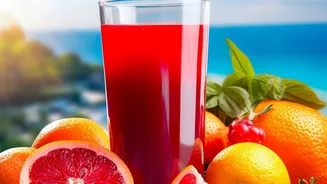
Have you ever noticed how easy it is to drink a large glass of juice, but eating the equivalent amount of whole fruit would be a struggle? It might take three or four oranges to produce one glass of juice, and drinking it takes seconds. Eating four whole oranges, however, takes time and effort. The act of chewing, combined with the fiber and bulk of whole fruit, sends signals to your brain that you are full. This is known as satiety. Research shows that consuming fruit in its solid form leads to a greater feeling of fullness compared to liquid forms like juice. Because juice doesn't make you feel as full, it's much easier to consume excess calories and sugar without realizing it, which can contribute to weight gain over time.
Nutrients Lost in Translation
While fruit juice does provide vitamins and minerals, the juicing process can lead to the loss of other important compounds. Many beneficial phytonutrients and antioxidants are bound to the fiber in the fruit's pulp and skin, which are often discarded. For example, a class of beneficial compounds called nonextractable polyphenols travel with the fiber to the colon, where they can support a healthy gut microbiome. Blending a smoothie is a step up from juicing because it retains the fiber, but the physical structure of the whole fruit is still broken down, which can impact satiety compared to eating the fruit itself.