






Why Winter Pruning Is Essential
Kiwifruit vines are incredibly vigorous, capable of growing several metres in a single season. Without a firm hand, they can quickly become a tangled, unproductive mess. The primary reason for winter pruning is to manage this growth and stimulate fruit production.
Kiwis produce fruit on new shoots that grow from one-year-old wood (canes that grew last season). The winter prune removes old, unproductive wood, clears out congestion, and tells the plant where to focus its energy, leading to strong new growth that will carry the season's flowers and fruit. A well-pruned vine allows for better sunlight penetration and air circulation, which not only helps ripen the fruit but also reduces the risk of fungal diseases.
The Perfect Timing
Timing your prune correctly is critical. The ideal window is during the plant's dormant season, after the leaves have fallen but before the sap starts to rise in late winter. For most growing regions in India, this typically falls between late December and early February. Pruning too late, when the sap is already flowing, can cause the cuts to 'bleed' excessively, which weakens the vine. Pruning too early, before the vine is fully dormant, can expose it to potential frost damage. Aim for a period of deep inactivity to give the pruning wounds time to dry and heal before spring growth begins.
Your Essential Toolkit
You don't need a lot of equipment, but what you have should be high quality. A sharp, clean pair of bypass secateurs is essential for smaller stems. For branches thicker than a pencil, a pair of long-handled loppers will provide the necessary leverage. For any wood that is too thick for loppers, a small, sharp pruning saw will be required. Before you start, and between cuts on different plants, it’s crucial to sterilise your tools with a disinfectant. This simple step prevents the spread of diseases from one part of the plant to another, or between different vines.
A Step-by-Step Pruning Strategy
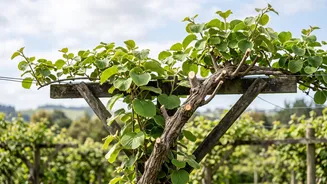
First, identify the main structure of your vine: the permanent trunk and the main horizontal arms (cordons) trained along your trellis or support wire. These should not be cut. Next, perform a cleaning prune. Remove any dead, damaged, or diseased wood, as well as any tangled canes that are winding around each other. Now, identify the canes that produced fruit last season. These will look older and may still have remnants of fruit stalks. Cut these old fruiting canes back, leaving just two or three buds from the main cordon. Your goal is to select new, healthy canes that grew during the previous season to be your fruiting wood for the upcoming year. Select strong, well-spaced canes (about 20-30 cm apart) and tie them onto your support wires. These will produce the shoots that bear fruit. Any weak or excess new canes should be removed completely.
Pruning Male vs. Female Vines
Remember, kiwifruit plants are dioecious, meaning you need both male and female plants for pollination and fruit. While the main winter structural prune is similar for both, their specific needs differ. The goal for a female plant is to create a framework of fruiting wood. For a male plant, the only goal is to produce as many pollen-rich flowers as possible. Because of this, male vines, which are often more vigorous, can be pruned more severely. Many gardeners perform the main prune on male vines immediately after they have finished flowering in the spring or early summer, cutting back the flowered shoots to encourage new growth for the next year's flowers. However, a dormant winter clean-up of dead or tangled wood is still beneficial.