
The Ultimate Cosmic Cold Case
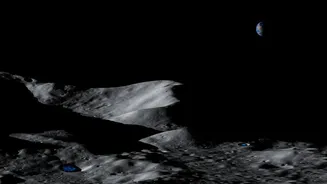
Bringing lunar samples to Earth is a feat only three countries have ever accomplished. But bringing back lunar ice is an entirely different level of difficulty. The permanently shadowed craters of the Moon's south pole are some of the coldest places in the solar
system, with temperatures plummeting to below -200°C. In the vacuum of space, this isn't ordinary ice. If exposed to even a little heat or sunlight, it doesn't melt into water; it sublimates, turning directly into gas and vanishing. These volatile compounds hold priceless secrets about the history of the solar system, the origin of Earth's water, and the potential for future lunar resources like drinking water and rocket fuel. To study them, scientists need the samples to arrive on Earth exactly as they were on the Moon: pristine, uncontaminated, and frozen solid. Any temperature change could alter their chemical structure, destroying the very information the mission is designed to retrieve.
A High-Tech Thermos for Deep Space
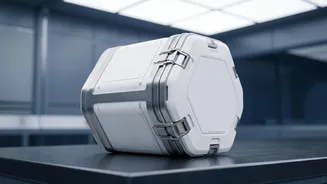
The core of the challenge lies in the sample container itself. While specific designs for Chandrayaan-4's cryogenic storage are still in development, the principles are based on advanced cryo-cooling technology. Think of it as the most sophisticated thermos flask ever built. The system must maintain a constant, ultra-low temperature, likely below -150°C, for the entire two-week journey back to Earth. This will involve a multi-layered containment system. An outer shell will shield the sample from the harsh radiation of deep space, while internal layers will provide extreme insulation. The system could be passive, relying solely on insulation, or active, using a cryo-cooler—a type of miniature refrigerator—to actively pump heat away from the samples. Given the power constraints of a spacecraft, this must be achieved with maximum efficiency. The entire apparatus needs to be robust enough to withstand the violent vibrations of launch and re-entry, yet lightweight enough to fit within the mission's mass budget.
A Complex Five-Part Mission
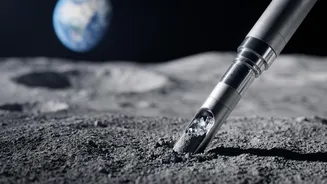
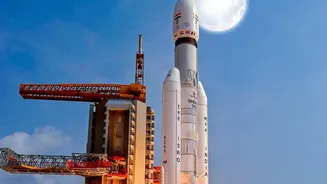
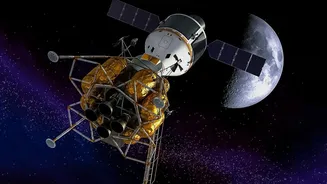
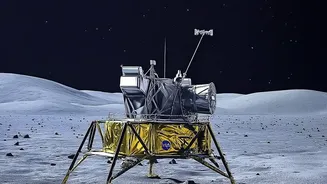
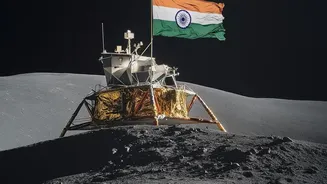
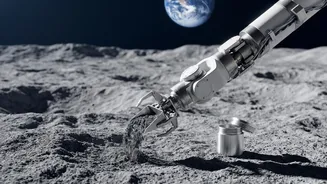
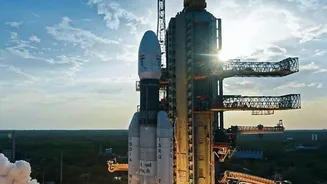
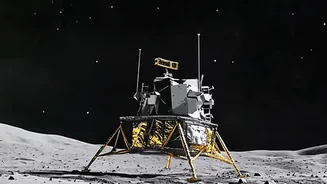
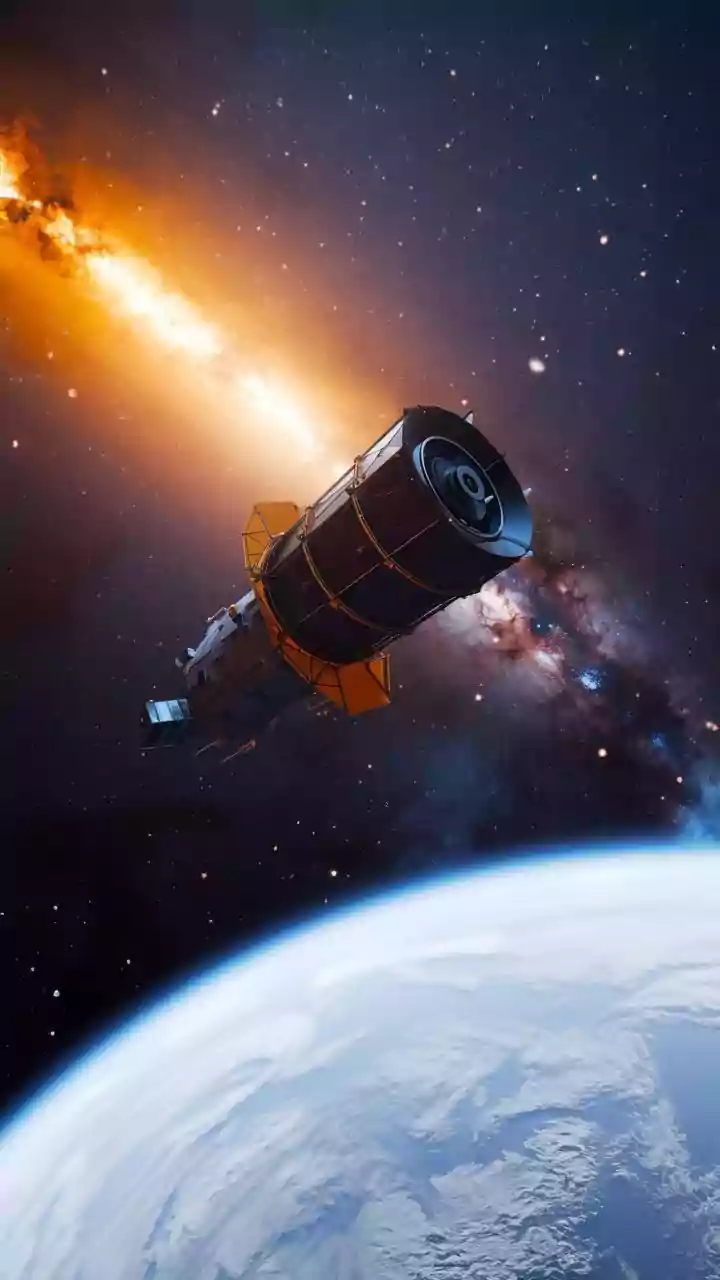
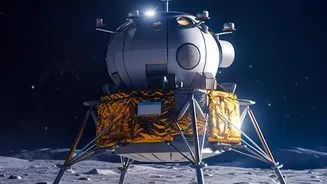
The sample storage is just one component of what is arguably ISRO's most complex mission ever. Chandrayaan-4 will involve five separate modules launched on two of India's heaviest rockets, the LVM3. The mission architecture involves a Propulsion Module, a Descender to land on the Moon, and an Ascender to launch back off the surface. Once on the Moon, a robotic arm and a drill will collect surface and sub-surface samples, which will be sealed in the cryogenic container inside the Ascender Module. The Ascender will then launch into lunar orbit to perform a crucial docking manoeuvre—a first for ISRO—with the Transfer and Re-entry modules. The sample container will be transferred to the Re-entry Module for the final leg of its journey, ensuring it remains cryogenically frozen until it lands safely on Earth.
Building on Global Collaboration
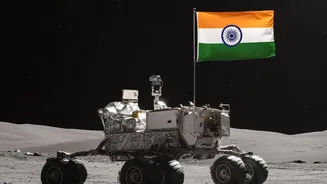
While Chandrayaan-4 is a national mission, it is part of a broader international push to understand lunar volatiles. ISRO is also collaborating with Japan's Aerospace Exploration Agency (JAXA) on a separate future mission called LUPEX (Lunar Polar Exploration). Planned for no earlier than 2028, LUPEX will send a lander and a more advanced rover to the lunar south pole to prospect for water and test surface exploration technologies. This joint effort, which also involves instruments from NASA and the European Space Agency, highlights the global scientific interest in the Moon's polar regions. The technologies and scientific knowledge gained from both Chandrayaan-4 and LUPEX will be mutually beneficial, paving the way for more sustained exploration and potentially a future human presence on the Moon.
More Than Just Ice
Successfully returning a cryogenic sample from the Moon is about much more than just scientific discovery. It is a powerful demonstration of technological capability. The systems developed for Chandrayaan-4—from robotic drilling and autonomous docking to long-duration cryogenic storage—are foundational for future deep-space exploration. Mastering these techniques will be essential for potential missions to Mars or for building a sustained presence on the Moon as envisioned in India's long-term space goals. By retrieving samples from a previously unexplored geological region, India will not only provide the global scientific community with invaluable materials but also solidify its position as a top-tier spacefaring nation capable of executing the most challenging missions.