


A Cosmic Disappearing Act
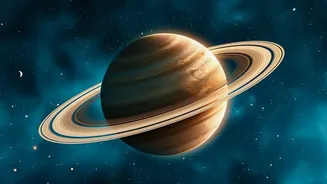
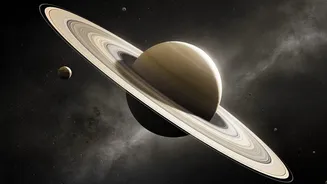
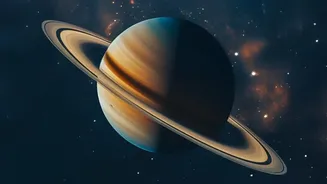
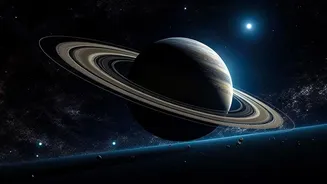
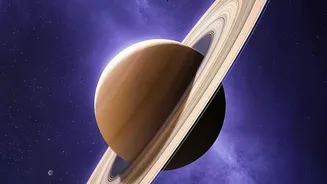
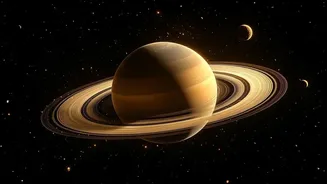
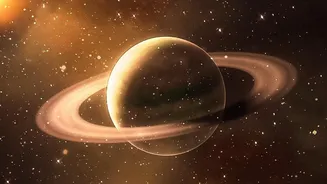
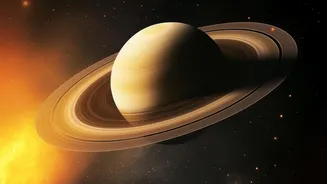
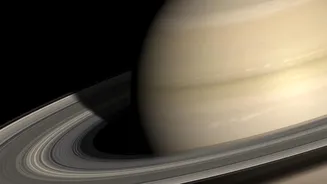
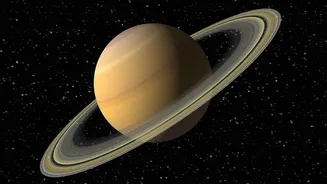
For centuries, we’ve viewed Saturn's rings as a constant, unchanging celestial wonder. However, data gathered over decades, particularly from NASA's Cassini spacecraft, has painted a much more dramatic picture. The rings are not only surprisingly young
in cosmic terms, but they are also actively disappearing. Scientists now estimate the entire ring system could be gone in as little as 100 million years. While that sounds like an eternity to us, it’s a fleeting moment compared to Saturn’s 4.5-billion-year history. This has led to a fascinating realization: we are lucky to be alive in a brief window of cosmic history when Saturn has its magnificent halo.
The Science of 'Ring Rain'
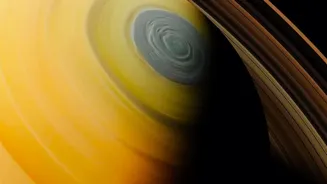
The primary culprit behind the rings' demise is a phenomenon dubbed "ring rain." The rings are mostly composed of countless particles of water ice, ranging from dust-sized grains to mountain-sized boulders. These particles are caught in a constant tug-of-war. Micrometeoroid impacts and the Sun's ultraviolet radiation give the ice particles an electrical charge. This allows Saturn's powerful magnetic field to grab hold of them, pulling them out of the ring plane and funneling them down into the planet's upper atmosphere. This steady downpour of icy particles is literally raining away the rings. The amount of water is staggering; some estimates suggest enough to fill an Olympic-sized swimming pool is drained every half hour.
Clues from a Doomed Spacecraft
Much of this understanding comes from the treasure trove of data from the Cassini mission, which orbited Saturn for 13 years before its dramatic plunge into the planet in 2017. In its final phase, dubbed the 'Grand Finale,' Cassini made 22 daring dives between Saturn and its innermost rings. This allowed instruments to directly sample the material falling into the planet. The measurements confirmed that not only was ring rain happening, but another process involving a colossal amount of material falling onto Saturn's equator was also occurring, potentially accelerating the rings' disappearance to that 100-million-year timeline. These up-close observations were essential for turning a long-held theory into a measurable reality.
Young Rings from a Shattered Moon?
The discovery that the rings are disappearing so quickly has also rewritten our understanding of their age. For a long time, astronomers debated whether the rings formed along with Saturn or came later. The high rate of material loss, combined with the fact the rings are made of almost 95% pure water ice, suggests they cannot be ancient. Over billions of years, they would have been darkened and polluted by interplanetary dust. The current leading theory is that the rings are relatively young, perhaps only 100 to 400 million years old, meaning they may have formed when dinosaurs roamed the Earth. One compelling hypothesis suggests they are the remnants of a large icy moon, nicknamed 'Chrysalis,' that strayed too close to Saturn and was torn apart by the planet's immense gravity.