

The Unseen Guardians on the Ground
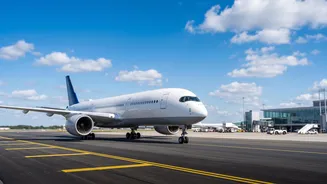
Long before you board, a team of highly trained aircraft maintenance technicians has already been at work. These professionals conduct rigorous checks to ensure every part of the aircraft is in perfect working order. This process includes routine 'line
maintenance' performed at the gate between flights, which involves inspecting wheels, brakes, and fluid levels. At regular, specified intervals based on flight hours or cycles, aircraft undergo more intensive 'A checks' in a hangar. These deeper inspections cover everything from the airframe's integrity to the functionality of emergency equipment. This structured, continuous maintenance program ensures that potential issues are identified and resolved on the ground, forming the first critical layer of safety.
The Choreographers of the Sky
Once an aircraft pushes back from the gate, it enters the domain of Air Traffic Control (ATC). These are the individuals who manage the flow of air traffic to prevent collisions and maintain an orderly sequence. Using radar, radio communication, and sophisticated tracking systems, controllers provide instructions to pilots on their route, speed, and altitude. The sky is divided into sectors, and as a flight progresses, it is 'handed off' from one controller to the next. A fundamental principle they use is separation—keeping aircraft a safe distance from each other, both vertically and horizontally. By assigning different flight levels to aircraft on similar paths, ATC creates invisible highways in the sky, ensuring that even in crowded airspace, every plane has its own protected space.
The Automated Co-Pilot
Modern aircraft are equipped with advanced automated systems that act as a digital safety net, operating independently of both pilots and ground control. Chief among these is the Traffic Collision Avoidance System, or TCAS. This system uses transponders on aircraft to communicate with each other, building a 3D map of the surrounding airspace. If TCAS detects that another aircraft is on a potential collision course, it first issues a 'Traffic Advisory' to the pilots. If the risk escalates, it will issue a 'Resolution Advisory'—an explicit command like "Climb" or "Descend." Crucially, the TCAS systems on both aircraft coordinate, ensuring they issue complementary instructions to avoid a mid-air collision.
The First Responders in the Cabin
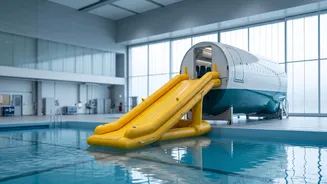
While you might see them serving drinks and meals, the primary role of cabin crew is safety. They are legally required on commercial flights and are highly trained first responders. Before passengers even board, the crew conducts a pre-flight inspection of all emergency equipment, including fire extinguishers, oxygen bottles, and evacuation slides. During the flight, they are trained to handle a wide range of situations, from medical emergencies and in-flight fires to managing unruly passengers and securing the cabin during turbulence. In the exceedingly rare event of an emergency evacuation, their training is critical to getting all passengers off the aircraft quickly and safely. They are not just service staff; they are a vital, active layer of in-flight safety.
The Rule-Makers and Regulators
Overseeing this entire ecosystem are national and international regulatory bodies, such as the Directorate General of Civil Aviation (DGCA) in India, the FAA in the United States, and the International Civil Aviation Organization (ICAO). These organisations set and enforce the standards for everything from aircraft design and manufacturing to pilot training and maintenance procedures. They mandate the safety equipment required on board, establish the rules for air traffic control, and investigate any incidents to learn lessons and improve safety protocols. This regulatory framework ensures that every airline, manufacturer, and operator adheres to the same high standards, creating a consistent and reliable global aviation system.