





The Promise in Your Freezer
A well-stocked freezer is a secret weapon for fast, healthy meals. By freezing vegetables, you lock in nutrients at their peak, creating a ready-to-use ingredient that significantly cuts down on dinner prep time. It is a powerful strategy for both managing
a surplus of seasonal produce and rescuing those veggies in the crisper drawer before they wilt. While freezing food keeps it safe to eat indefinitely from a food safety perspective, the goal is to preserve quality—flavour, colour, and texture. For best results, plan to use your home-frozen vegetables within 8 to 12 months.
To Blanch or Not to Blanch?
This is the most critical step for most vegetables. Blanching is a quick scalding in boiling water followed by an immediate plunge into ice water. This process stops the enzyme action that would otherwise cause vegetables to lose their flavour, colour, and texture in the freezer. While you can technically freeze any vegetable raw, the quality will degrade much faster. Under-blanching is worse than no blanching at all, as it can stimulate enzyme activity, so following timing guides is key. A few vegetables do not need to be blanched: bell peppers, diced onions, and green onions can be chopped and frozen raw. Vegetables with high water content like cucumbers, celery, radishes, and lettuce should not be frozen as they become limp and watery upon thawing.
A Simple Guide to Blanching
The process is straightforward. First, bring a large pot of water to a rolling boil—use about one gallon of water per pound of vegetables to ensure the water temperature doesn't drop too much. While it heats, prepare a large bowl of ice water. Wash and chop your vegetables into uniform, recipe-ready pieces. Carefully lower the vegetables into the boiling water. The clock starts once the water returns to a boil. Blanching times vary by vegetable: green beans and broccoli florets need about 3 minutes, carrots take 2 minutes, and corn kernels need 4 minutes. Immediately transfer the vegetables from the boiling water to the ice bath using a slotted spoon. Let them cool completely for the same amount of time you blanched them, then drain thoroughly. Getting them as dry as possible is crucial for the next step.
The Big Freeze: Preventing Clumps
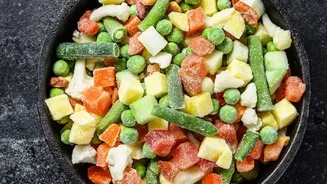
To avoid ending up with a solid, unusable brick of frozen produce, a technique called 'flash freezing' is your best friend. After blanching and thoroughly drying your chopped vegetables, spread them in a single layer on a baking sheet lined with parchment paper. Make sure the pieces aren't touching. Place the baking sheet on a flat surface in your freezer for 1 to 2 hours, or until the vegetables are frozen solid. This step ensures each piece freezes individually. Once they are firm, you can transfer them into their final storage containers. This method works beautifully for peas, corn, broccoli, and sliced peppers, allowing you to pour out exactly the amount you need for any given recipe.
Packaging for Peak Freshness
Your enemy in the freezer is air. Exposure to cold, dry air causes freezer burn, which results in unpleasant changes in texture and flavour. To prevent this, pack your flash-frozen vegetables in airtight containers. Freezer-safe zip-top bags are a great option; press out as much air as possible before sealing. You can even use a straw to suck out the last bit of air before closing the bag completely. For the ultimate protection, a vacuum sealer is an excellent investment that dramatically extends the quality and life of your frozen foods. Always label your bags or containers with the name of the vegetable and the date you froze it, so you can follow the 'first in, first out' rule.
From Freezer to Frying Pan
One of the best parts about having a stash of frozen vegetables is their convenience. For most recipes, there is no need to thaw them first. Adding frozen vegetables directly to a hot pan for a stir-fry, a pot for soup or stew, or a baking sheet for roasting will yield the best texture. Because they have been blanched, home-frozen vegetables often cook faster than their fresh counterparts. Just be careful not to overcook them, which can lead to a soggy result. Toss them into pastas, curries, and fried rice for an instant, zero-waste addition to your weeknight dinners.