








A Blueprint Passed Through Generations
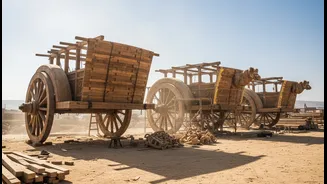
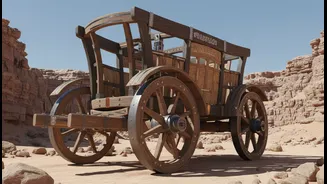
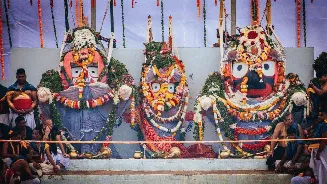
The construction of the three iconic chariots—Nandighosha for Lord Jagannath, Taladhwaja for Lord Balabhadra, and Darpadalana for Devi Subhadra—is a tradition that unfolds over 58 days, starting on the auspicious day of Akshaya Tritiya. This is not a project
guided by modern blueprints or digital models. Instead, it relies on hereditary knowledge passed down through generations of master craftsmen known as Biswakarmas. These artisans use traditional, non-standard units of measurement like the 'haat' (hand span) and 'anguli' (finger width) to achieve remarkable precision year after year, recreating the massive structures with an accuracy that would astound any modern engineer.
The Science of Selecting Wood
The very foundation of the chariots lies in an intuitive understanding of material science. Specific woods are chosen for their unique properties, a practice that aligns perfectly with modern engineering principles. Robust and termite-resistant Phasi wood is used for key structural components, while durable Dhausa wood is also a primary building material. For the more intricate carvings and decorative elements, artisans turn to Simli wood, which is both strong and lightweight. Over a thousand logs from these specific trees, which must be of a certain age and straightness, are sourced annually, demonstrating a deep, practical knowledge of timber technology that has been sustained for centuries.
A Structure That Breathes
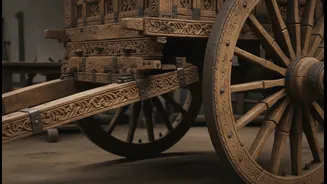
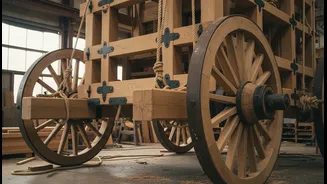
One of the most astonishing features of the chariots is their core construction, which uses no iron nails for its primary joints. Instead of being held together by metal fasteners, the massive wooden components are interlocked using a sophisticated system of mortise and tenon joints, dowels, and pegs. This technique, a cornerstone of ancient carpentry, creates a structure that is both strong and flexible. It allows the chariot to absorb the immense stresses and strains of being pulled by thousands of devotees, giving it a resilience that a rigid, nailed structure might lack. While blacksmiths, or 'Kamara Sevaks', do forge thousands of iron fittings and nails, these are typically used for decorative elements, axles, and securing the superstructure, not for the main load-bearing frame.
The Physics of Stopping a Juggernaut
Bringing a multi-tonne chariot to a halt requires a grasp of classical mechanics. The traditional braking system is a simple yet effective application of friction. A massive wooden beam made of Sal wood is suspended in front of the wheels. When the chariot needs to slow down or stop, sevayats lower this log, forcing the wheels to roll onto it and creating the friction needed to control the momentum. In a perfect marriage of tradition and innovation, this age-old system has been enhanced in recent years. A retired engineer developed an upgrade using durable rubber linings and improved pulley systems to increase braking efficiency and safety. For the 2026 Rath Yatra, this system was even made waterproof to ensure its performance in all weather conditions.
Wheels, Axles and Steering by Force
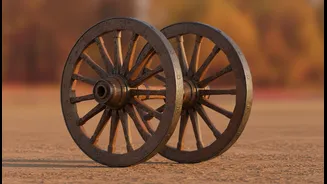
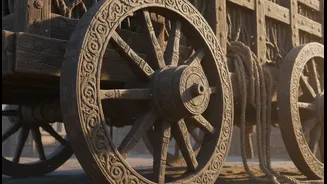
The massive, solid wood wheels, each about seven feet in diameter, are engineering marvels in themselves. Each chariot has a specific number of wheels—16 for Nandighosha, 14 for Taladhwaja, and 12 for Darpadalana—that are designed to bear the colossal weight. There is no modern steering mechanism like a rack and pinion. Instead, steering is a coordinated effort that demonstrates a profound understanding of force and torque. The chariot is turned by the devotees pulling the ropes and the strategic application of the brakes on one side. By locking one set of wheels with the brake log, the pulling force on the other side pivots the entire structure, allowing it to navigate the corners of the Grand Road in Puri.