


What is Colour-Blocking?
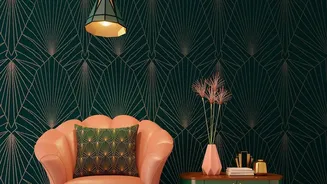
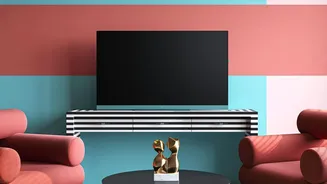
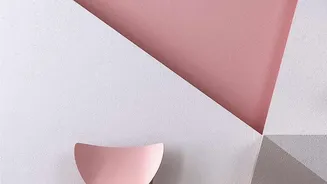
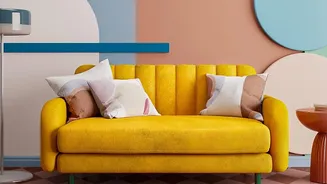
Colour-blocking is a design trend that involves using two or more solid, often contrasting, blocks of colour to create a deliberate and impactful visual statement. Originally popular in fashion, it has become a go-to technique in interior design for adding
personality and structure to a room. While this can be achieved with paint, it requires careful taping, multiple coats, and a very steady hand to get those perfectly crisp lines. Colour-blocking wallpaper, particularly those with geometric designs, takes the guesswork out of the equation. These wallpapers come with the sharp, clean lines already built into the pattern, delivering a professional look without the painstaking effort.
Why Wallpaper Works Better Than Paint
For a first-time decorator, achieving a flawless colour-blocked look with paint can be daunting. The main advantage of wallpaper is that it delivers pattern and precision in one step. Modern wallpapers offer an incredible variety of designs, from simple two-tone splits to complex geometric arrangements that would be nearly impossible to replicate by hand. They are also excellent at concealing minor wall imperfections like small cracks or bumps, which a coat of paint might highlight. Furthermore, many contemporary wallpapers are highly durable and easy to clean, making them a practical choice for busy households. High-quality wallpaper can last up to 15 years, far longer than a typical paint job, making it a cost-effective choice in the long run.
The Beginner's Best Friend: Straight-Match Patterns
Not all wallpaper patterns are created equal when it comes to ease of installation. For beginners, the key is to look for a 'straight match' or 'free match' pattern. A free match requires no alignment at the seams, which is the easiest of all. A straight match means the pattern aligns horizontally across adjacent strips. This is common with geometric and striped designs. You simply line up the top of each new strip with the one beside it. This is far simpler than a 'drop match', which requires shifting each strip vertically to align the pattern, adding a layer of complexity. Large-scale geometric patterns often have fewer critical alignment points, making them more forgiving for a novice installer.
Get Ready: Tools and Wall Prep
Proper preparation is the most critical step for a successful wallpapering project. Before you begin, gather your tools. You'll need a tape measure, a spirit level or plumb line, a pencil, a wallpaper smoothing tool, a sharp utility knife, and wallpaper paste if you're not using a peel-and-stick variety. Your walls must be clean, dry, and smooth. Remove any old wallpaper, fill any cracks or holes with filler, and sand the patches smooth once dry. It's also a good idea to clean the wall with a mild soap solution to remove any dust or grease. For best results, especially on uneven or dark-coloured walls, applying a primer or a layer of lining paper can create an ideal surface for the wallpaper to adhere to.
Hanging Your First Strip Like a Pro
The first strip of wallpaper is the most important, as it acts as the guide for the entire wall. Never assume your wall or corner is perfectly straight. Instead, measure the width of your wallpaper and use a spirit level or plumb line to draw a perfectly vertical pencil line on the wall where the edge of your first strip will go. When you hang that first piece, align its edge with this guideline. Leave a few inches of excess paper at the top and bottom for trimming later. Use a smoothing tool to press the paper to the wall, working from the centre outwards to push out any air bubbles. Getting this first piece perfectly plumb is the secret to a professional-looking finish.
Achieving Those Flawless Straight Edges
With your first strip straight, the rest becomes much easier. For subsequent strips, butt the edge of the new piece up against the previous one, making sure there are no gaps or overlaps. Visually align the pattern as you go. Smooth each new strip down firmly. Once a strip is in place, use a straightedge and a sharp craft knife to trim the excess wallpaper at the ceiling and skirting board. A sharp blade is non-negotiable; a dull one will tear the paper and ruin your clean line. For peel-and-stick papers, if you misalign a strip, you can often gently lift it and reposition it, but avoid stretching the material as it can distort the pattern.