






The Monday Morning Surge
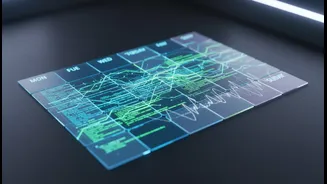
Just like our work week, AI usage kicks into high gear on Monday morning. Multiple studies show that platforms like ChatGPT, Gemini, and Claude see their heaviest traffic on weekdays, with Monday being the single busiest day. This surge is overwhelmingly
driven by professional tasks. As workers settle at their desks, they turn to AI to draft emails, summarise reports, debug code, and plan their week. One recent analysis found that requests related to work, such as writing assistance, peak between 10 and 11 a.m. This pattern suggests AI has become a core productivity tool, an digital assistant we check in with at the start of our work week to gain momentum and tackle our to-do lists.
The Mid-Week Professional Plateau
After the initial Monday rush, AI usage remains high and stable from Tuesday through Thursday. This period represents the core of the 'GenAI Work Week'. During these days, the use of AI is deeply embedded in the workflows of knowledge workers. The queries are less about planning and more about execution. This includes everything from data analysis and creating marketing copy to generating presentations. Interestingly, the busiest hours align with a traditional 9-to-5 schedule, with a significant concentration of activity in the morning and early afternoon. The data indicates that for a large segment of working-age adults, particularly those between 25 and 49, AI is now an indispensable part of their daily professional toolkit.
The Weekend Wind-Down and Shift
As the work week concludes, so does our professional use of AI. Traffic begins to dip on Friday afternoons and drops significantly over the weekend—by as much as 23% according to one report. However, AI doesn't go completely quiet. Instead, the nature of our queries changes dramatically. Work-related prompts fall away, replaced by personal interests. On weekends, people are more likely to use AI for hobbies, planning trips, getting recipe ideas, or seeking emotional support and medical advice. Research shows that the share of personal conversations on AI platforms can jump from around 35% on a weekday to nearly 50% on a weekend, reflecting a clear shift from our professional lives to our personal ones.
Demographics Tell a Deeper Story
Not everyone follows the same pattern. Age and profession play a huge role. The sharpest weekend drop-off in AI usage is seen among working adults aged 25-49, whose use is tightly bound to their jobs. In contrast, students aged 18-24 show a much smaller dip in weekend activity, as their study and project deadlines don't always follow a standard work week. Gender differences also emerge, with some data suggesting men's usage drops more steeply on weekends, while women's usage remains more consistent, possibly pointing to different use cases tied to personal projects or household planning. This granular data shows that while AI is becoming universal, how we integrate it is deeply personal and situational.
What These Patterns Reveal About Us
This weekly rhythm reveals a fundamental truth: far from being an alien, ever-present force, AI is being shaped by our very human routines. We are integrating it into our lives on our own terms, moulding it to fit the established cadences of work, rest, and play. The weekday surge shows its power as a productivity engine, while the weekend shift highlights its growing role as a personal companion and creative partner. Some studies even point to a rise in late-night queries about more philosophical topics, suggesting some use AI for quiet contemplation after the day is done. These patterns provide a fascinating, real-time map of how society is adopting and adapting to one of the most powerful technologies of our time, not as a replacement for human activity, but as a reflection of it.