




Europe's Great Eclipse
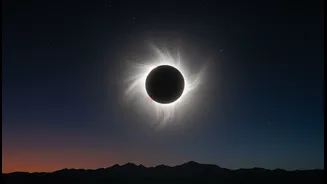
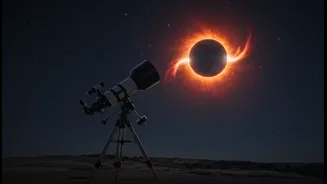
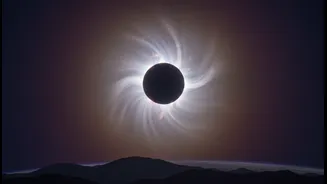
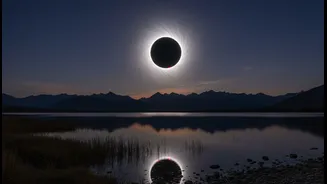
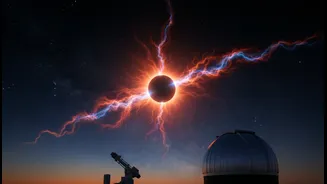
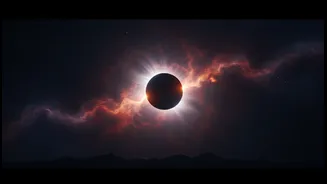
The upcoming total solar eclipse on August 12, 2026, is a significant astronomical event, primarily because it's the first one visible from mainland Europe since 1999. The path of totality, where the Moon completely blocks the Sun, will sweep across Greenland,
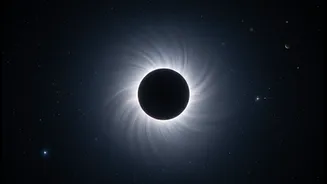
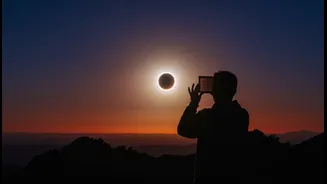
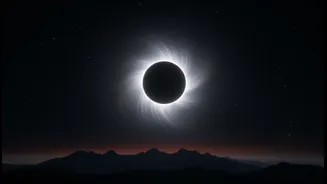
Iceland, the Atlantic Ocean, and northern Spain. Cities like Reykjavík, Bilbao, and Valencia will be plunged into midday darkness for a brief period, experiencing the rare sight of the Sun's corona. The maximum duration of this total blackout will be just over two minutes. This event is made even more special as it occurs just before sunset in Spain, creating the potential for a stunning 'sunset eclipse'.
The View from India: A Clear Answer
To get straight to the point: no, the total solar eclipse of August 12, 2026, will not be visible from India. The event will take place during the night for the Indian subcontinent. The eclipse is expected to begin around 9:04 PM IST and conclude after 2:00 AM IST on August 13, when the Sun is well below the horizon for everyone in India. Because the eclipse is not visible, traditional customs and restrictions, such as Sutak Kaal, do not apply. While some highly specialised tools suggest a tiny, almost imperceptible partial eclipse might theoretically occur at the very northernmost tip of Ladakh, for all practical purposes, it is not an event that can be observed from the country.
Why Geography Matters for Eclipses
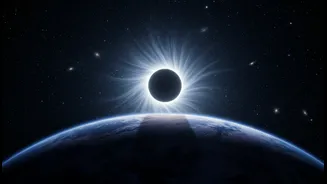
A solar eclipse happens when the Moon passes between the Sun and Earth, casting a shadow on our planet. However, this shadow is relatively small, creating a narrow track known as the 'path of totality'. Only locations within this specific path get to witness the total eclipse. For the 2026 eclipse, that path is far to the north and west of India, crossing the Arctic and parts of Europe. Regions outside this path, like most of Europe and northwestern Africa, will only see a partial eclipse, where the Moon covers just a portion of the Sun. India lies completely outside the path of both the total and partial phases of this particular celestial alignment.
How You Can Watch from India
Just because the eclipse isn't happening over our skies doesn't mean you have to miss out. The best way to witness the event from India is through digital live streams. Major space agencies like NASA and the European Space Agency (ESA) will host high-definition broadcasts tracking the Moon's shadow as it moves across Iceland and Spain. Many international observatories and astronomy channels on platforms like YouTube are also expected to provide live coverage. This allows you to experience the awe of totality from the comfort of your home, complete with expert commentary explaining the science as it unfolds.
A Celestial Bonus
Interestingly, the date of the eclipse coincides with the peak of the annual Perseid meteor shower. A solar eclipse can only occur during a New Moon phase, which means the sky will be exceptionally dark on the night of August 12-13. This lack of moonlight provides perfect conditions for stargazers to watch for shooting stars after the eclipse event has concluded in Europe. So, while the Sun won't be blocked for us, the night sky might still put on a beautiful show.
Looking Ahead: The Next Eclipses for India
While we miss out on this one, Indian skywatchers have other events to look forward to. The next solar eclipse visible from India will be a partial one on August 2, 2027. Looking further ahead, a significant total solar eclipse will trace a path across northern India on March 20, 2034, promising a spectacular show for many in the country. So, while the 2026 eclipse is a virtual event for us, our turn for a direct view is on the horizon.