




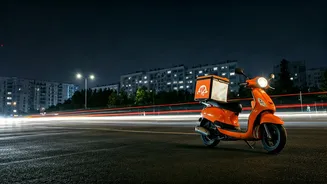



The Dawn of the Fourth Meal
For generations, the Indian food clock was predictable: breakfast, lunch, and dinner. But in the country's urban centres, a fourth meal is emerging, one that happens long after traditional kitchens have closed. Late-night food delivery has doubled over
the past year, with orders placed between 11 p.m. and 3 a.m. surging. This isn't just a temporary spike driven by sporting events like the FIFA World Cup, which has seen demand rise by 12-15%; it's built on a fundamental lifestyle shift that was growing steadily before. The once-quiet hours of the night are now a prime-time battleground for restaurants, delivery platforms, and quick-commerce companies, all vying to capture a share of this burgeoning market.
Who Is Eating After Midnight?
The patrons of this new economy are a diverse group united by their nocturnal schedules. They are young professionals in the tech and service industries, whose workdays stretch across global time zones. They are students pulling all-nighters, BPO employees on the night shift, and a generation of digital natives for whom 2 a.m. is the new primetime. This demographic shift is so pronounced that executives at major chains like McDonald's have noted that the standard 9 p.m. dinner time is becoming obsolete for young consumers. In response, chains are extending their hours, with some outlets in cities like Delhi-NCR and Jaipur now operating until 3 a.m. or even later.
The Cloud Kitchen Revolution
This late-night boom would be impossible without the rise of cloud kitchens—delivery-only restaurants that operate without a physical storefront. These 'ghost kitchens' are perfectly suited for the midnight market. By shedding the high costs of rent in prime locations and front-of-house staff, they can focus resources on food production and operational efficiency during off-peak hours. For many entrepreneurs, the late-night window offers a strategic advantage: less competition and a highly motivated customer base. Brands specializing in everything from burgers and pizzas to gourmet desserts have found a loyal following in the wee hours, with some kitchens reporting that late-night sales now account for 15-25% of their total orders, rivaling traditional lunchtime rushes.
Technology as the Great Enabler
Food delivery platforms like Swiggy and Zomato are the logistical backbone of the midnight economy. They have not only provided the infrastructure for ordering and delivery but have actively cultivated late-night ordering as a distinct behaviour. Through targeted notifications, dedicated 'late-night cravings' sections, and special offers, these apps have transformed a latent demand into a consistent revenue stream. The data they collect is invaluable, revealing that Bengaluru, Hyderabad, and Mumbai lead in metro orders, while cities like Surat, Thiruvananthapuram, and Patna show strong growth in emerging markets. This proves the trend is not just a metro phenomenon but a nationwide shift in consumption.
Beyond Burgers and Biryani
While comfort foods like pizza and burgers remain the most popular late-night orders, the menu is expanding. Desserts, in particular, have become a booming category, with orders for ice cream, brownies, and cheesecake seeing massive growth. This is driven by a desire for 'affordable indulgence'—a small treat to reward oneself after a long day. Packaged goods are also part of the boom, with quick-commerce platforms like Blinkit and Zepto delivering everything from chips to frozen snacks. During recent World Cup matches, dairy giant Amul reported a 30-40% spike in demand during match hours, highlighting how the entire food ecosystem is adapting.
The Challenges of Working in the Dark
Despite the opportunity, the midnight economy is not without its challenges. For restaurants, staffing is a major hurdle. Many kitchens operate with fewer employees on the night shift, leading to more hectic and demanding work conditions. Then there are regulatory grey areas. The operating hours of kitchens and delivery services are often subject to complex local permissions, which can vary from one jurisdiction to another and lead to friction with authorities. As the sector grows, establishing clear and uniform regulations will be crucial for sustainable growth and ensuring the safety and well-being of the thousands of kitchen staff and delivery partners who power this after-dark industry.