


A home should tell a story, reflecting not just your style, but your soul. There’s a quiet but powerful movement in modern Indian interiors—a turn towards heritage, where ancient crafts are not just preserved, but reimagined for today's homes.
More Than a Museum Piece
Integrating
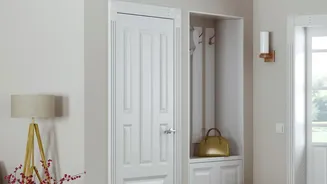
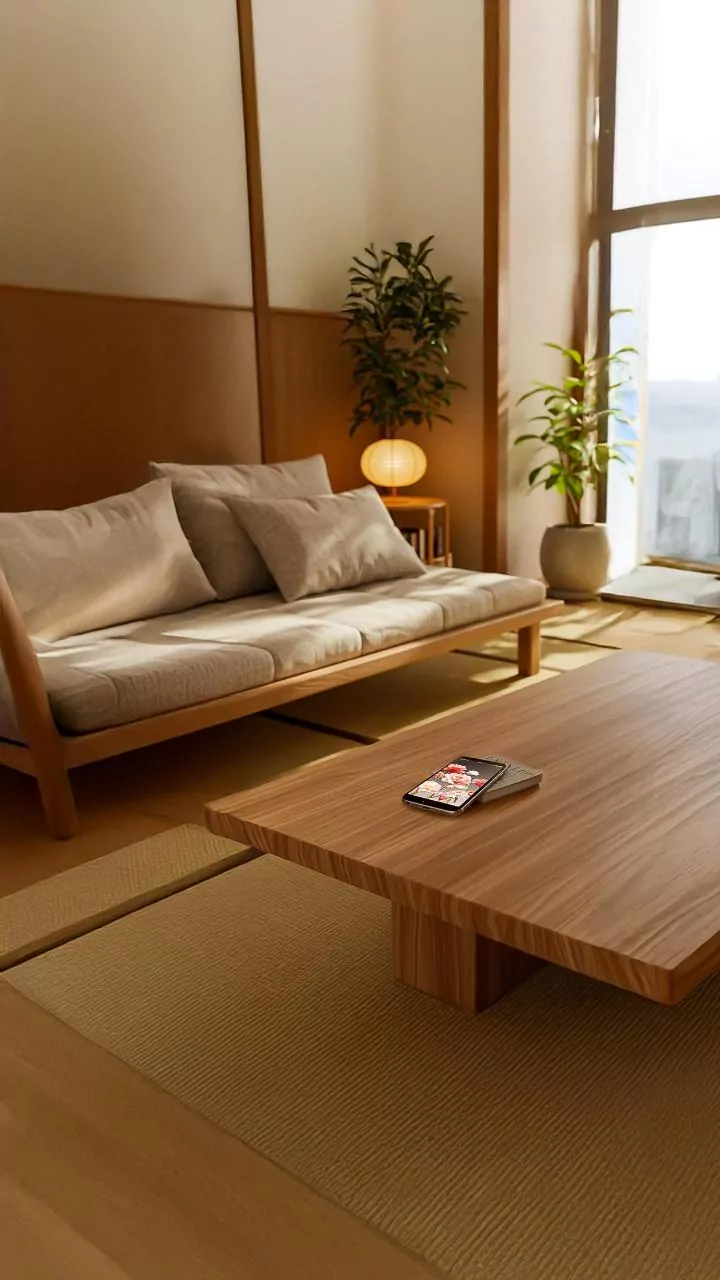
traditional arts into a modern home isn't about creating a museum. It's about a thoughtful fusion that brings warmth, character, and meaning to a space. The most compelling interiors today often balance clean, minimalist lines with objects that carry history. Instead of cluttering a room with numerous 'ethnic' items, the modern approach is to choose one or two statement pieces that can truly shine. Think of a sleek, contemporary console table made warmer by a single, intricately carved wooden figure, or a neutral-toned living room given life by vibrant, hand-woven cushion covers. This contrast is key; it allows the craftsmanship to become a focal point, telling its story without overwhelming the room's modern aesthetic. The goal is not to recreate the past, but to carry its soul forward into the spaces we live in today.
Threads of Modernity
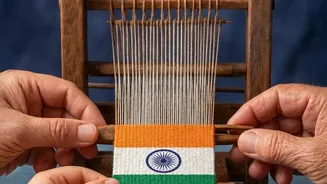
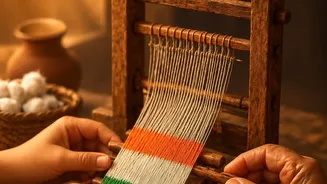
Indian textiles are a treasure trove of colour, pattern, and texture. Weaves like Ikat, with its signature blurred geometric patterns, are finding new life in lampshades and cushion covers, adding a burst of energy to a room without making it feel busy. Ajrakh, the deep indigo block-printed fabric from Gujarat, is being stretched onto wooden frames and used as contemporary wall art. Meanwhile, the delicate running stitch of Kantha from Bengal is transforming lightweight quilts into artistic throws for sofas and armchairs. Even luxurious Banarasi brocade, once reserved for grand occasions, is being used in small, impactful doses—as a table runner or an accent panel on a chair—to bring a touch of regal elegance to everyday life. These textiles, whether hand-embroidered or block-printed, add layers of texture and history to modern furniture.
Carving a New Niche
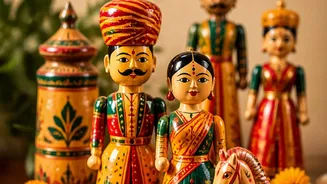
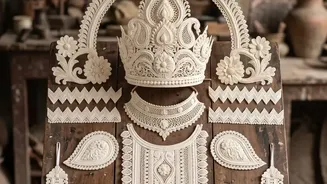
Similarly, the ancient art of carving is being scaled down and repurposed for modern living. Intricate wood carving traditions from regions like Saharanpur and Rajasthan are no longer confined to heavy, ornate furniture. Instead, this skill is appearing in smaller, more functional accessories that blend seamlessly into contemporary homes. We see it in hand-carved mirror frames, decorative trays, photo frames, and sculptural bookends. Designers are also using traditional metal crafts like Dhokra (lost-wax casting) and Bidriware (silver inlay on blackened metal) to create striking decorative objects. A set of Dhokra figurines on a minimalist shelf or a Bidriware vase on a glass coffee table creates a beautiful dialogue between old and new materials, adding warmth and a human touch.
A Bridge Between Worlds
This trend is more than just an aesthetic choice; it represents a vital collaboration between modern designers and traditional artisans. Design studios are increasingly partnering with craft clusters across the country, from Pattamadai mat weavers in Tamil Nadu to Kalamkari artists in Andhra Pradesh. These partnerships help preserve ancient skills by creating new, relevant markets for them. Designers bring a contemporary perspective, reimagining traditional forms for modern utility, while artisans bring generations of inherited knowledge and skill. The result is a product that is not just beautiful, but also tells a story of cultural continuity and sustainable livelihood. When you buy a hand-block printed cushion or a carved wooden bowl, you are not just acquiring a decorative item; you are supporting a legacy of craftsmanship.
Styling with Soul
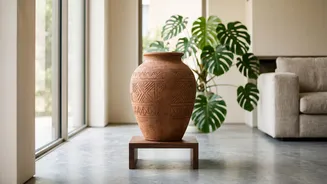
Bringing these elements into your own home is simpler than it might seem. Start small with accent pieces like cushions, runners, or a single piece of wall art. Don't be afraid to mix textures—pair the rustic feel of a handwoven dhurrie with a sleek modern sofa, or place an earthy terracotta pot in a minimalist corner. One of the most effective strategies is to choose a single, strong focal piece, like a large Gond painting or a hand carved swing, and let it anchor the room. The surrounding simplicity of a modern space will only enhance its intricate details. The key is to be intentional. Give each handcrafted piece its own space to breathe, allowing its character and story to enrich your home.