




The Initial Spark of Controversy
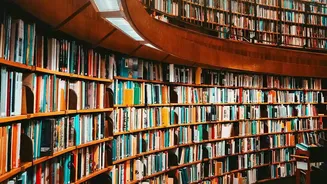
The scandal first erupted when acclaimed Tamil novelist Perumal Murugan visited the newly inaugurated Periyar Arivulagam library in Coimbatore. In an online article, he raised alarms about nearly 1,800 books supplied by a single, little-known publisher,
Agal Vilakku Pathippagam. The books were flagged for having unfamiliar author names, questionable publication details (ISBNs), grossly inflated prices, and content riddled with factual errors and nonsensical passages, leading to suspicions that they were either plagiarised or generated by artificial intelligence. For example, one book described the classical Tamil work 'Naaladiyar' as an individual philosopher instead of a collection of verses by Jain monks.
Allegations of a Large-Scale 'AI Scam'
Following Murugan's revelations, the issue quickly escalated. Tamil Nadu's School Education Minister, A. Rajmohan, described the situation as potentially 'India's first AI scam'. He alleged that this was not an isolated incident confined to one library but part of a wider pattern of corruption. The allegations point towards a scheme where officials may have colluded with specific vendors to procure thousands of substandard books at inflated prices, possibly for kickbacks. The publisher at the center of the controversy, Agal Vilakku Pathippagam, and its proprietor Mohan, are now under intense scrutiny. The issue has also taken on a political dimension, with the current state government blaming the previous administration for the procurements, a charge the opposition denies.
The High Court Intervenes Decisively
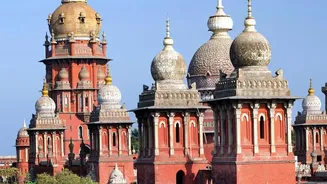
The matter reached the Madurai Bench of the Madras High Court through a contempt petition. The petition argued that the fraudulent procurement violated the court's own detailed directions from June 2024, which were intended to ensure transparency in the state's library book acquisition process. The bench, comprising Justices G.R. Swaminathan and M.D. Sumathi, took a stern view of the situation. In a scathing order on November 10, 2026, the court remarked, 'Actors change, actions do not', noting that such a massive fraud could not occur without the 'active involvement of government servants'.
A Criminal Investigation is Ordered
Expressing dismay that no formal police complaint (FIR) had been filed despite the public outcry, the High Court directed the Tamil Nadu Directorate of Vigilance and Anti-Corruption (DVAC) to immediately register an FIR and launch a criminal investigation. The court ordered the immediate freezing of the bank accounts of Agal Vilakku Publication and its proprietor. It also directed the government to take disciplinary action, including suspension, against the officials involved in the procurement committees. So far, five officials from the Directorate of Public Libraries have been suspended.
Defining 'Doubtful Taste' for the AI Era
In its order, the court gave a modern interpretation to Rule 18(4) of the Tamil Nadu Public Libraries Rules, 1950, which prohibits the procurement of books of 'doubtful taste'. The judges held that AI-generated and plagiarised works, which contain dubious content and false narratives, squarely fall within this category. The court emphasised that citizens have a right to receive accurate information under the Constitution, and public libraries have a duty to provide authentic knowledge, not become repositories for bogus publications and phantom authors.
What Happens Next?
The DVAC's criminal investigation is now underway. It will aim to uncover the full extent of the alleged scam, identify all individuals involved—from publishers to government officials—and determine the scale of the financial loss to the public exchequer. Meanwhile, librarians across the state have been instructed to identify and remove all suspect books from the shelves. Over 70,000 fraudulent books have reportedly been removed so far. The case is being closely watched, not only as a test of accountability in public procurement but also as a landmark case grappling with the challenges posed by AI-generated content in public institutions.