


The Volcano That Injected an Ocean
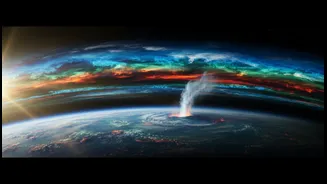
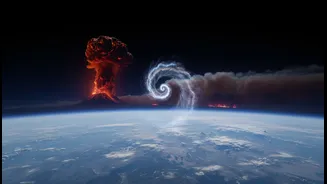
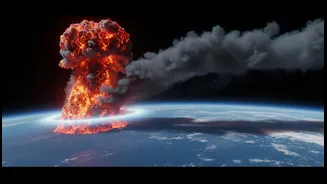
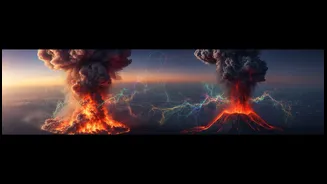
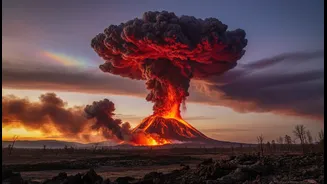
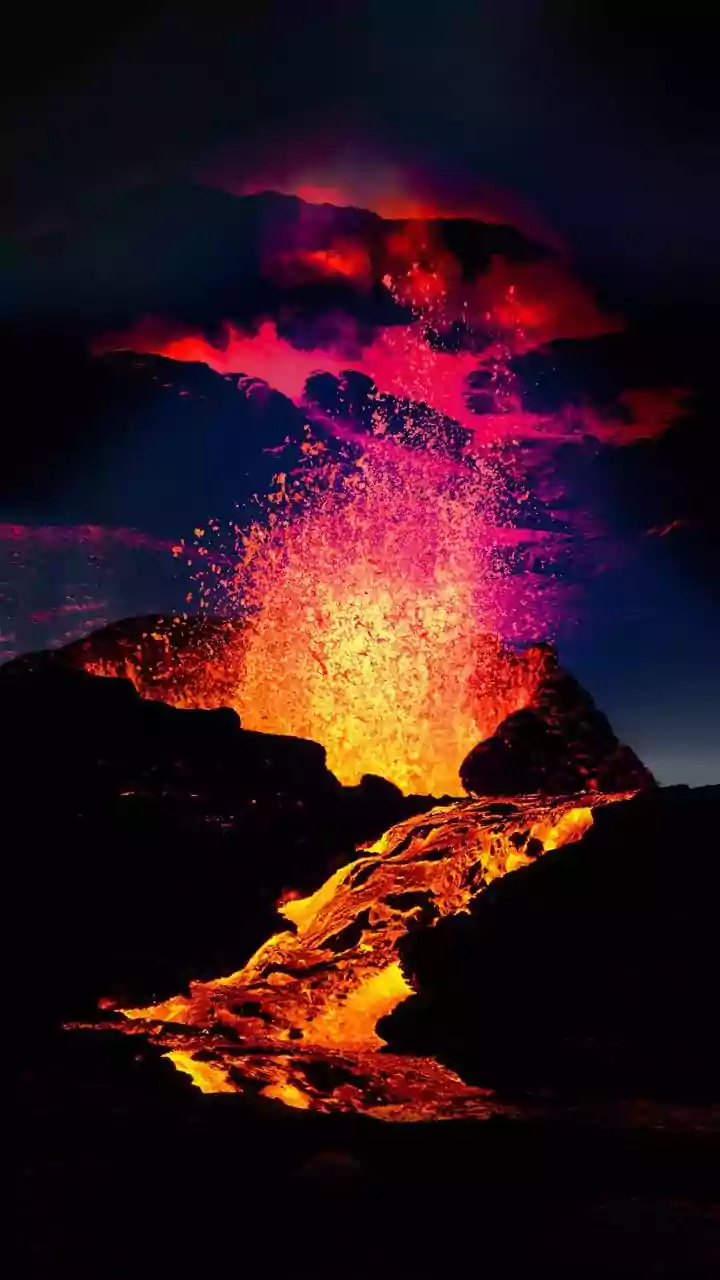
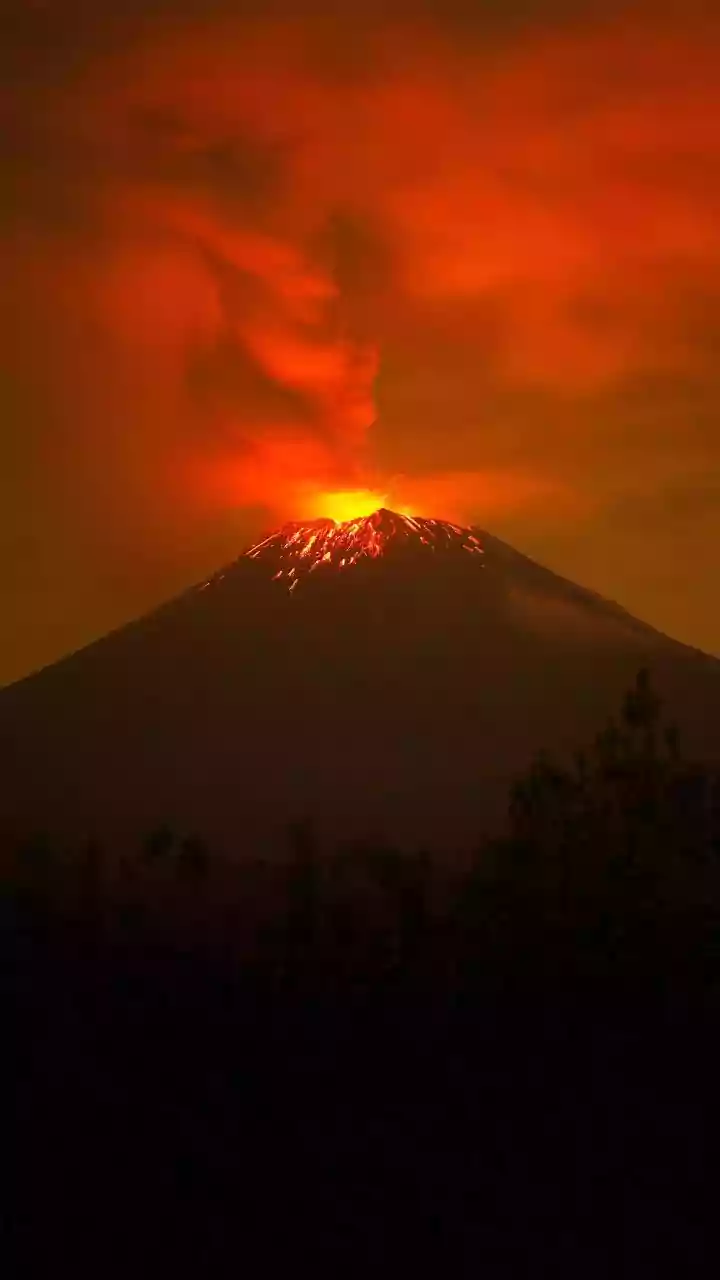
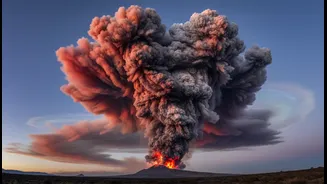
In January 2022, the Hunga Tonga-Hunga Ha’apai submarine volcano erupted with a force that sent shockwaves around the planet. Beyond the spectacular explosion, it accomplished something unprecedented in modern history: it injected an enormous amount of
water vapor directly into the stratosphere, the atmosphere's second layer. Scientists estimate the eruption blasted around 150 million tons of water—equivalent to tens of thousands of Olympic swimming pools—up to 55 kilometers high. This single event increased the total amount of water vapor in the stratosphere by roughly 10 percent. Water vapor is a potent greenhouse gas, and its sudden appearance in a normally dry atmospheric layer has complex effects on temperature and ozone chemistry that scientists are still working to understand. Traditionally, models accounted for slow increases in stratospheric moisture, but Hunga Tonga was a sudden, massive shock to the system that existing frameworks were not built to handle.
When Wildfires Create Their Own Weather
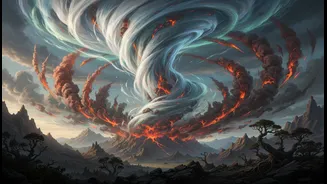
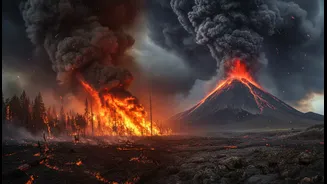
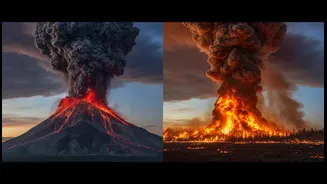
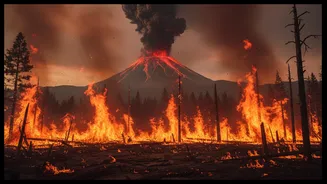
It’s not just volcanoes. A warming world is leading to larger, more intense, and more frequent wildfires. The most extreme of these fires are now so powerful they generate their own weather systems. Known as pyrocumulonimbus clouds, or pyroCbs, these are essentially fire-breathing thunderstorms. The intense heat from a megafire forces a massive column of air, smoke, and moisture to rise rapidly. This column can punch through the troposphere (the lowest atmospheric layer where we live and experience weather) and inject its contents directly into the stratosphere. This process, sometimes called a "self-lofting" pathway, provides another mechanism for pumping huge quantities of moisture and smoke particles into the upper atmosphere. Events like the 2020 Australian bushfires created pyroCbs that were tracked globally, demonstrating that fires in one hemisphere can have atmospheric consequences across the planet.
Why Our Climate Crystal Ball Is Blurry
Global climate models are incredibly sophisticated tools, but they were primarily designed to simulate long-term trends over vast areas. They are excellent at predicting how average global temperatures will respond to a gradual increase in greenhouse gases. However, they often struggle with short-lived, geographically concentrated, and unusually intense events. Most models operate on grids where each point is 100 kilometers or more from the next, a resolution too coarse to accurately capture the physics of a volcanic plume or a pyroCb. These episodic events introduce a cocktail of materials—water vapor, sulfate aerosols from volcanoes, black carbon from smoke—that interact in complex ways, sometimes causing warming and other times cooling. Because models haven't been designed to account for these sudden, massive injections, their projections for future atmospheric composition and temperature may be missing a critical piece of the puzzle.
Rewriting the Rules of Climate Prediction
The scientific community is now racing to adapt. Recognizing that these episodic shocks are a previously overlooked driver of atmospheric change, researchers are working to upgrade their models. For instance, the Hunga Tonga eruption spurred international collaborations where different modeling groups test their simulations against the real-world data from the event to see what they get right and what they get wrong. The goal is to create next-generation Earth System Models that are more dynamic and can incorporate the effects of these extreme events. This involves improving model resolution and better representing the complex chemistry and physics of aerosol and cloud interactions. As climate change makes extreme wildfires more common, accounting for their impact is no longer optional for accurate long-term forecasting. Capturing these shocks is crucial for everything from projecting ozone layer recovery to understanding future rainfall patterns.