



The Annual Cycle of Stubble Burning
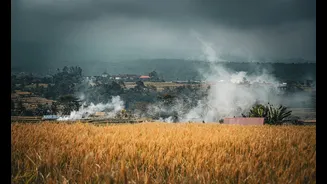
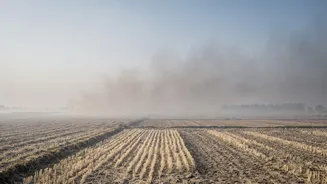
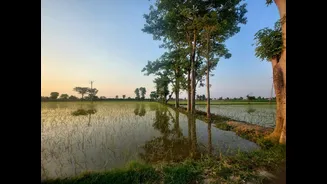
Each year, from late September through November, vast agricultural belts in Punjab, Haryana, and Uttar Pradesh see a surge in farm fires. This practice, known as stubble or crop residue burning, involves setting fire to the leftover paddy straw after
the rice (kharif) harvest. Farmers do this to quickly and cheaply clear their fields for the next crop, which is typically wheat (rabi). The use of mechanised harvesters, which leave behind a significant amount of stubble, has made this a widespread issue. While manual clearing was once common, it is now often considered too slow and expensive for many farmers.
Why Farmers Burn: A Question of Economics and Time
The decision to burn stubble is not taken lightly but is driven by pressing agricultural realities. There is a very narrow window, often just a few weeks, between harvesting rice and sowing wheat. Burning the residue is the fastest way to prepare the land. A survey in Punjab revealed that 48% of farmers consider it the most economical and time-efficient method. Clearing an acre of land without fire can cost thousands of rupees, while burning is practically free. Furthermore, paddy straw has high silica content, making it unsuitable as animal fodder, which reduces its economic value and leaves farmers with few alternatives for disposal.
The Perfect Storm: Weather and Wind
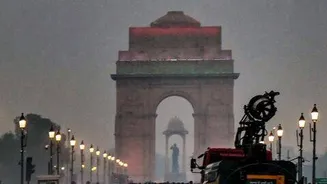
The timing of the burning season coincides with specific meteorological conditions that trap pollutants. After the monsoon, wind speeds slow down and temperatures drop. This creates a phenomenon called temperature inversion, where a layer of cold air is trapped beneath a layer of warmer air, preventing pollutants from dispersing vertically. During this period, northwesterly winds act as a direct corridor, carrying smoke from the fields of Punjab and Haryana across the Indo-Gangetic Plain towards Delhi and other cities. This combination of dense smoke and stagnant weather conditions is what leads to the severe smog episodes that define the season.
Quantifying the Impact on Air Quality
The contribution of farm fires to urban air pollution is significant, though it fluctuates. On peak burning days, studies have shown that smoke can account for 30% to over 40% of the harmful PM2.5 particulate matter in Delhi's air. A recent IIT Delhi study found that during the burning season, biomass burning could account for an average of 48% of black carbon (soot) in rural Punjab, periodically exceeding 90% during intense fires. While other sources like vehicles, industry, and dust are major polluters year-round, the seasonal onslaught of farm smoke pushes already poor air quality into the 'Severe' or 'Hazardous' categories, posing serious health risks.
The Search for Sustainable Solutions
Efforts to curb stubble burning are multi-pronged. The government has been promoting the use of specialised machinery like the Happy Seeder and Super Straw Management System (S-SMS), which allow for sowing wheat without clearing the stubble. Subsidies are available under the Crop Residue Management (CRM) scheme to help farmers and Custom Hiring Centres purchase this equipment. Another promising alternative is the Pusa bio-decomposer, a microbial solution that speeds up the decomposition of straw, turning it into manure in about 20-25 days. However, challenges remain. Farmers have raised concerns about the cost and limited availability of machinery, and some find the decomposer's timeframe too long for the short sowing window. To enforce the ban, the government has also relied on fines and, as of September 2026, proposed a new framework that could place violating fields in a 'red category' in land records.