
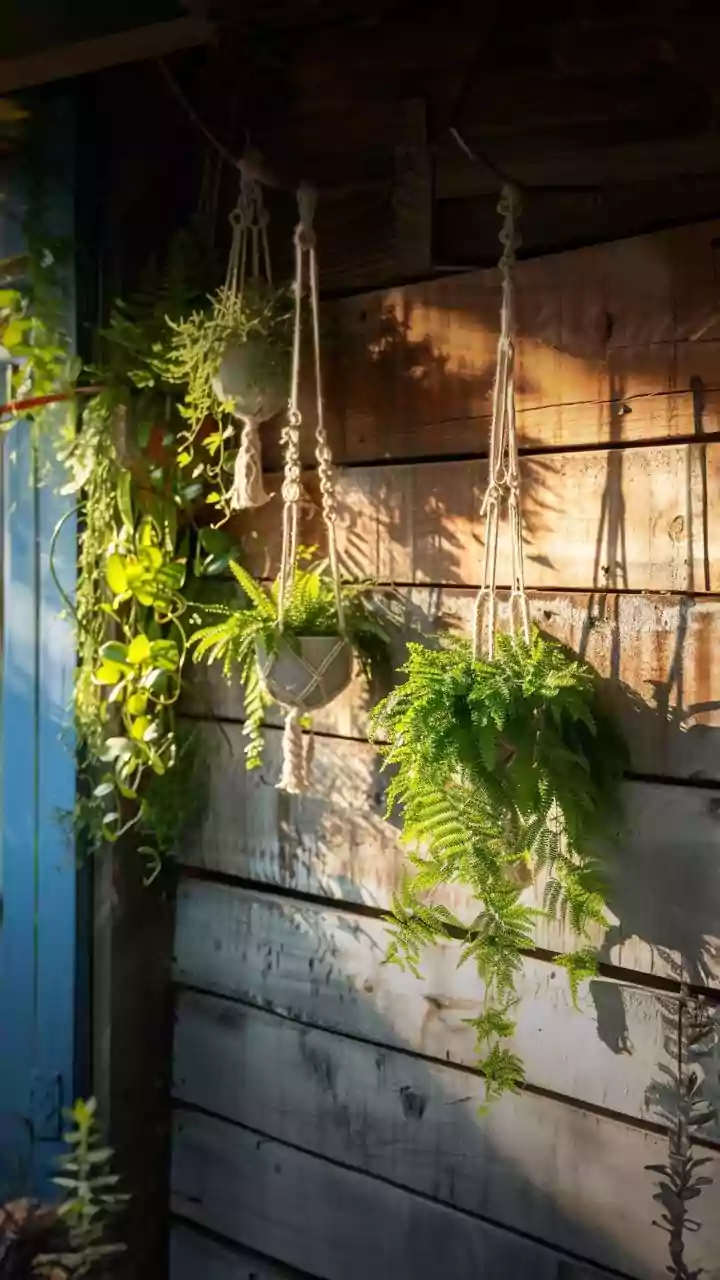



Maximise Every Inch of Your Space
The most obvious and compelling advantage of a vertical garden is its incredible space efficiency. For apartment dwellers in cities like Mumbai, Delhi, or Bengaluru, where every square foot is precious, traditional pots can quickly clutter a small balcony.
Vertical systems, however, draw the eye upward, transforming a plain, unused wall into a living tapestry of green. By stacking plants on top of one another, you can cultivate a diverse range of flowers, herbs, and even vegetables in a fraction of the floor space a conventional garden would require. This approach not only frees up valuable room for a chair or small table but also makes the entire space feel larger and more intentional.
Embrace Low-Maintenance Gardening
Many people are put off gardening by the perceived effort involved—constant watering, weeding, and pest control. Vertical planting systems are often designed to simplify these chores. Many modular systems come with integrated or self-watering features, such as drip irrigation or wicking mechanisms, that deliver water directly to the plant roots with minimal waste. This reduces the daily chore of watering and prevents both under and over-watering, a common reason for plant failure. Furthermore, since plants are in individual containers off the ground, issues with soil-borne pests and weeds are significantly reduced, making maintenance far more manageable for busy urbanites.
Conserve Water with Smarter Systems
Water conservation is a growing concern, and vertical gardens can be surprisingly efficient. Traditional watering often leads to significant runoff and evaporation. In contrast, many vertical systems are designed as closed-loop or recirculating setups where excess water is collected at the base and can be reused. Drip irrigation lines embedded in these systems deliver precise amounts of water directly to the soil, minimising wastage. Some studies have shown that vertical farming techniques can use significantly less water compared to traditional agriculture, and the same principles apply to home systems. This makes it a more sustainable choice for the eco-conscious gardener.
Create a Personal Green Sanctuary
Beyond the practical benefits, a vertical garden has a profound impact on a home's ambience. A wall of living plants can improve air quality by filtering pollutants and releasing oxygen, creating a fresher micro-environment on your balcony. The visual appeal is undeniable; a 'living wall' adds texture, colour, and a sense of calm, turning a sterile architectural feature into a vibrant natural escape. This connection to nature, however small, is known to reduce stress and improve mental well-being, offering a welcome respite from the concrete jungle.
Grow a Variety of Plants
You might be surprised by the variety of plants that thrive in vertical setups. In the Indian climate, you can easily create a kitchen herb garden with essentials like mint, coriander, and curry leaves. Trailing plants like the Money Plant (Pothos) and Spider Plant are perfect for cascading down, creating a lush curtain of green. For a splash of colour, consider flowering plants like Bougainvillea, Portulaca, or even seasonal Petunias. Many systems are also robust enough for growing vegetables like cherry tomatoes and chillies, giving you access to fresh, organic produce right outside your door.