








The Illusion of Infinite Runways
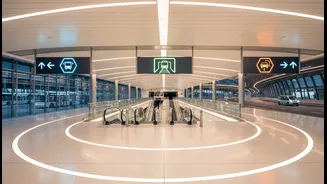
The opening of new terminals at Delhi's IGI Airport and the launch of the Noida International Airport (NIA) in Jewar represent a massive boost in the region's passenger handling capacity. On paper, more runways and gates should mean more flights and less
congestion. However, airport capacity isn't just about physical space; it's about how that space is used every minute of the day. The critical bottleneck isn't the number of terminals, but the number of desirable time slots available for take-off and landing. An airport might be able to handle a flight at 2 PM, but that does little for business travellers who need to be in Mumbai for a 10 AM meeting or families wanting to avoid a 3 AM departure.
The Battle for Prime Time Slots
The heart of the scheduling puzzle lies in 'airport slots'—the specific, regulated permissions for an airline to land or take off at a given time. In high-congestion airports like Delhi, which is a Level 3 coordinated airport, these slots are a scarce and valuable commodity. Every airline wants to fly during peak hours, typically between 5 AM to 9 AM and 4 PM to 8 PM, because that's when most people want to travel. Adding a new runway or terminal doesn't create more 8 AM slots. It simply means there's more physical capacity to handle the flights that can get those slots. The competition remains fierce, forcing airlines to schedule many flights at less convenient, off-peak hours to fully utilise their aircraft.
Airline Economics 101
For an airline, a plane on the ground is a wasted, expensive asset. To maximise profitability, carriers need to keep their aircraft flying as much as possible. This pressure leads to flight schedules that often seem inconvenient. An aircraft might fly a prime morning route from Delhi to Bengaluru, then be scheduled for a less popular mid-afternoon flight to a tier-2 city, followed by a late-night 'red-eye' flight back to a metro. This ensures the plane is constantly generating revenue. While new capacity at airports like NIA might introduce competition and new routes, it doesn't change this fundamental economic driver that leads to bunched schedules and inconveniently timed flights.
The Human and System Bottlenecks
Even with perfect infrastructure, the aviation system is a complex chain of human interactions and processes. Air Traffic Control (ATC) has a finite capacity for managing aircraft safely in the sky, regardless of how many runways are available. Ground staff, baggage handling systems, security personnel, and immigration all have operational limits. As seen during periods of high passenger traffic, even a small disruption can create a cascading effect of delays. For example, new regulations on crew rest times, while crucial for safety, can reduce the number of available pilots and crew, forcing schedule adjustments and cancellations. These operational constraints mean that simply adding concrete and glass doesn't instantly create a seamless, perfectly distributed schedule.
So, What Does New Capacity Change?
This isn't to say that expanding capacity is pointless. The development of Noida International Airport and the ongoing expansion at IGI are vital for the long-term health of aviation in the region. More capacity helps alleviate extreme congestion, provides operational redundancy during disruptions, and can encourage airlines to launch new point-to-point services, particularly to smaller cities. It gives airlines more options and, over time, can help spread demand. However, early trends from NIA show that passenger preference is still heavily influenced by fare prices and ground connectivity, highlighting that a new airport must compete on more than just availability.