






What Exactly Are Auditable Artefacts?
In the world of AI, an 'artefact' isn't a historical relic. It's a digital object that forms part of the AI's development or output. An auditable artefact is a complete, verifiable record of how an AI produced a result. Think of it as a scientist's lab
notebook, but for an algorithm. This doesn't just mean the final code. A true set of auditable artefacts includes the specific version of the AI model used, the exact training and testing data, environment configurations, parameter settings, and the logs of the entire process. The goal is to capture everything needed for another researcher to independently reproduce the same result under the same conditions. Without this, an AI's output is essentially a magic trick—impressive, but not verifiable science.
The Reproducibility Crisis in AI
The demand for auditability isn't new; it stems from a wider problem in the tech world known as the 'reproducibility crisis'. For years, researchers have pointed out that many published AI studies cannot be replicated. One report noted that as much as 70% of AI research was found to be irreproducible. This happens when papers are published with exciting results, but the authors don't share enough detail about their data, code, or methods for others to verify the claims. This slows down genuine scientific progress, as researchers can't reliably build on each other's work. In a field that promises to solve humanity's biggest challenges, building on a foundation that can't be tested or trusted is a significant risk.
Enter Claude Science: A Step Toward Transparency?
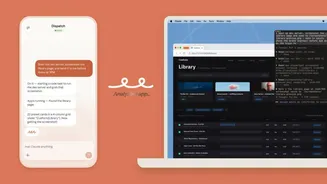
Anthropic, the company behind the Claude models, recently entered this arena with a new product called Claude Science, launched in beta on June 30, 2026. It's not a new AI model, but a dedicated 'workbench' app designed for scientific research, particularly in fields like genomics and proteomics. A key feature promoted by Anthropic is its ability to produce detailed and auditable artefacts. When Claude Science generates a figure or analysis, it is designed to bundle the exact code, environment details, and a plain-language description of how it was made. According to Anthropic, this system is designed to make work easier to validate and reproduce, even months later. It's a direct response to the scientific community's need for tools that don't just generate answers, but also show their work.
How Does It Actually Work?
Claude Science’s approach to reproducibility, which it calls 'Provenance', systematically captures five key pieces of information every time an artefact is created. These include the exact code that was run, specific versions of any input data, the execution log, the resulting output, and even the conversational history with the AI that led to the result. This final element attempts what some call 'cognitive reproducibility'—preserving the chain of reasoning, not just the mechanical steps. The system is designed to integrate with tools scientists already use, like high-performance computing (HPC) clusters, and connect to over 60 scientific databases. By automating the capture of this information, it shifts the burden of documentation from the user to the system itself, aiming to make transparency the default rather than an afterthought.
The Path to Genuinely Trustworthy AI Research
While tools like Claude Science are a significant step forward, achieving true auditability across the AI landscape requires a broader cultural shift. The outputs of any AI, no matter how sophisticated, should be treated with healthy skepticism until verified. Audit trails must be immutable—meaning they cannot be altered after the fact—and comprehensive. For AI to become an indispensable tool in regulated and high-stakes fields like drug discovery or climate science, its outputs can't be a black box. The future of AI-powered research depends less on the raw power of the models and more on the integrity of their processes. Creating and demanding auditable artefacts is the primary way to ensure that AI doesn't just give us answers, but gives us answers we can trust.