



Mistake 1: Skipping the Rinse
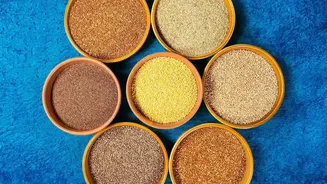
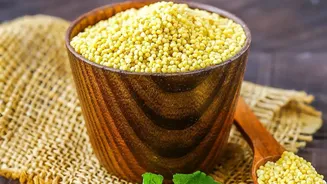
One of the most common yet overlooked steps is thoroughly rinsing your millets. Small grains like foxtail, little, or kodo millet often have a dusty residue, natural husk particles, or a coating of saponins, which can result in a bitter or muddy aftertaste.
Rinsing removes these impurities. To do it correctly, place the millets in a fine-mesh sieve and wash them under cool running water for a couple of minutes, swishing the grains with your fingers. Continue until the water runs clear. This simple act not only cleans the grain but is the first step toward a cleaner, purer flavour in your final dish.
Mistake 2: Not Soaking the Grains
Many home cooks treat millets like rice, tipping them straight from the packet into the pot. This is a crucial error. Soaking is highly recommended and serves several purposes: it softens the tough outer layer, reduces cooking time, and helps the grains cook more evenly. More importantly, soaking helps break down 'anti-nutrients' like phytic acid. This compound can block your body's ability to absorb essential minerals like iron and zinc. For small-grain millets like foxtail and little millet, a soak of 30 minutes to two hours is sufficient. For others like kodo, a longer soak of 6-8 hours is beneficial. Always discard the soaking water and give the millets a final rinse before cooking.
Mistake 3: Guessing the Water Ratio
The single biggest reason for mushy or undercooked millet is an incorrect water-to-grain ratio. Unlike some types of rice, there's no universal rule for all millets; each variety has its own specific need. Too much water will turn your dish into a sticky paste, while too little will leave you with hard, crunchy grains. As a general starting point for a fluffy, rice-like texture, a ratio of 1 cup of small millet to 2 or 2.5 cups of water is effective for varieties like foxtail, little, and barnyard millet. If you want a softer, porridge-like consistency, you can increase the water to 3 or 3.5 cups. Always check the recommendation for the specific millet you are using and measure accurately for consistent results.
Mistake 4: Cooking on High Heat
Patience is a virtue when cooking millets. Blasting them on high heat to speed up the process will backfire. High heat causes the water to evaporate too quickly, leaving the grains at the top undercooked while those at the bottom burn and stick to the pan. The correct method is to bring the water and millet to a boil, then immediately reduce the heat to a low simmer. Cover the pot with a tight-fitting lid and let it cook gently. This slow, even heat allows the grains to absorb the water gradually and swell to a perfect, fluffy consistency.
Mistake 5: Stirring Too Much (or at All)
Once the millet is simmering, resist the urge to peek and stir. Agitating small millets while they cook breaks down the delicate grains and causes them to release excess starch, resulting in a sticky, gluey mess. The only time a stir is needed is once at the beginning, when you first add the millet to the boiling water. After that, put the lid on and leave it alone. The grains need to steam, undisturbed, to cook through properly. This hands-off approach is key to achieving separate, well-defined grains.
Mistake 6: Serving Without a Resting Period
Just like a good steak or a pot of rice, millets benefit immensely from a resting period after cooking. Once you've turned off the heat, let the pot stand, still covered, for at least 5 to 10 minutes. This crucial step allows the residual steam to redistribute throughout the grains, ensuring any remaining moisture is fully absorbed and the texture firms up. Rushing this process and fluffing the grains immediately can break them, leading to a mushier texture. After the rest, gently fluff with a fork to separate the grains before serving.