





The Science of a Rainy Day Craving
Why do we instinctively reach for fried foods when it rains? There's a science to it. The cooler, humid weather can lead to a slight dip in our body temperature and even our mood, as reduced sunlight affects serotonin levels. Our bodies, in turn, seek
warmth and a quick energy boost. Hot, crispy, and often spicy foods provide exactly that. The satisfying crunch of a pakora offers a sensory contrast to the damp, grey surroundings, providing a feeling of comfort and satisfaction. Furthermore, high humidity can make aroma molecules linger in the air longer, making the scent of frying snacks even more irresistible. It's a combination of biology, environment, and pure emotional comfort.
Pakora and Chai: The Perfect Storm
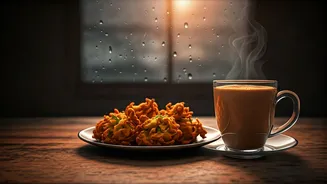
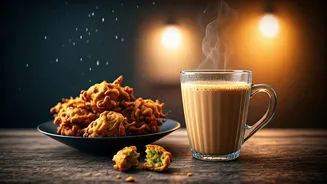
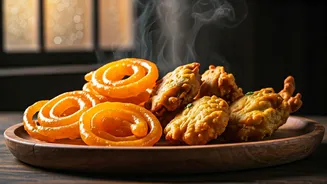
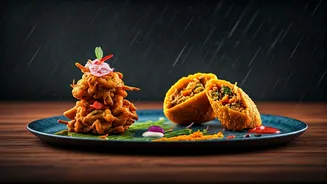
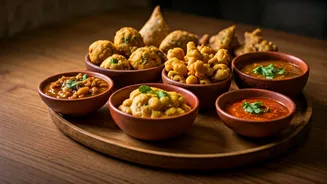
No monsoon food list can begin with anything other than the undisputed king of rainy-day snacks: the pakora. These golden, deep-fried fritters are a national obsession. Whether it's the classic onion (kanda bhaji), potato, spinach, or paneer, each bite is a crunchy, flavourful delight. Made from a seasoned gram flour batter, pakoras are the perfect vehicle for a variety of spices. Paired with a steaming cup of adrak wali chai (ginger tea), this combination is more than a snack; it’s a cultural phenomenon. It represents slowing down, watching the rain from a window, and sharing a simple, joyful moment.
Bhutta: The Scent of the Streets
The smoky aroma of bhutta (corn on the cob) being roasted over hot coals is synonymous with the Indian monsoon. Street vendors, often huddled under a large umbrella, skillfully turn the corn until it's lightly charred. It is then generously rubbed with a mixture of lemon juice, salt, and red chilli powder. This simple preparation creates a perfect balance of sweet, smoky, tangy, and spicy flavours. A healthier alternative to deep-fried snacks, bhutta provides warmth and nostalgia in every bite, making it an essential part of the monsoon street food experience.
Samosa and Kachori: Golden Pockets of Joy
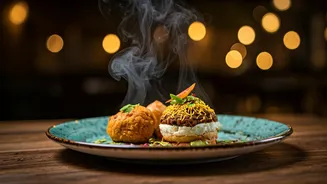
While available year-round, samosas and kachoris take on a special significance during the monsoon. Breaking open the crisp, flaky pastry of a samosa to reveal a steaming, spiced potato and pea filling is a moment of pure bliss. Similarly, the hearty, lentil-stuffed kachori, especially popular in North India, offers a different but equally satisfying crunch and flavour. Served hot with tangy tamarind and spicy mint chutneys, these deep-fried delights are a comforting indulgence that feels custom-made for a cool, rainy evening.
Pav Bhaji and Momos: A Tale of Two Cities
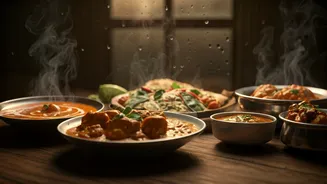
In Mumbai, the monsoon calls for a plate of buttery Pav Bhaji. A rich, flavourful mash of mixed vegetables is served with soft, butter-toasted bread rolls, creating a hearty and fulfilling meal that warms you from the inside out. Further north and in the Northeast, steamed momos have become a monsoon favourite. These delicate dumplings, filled with vegetables or meat and served with a fiery red chutney, offer a lighter yet deeply comforting option. Both dishes, though different, capture the essence of finding warmth and community through food when the skies open up.
A Sweet Ending with Jalebi
To balance the savoury and spicy, the monsoon also demands a touch of sweetness. And what better than hot, crispy jalebis? These bright orange swirls, made from a fermented batter that is deep-fried and then soaked in sugar syrup, are a festival of textures and tastes. The crunch of the outer layer gives way to a chewy, syrup-filled interior. Often paired with rabri (thickened sweet milk), jalebi provides the perfect sweet counterpoint to the saltiness of other monsoon snacks, completing the culinary experience.