






The Anatomy of a Perfect Bite
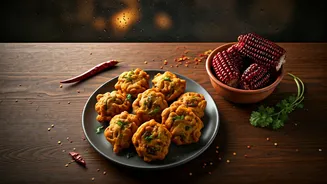
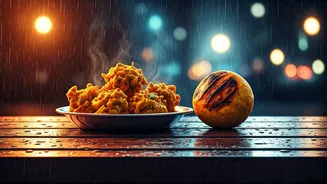
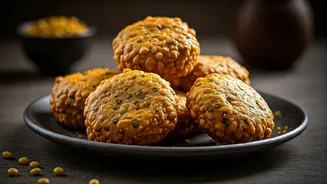
Close your eyes and imagine it. The craggy, golden-brown exterior, promising a satisfying crunch that gives way to a soft, steaming interior. The texture is key: never dense, but airy and light. The flavour is a masterful blend of earthy moong dal, punctuated
by the sharp heat of green chillies, the warmth of ginger, and the fresh, citrusy notes of coriander. Unlike its potato or onion-based cousins, the moong dal pakoda, or *bhajiya*, offers a distinctly savoury, protein-rich profile. It’s a snack that feels both indulgent and substantial, a perfect combination that has cemented its place in India’s culinary hall of fame. Each bite is a multi-sensory experience, a testament to the idea that the simplest ingredients can create the most profound pleasures.
More Than a Monsoon Companion
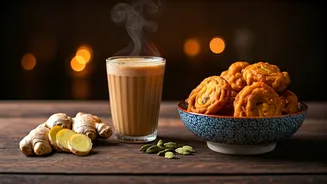
While inextricably linked with the romance of a rainy day, the moong dal pakoda’s appeal is far more versatile. It is a year-round champion. In Delhi’s bustling streets, it’s a breakfast staple. In Mumbai, it’s the quintessential evening tea-time snack, sold by vendors who have perfected their craft over generations. It appears as a welcome appetiser at weddings, a comforting snack during long train journeys, and a festive treat during Holi and Diwali. Its adaptability is its strength. Served hot with a tangy tamarind chutney or a spicy green coriander-mint chutney, it’s a crowd-pleaser that fits seamlessly into any occasion. This isn’t a snack confined to a single season; it’s a constant, reliable source of comfort and joy.
The 'Healthy-ish' Halo Effect
In an era of mindful eating, how does a deep-fried snack continue to 'win big'? The answer lies in its core ingredient: moong dal. As a lentil, it’s packed with plant-based protein and fibre. This gives the pakoda a ‘healthy-ish’ halo that other fried snacks lack. While no one is pretending it’s a health food, the perception is that you’re getting more nutritional bang for your buck. For those looking for a slightly less guilty indulgence, it strikes the perfect balance. This perception has been amplified by modern kitchens, where air-fryers and modified recipes are making it possible to enjoy the beloved texture and taste with significantly less oil. The moong dal pakoda is successfully bridging the gap between traditional cravings and modern wellness trends.
An Icon of Street Food Culture
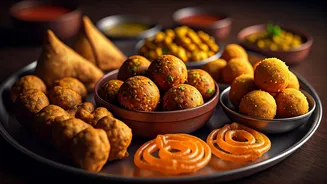
To truly understand its victory, one must go to the streets. Here, the moong dal pakoda is not just food; it’s performance art. It’s the sound of the batter being whipped, the dramatic sizzle as it hits the hot oil in a large *kadhai*, and the rhythmic speed of the vendor scooping them into a paper cone. Street vendors are the guardians of the authentic pakoda experience. They often serve unique variations—some add chopped onions for sweetness, others a pinch of asafoetida for depth, while some in Rajasthan serve them in a curry (*mangodi ki sabzi*). This street-level innovation keeps the snack exciting and relevant. It’s an affordable, accessible, and utterly delicious piece of Indian street food culture that continues to thrive against a backdrop of global food trends.
Nostalgia on a Plate
Ultimately, the biggest win for the moong dal pakoda is emotional. For millions, its taste is inextricably linked to memories. It’s the flavour of childhood, of a grandmother’s love, of sharing stories with friends over a cup of chai. It represents a connection to home and a simpler time. In our fast-paced, globalised world, food that evokes such powerful nostalgia has become more valuable than ever. When we eat a moong dal pakoda, we aren't just consuming a snack; we are tasting a memory. This deep-seated emotional connection is something no new food trend can replicate, ensuring its status not as a fleeting winner, but as a permanent champion.