




The Final Frontier of Medical Science
At its core, space medicine is the science of keeping humans healthy in the most hostile environment known: space. Astronauts face a barrage of health challenges, from muscle atrophy and bone density loss due to microgravity, to the psychological stress
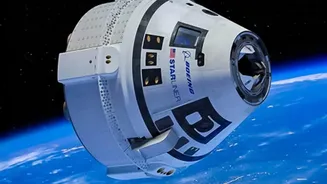
of isolation and exposure to cosmic radiation. Research in this field aims to understand these effects and develop countermeasures, life-support systems, and medical protocols to ensure astronauts can not only survive, but thrive on long-duration missions. This research is becoming increasingly critical as India prepares for its ambitious Gaganyaan mission, which plans to send a crew of three into an orbit of 400 km.
India’s Great Ambition: Gaganyaan and Beyond
The driving force behind India’s focused push into space medicine is the Gaganyaan programme. To support this national endeavour, the Indian Space Research Organisation (ISRO) is collaborating with top medical institutions. A landmark Memorandum of Understanding was signed between ISRO's Human Space Flight Centre and the All India Institute of Medical Sciences (AIIMS) to pioneer research in this domain. This partnership will delve into everything from astronaut physiology and behavioural health to developing specialised medical devices for space. The goal is to build a strong foundation for not just the initial Gaganyaan flights, but also for a future Indian space station and even crewed missions to the Moon.
From Orbit to the Outpatient Department
The extreme constraints of space are a powerful catalyst for innovation, and the solutions developed have profound implications for healthcare on Earth. The physiological changes astronauts experience in microgravity — such as bone loss and muscle weakening — closely mimic the effects of accelerated ageing or prolonged bedrest in patients. Studying these processes in healthy astronauts gives doctors a unique model to understand conditions like osteoporosis and develop better rehabilitation therapies for patients on Earth. Technologies designed to help astronauts cope, like devices that improve blood flow, could be adapted to help patients with circulatory disorders.
Technology Landing in Indian Clinics
The most tangible benefits for Indian doctors lie in technology transfer. The need to monitor astronauts remotely has direct parallels with telemedicine, a crucial tool for bridging the healthcare gap in India's vast rural areas. ISRO has already used its satellite network to connect hundreds of hospitals and run mobile telemedicine units. Furthermore, the requirement for compact, durable, and low-power medical equipment on a spacecraft drives the development of portable diagnostic tools. Imagine miniaturised blood analysers, lab-on-a-chip devices, and portable ultrasound machines—all spinoffs from space research—being used in primary health centres and disaster relief operations across India. ISRO has a history of such transfers, having developed cost-effective artificial limbs and ventilators from its research.
The Future: A New Era of 'Made in India' Healthcare
The collaboration between medicine and space exploration in India is just beginning. Through initiatives like the Health-QUEST program, ISRO is working with a network of hospitals to implement its high-standard quality control processes in critical and emergency care departments to reduce mortality rates. The research being done for Gaganyaan on immunology, nutrition, and mental health in isolation will provide invaluable data applicable to public health challenges on the ground. Even the private sector is getting involved, with startups exploring futuristic concepts like manufacturing pharmaceuticals in the unique microgravity environment of space and bringing them back to Earth. This synergy promises to not only secure the health of India's astronauts but also to foster a new ecosystem of medical innovation.