
India's Next Interplanetary Frontier
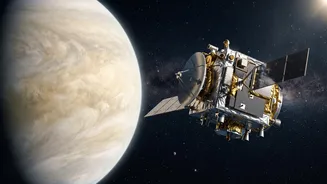
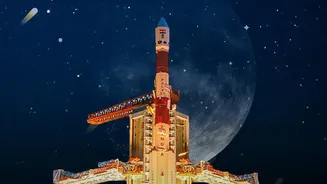
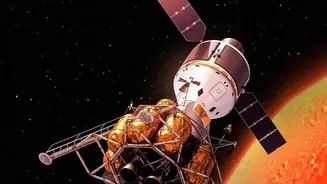
Shukrayaan-1, which translates to "Venus Craft," represents India's first dedicated mission to our neighbouring planet and its second interplanetary venture after the highly successful Mangalyaan Mars orbiter. Formally approved in September 2024, the mission is currently
scheduled for a March 2028 launch aboard the powerful LVM-3 rocket. After a journey of about 112 days, the spacecraft is expected to enter a large elliptical orbit around Venus in July 2028. From there, it will perform a series of aerobraking manoeuvres—using the planet's own atmosphere to slow down and conserve fuel—to settle into a more circular orbit ideal for scientific observation. This mission signals a major step in India's space ambitions, aiming to unravel the mysteries of a planet that, despite its similarities to Earth, followed a dramatically different evolutionary path.
Why Venus? Earth's Hothouse Twin
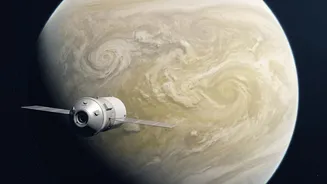
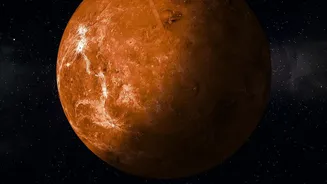
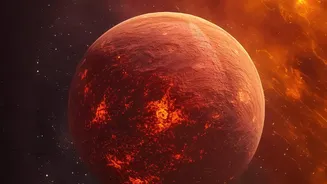
Often called Earth's twin due to its similar size, mass, and density, Venus is a world of extremes. Its surface is the hottest in the solar system, with temperatures soaring to 470 degrees Celsius, hot enough to melt lead. The atmospheric pressure at the surface is over 90 times that of Earth's. The planet is shrouded in thick clouds of sulfuric acid, which have historically made it difficult to observe the surface directly. Scientists believe Venus may have once had oceans, but a runaway greenhouse effect boiled them away, leaving behind the toxic, superheated environment we see today. Studying Venus offers a natural laboratory for understanding how planetary climates evolve and provides critical data for refining our own climate change models. Answering why Earth’s twin became so inhospitable is one of the key drivers for missions like Shukrayaan.
A Closer Look at the Specialized Sensors
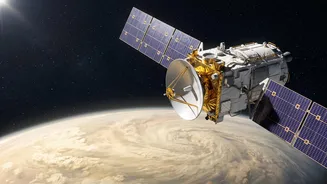
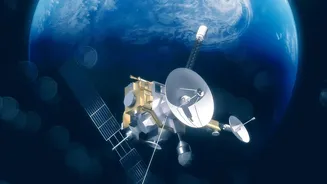
To peer beneath the thick cloud cover and analyze the hostile atmosphere, Shukrayaan-1 will carry a suite of around 19 scientific instruments, with a total payload mass of about 100 kilograms. A key instrument for atmospheric analysis is the Venus Infrared Atmospheric Gases Linker (VIRAL), a collaborative payload from Russia and France, designed to study the composition of the atmosphere in detail. Another critical sensor is the Venus Thermal Camera (VTC), which will map thermal emissions to understand the dynamics of the planet's super-rotating atmosphere. Other instruments will measure the solar wind's interaction with the Venusian ionosphere, search for active volcanic hotspots, and even analyse the chemical makeup of the clouds. These specialized tools are designed to work together to create a comprehensive picture of the planet’s complex systems.
A Collaborative Global Effort
Shukrayaan-1 is not just an Indian mission; it's a testament to growing international cooperation in space science. ISRO has partnered with several international space agencies to enhance the mission's scientific output. The Russian and French space agencies are contributing the VIRAL instrument. The Swedish Institute of Space Physics is providing a Venusian Neutrals Analyzer (VNA) as part of a broader payload to study how the solar wind strips away particles from the planet's atmosphere. Additionally, Germany is collaborating on an instrument to study the ionosphere. These partnerships bring shared expertise and cutting-edge technology to the mission, positioning Shukrayaan-1 as a truly global scientific endeavor and solidifying India's role as a key player in planetary exploration.