






From Transient Hub to Intentional Community
For years, Bali has been a magnet for digital nomads, drawn by its low cost of living, vibrant culture, and idyllic scenery. The scene was largely defined by a transient culture centred around hotspots like Canggu, where cafes and villas served as temporary
offices. But as the remote work movement matures, a growing contingent is seeking more than just a good Wi-Fi connection and a pretty backdrop. They are looking for purpose, connection, and a lifestyle that aligns with their values. This has given rise to a new model: integrated communities designed not just for work, but for conscious living. These spaces, often nestled in the spiritual heartland of Ubud, are moving the needle from individualistic freedom to collective well-being.
The Philosophy of Bamboo
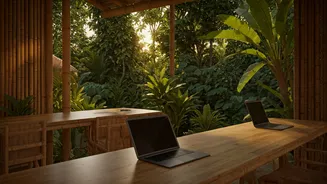
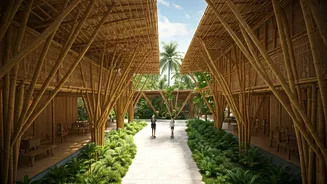
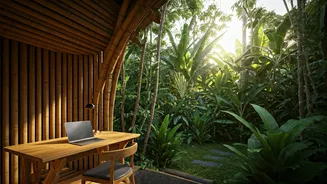
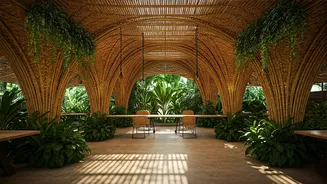
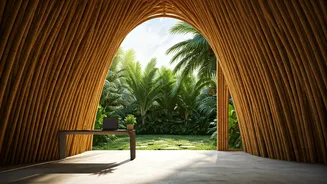
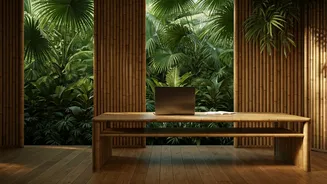
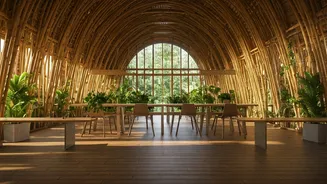
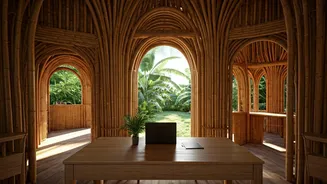
At the core of this shift is a revolutionary approach to architecture, pioneered by visionaries like John and Elora Hardy of Green School and Ibuku fame. They championed bamboo not just as a building material, but as a statement of intent. Bamboo is a fast-growing, sustainable grass that sequesters carbon, making it an exceptionally eco-friendly alternative to concrete and steel. The structures themselves are masterpieces of biophilic design, with swooping organic curves, open-air concepts, and a seamless flow between indoors and outdoors. Working in a multi-storey bamboo cathedral, with jungle sounds filtering in and natural light flooding the space, is a world away from a sterile, air-conditioned office. It’s an environment designed to inspire creativity and foster a connection to nature, reminding its inhabitants of the world they’re a part of.
A Day in a Zero-Waste Workspace
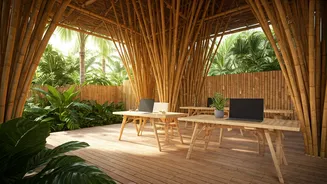
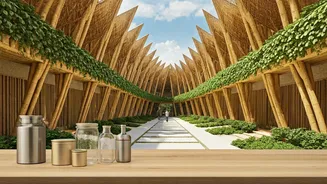
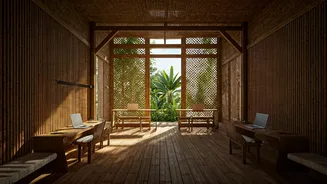
So what is it actually like to work here? A typical day might begin with a morning yoga session overlooking a river, followed by a communal breakfast of locally sourced tropical fruits. The workday happens in a shared bamboo pavilion, where entrepreneurs, designers, and writers collaborate on projects or work quietly amidst the hum of nature. Lunch is often a farm-to-table affair from on-site permaculture gardens. The term “zero-waste” is a guiding principle rather than a strict reality. It manifests in tangible ways: comprehensive composting systems, a complete ban on single-use plastics, water refill stations, and workshops on sustainable living. The focus is on mindful consumption and radical waste reduction, creating a culture where residents are active participants in the ecosystem, not just passive consumers.
More Than Just an Office
This environment fundamentally changes the “vibe” of remote work. The relentless hustle culture that can define digital nomadism is replaced by a slower, more deliberate pace. The emphasis shifts from networking for transactional gain to building genuine friendships. Spontaneous conversations over kombucha can lead to new business collaborations, while evening skill-shares and documentary screenings foster a sense of shared learning. This community-centric model combats the loneliness and isolation that can often accompany a location-independent lifestyle. It provides a support system and a sense of belonging, transforming a solitary work arrangement into a shared journey of personal and professional growth.