


A Day Versus A Year: The Bizarre Math
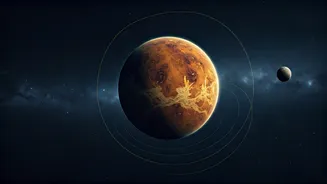
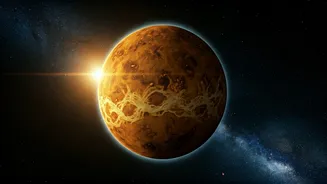
Let’s get the numbers straight, because they are truly baffling. A 'year' on any planet is the time it takes to complete one orbit around the Sun. For Venus, this journey takes about 225 Earth days. Simple enough. But a 'day' is more complicated. If we
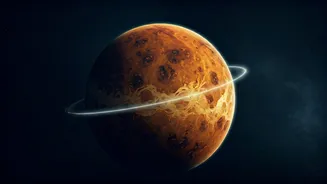
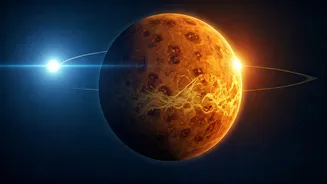
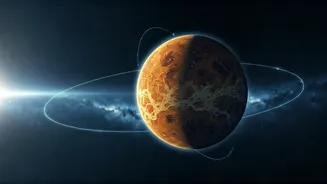
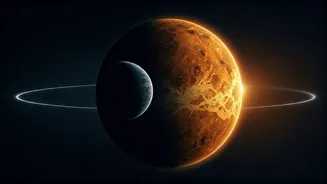
define a day as the time it takes for the planet to rotate once on its axis (a sidereal day), Venus is the slowest in the solar system. It takes a staggering 243 Earth days to complete a single spin. So, yes, a single Venusian day (243 Earth days) is longer than a Venusian year (225 Earth days). Before you could complete one full day-night rotation, you would have already celebrated New Year's Day. To make things even stranger, Venus spins backwards compared to Earth and most other planets, a phenomenon known as retrograde rotation. This means the Sun rises in the west and sets in the east. This backward spin, combined with its long orbit, creates a different kind of day—the solar day (from one sunrise to the next), which on Venus is about 117 Earth days long.
Why The Super-Slow, Backward Spin?
Scientists don't have a single, confirmed answer for Venus's lethargic, backward spin, but there are two leading theories. The first and most widely accepted points to the planet's crushingly dense atmosphere. The Venusian atmosphere is more than 90 times thicker than Earth's and is composed almost entirely of carbon dioxide, creating a runaway greenhouse effect. This super-heavy atmosphere churns with powerful winds and exerts immense pressure and friction on the planet's surface. Over billions of years, this atmospheric drag could have acted like a powerful brake, slowing the planet's rotation to its current crawl. The second theory involves a cataclysmic event in the distant past. Some astronomers hypothesise that one or more massive asteroid impacts could have struck Venus with enough force to not only slow its rotation but completely reverse its direction. While evidence for this is harder to find, it remains a plausible explanation for the planet’s unique motion.
What Would a 'Day' on Venus Feel Like?
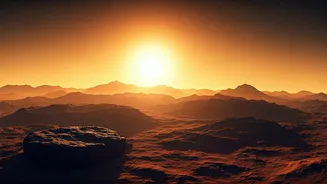
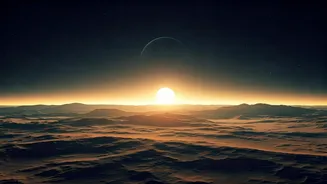
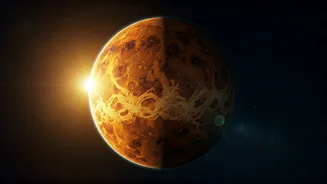
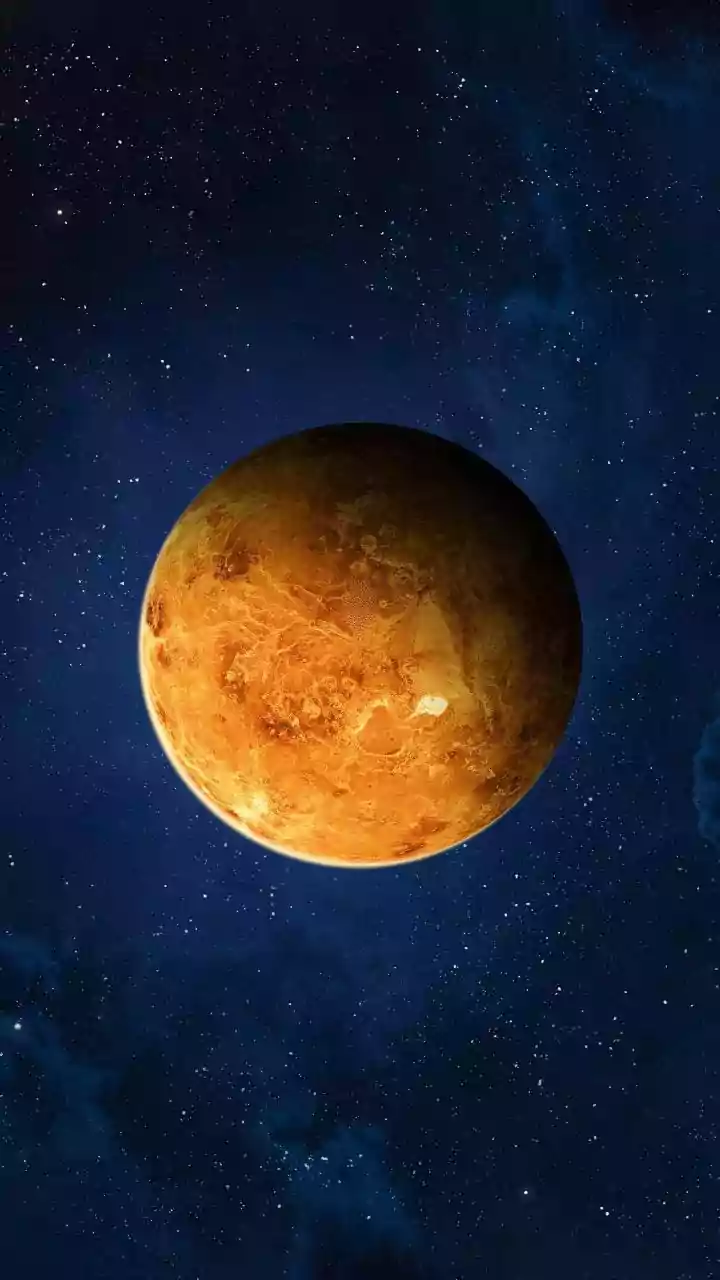
Forget everything you know about a 24-hour cycle. On Venus, you'd experience about 58 straight Earth days of daylight, followed by 58 Earth days of night. But 'daylight' here is a very loose term. The planet is shrouded in a permanent, thick blanket of sulfuric acid clouds that reflect most sunlight back into space. The light that does filter through to the surface creates a perpetual, gloomy twilight, similar to a very overcast day on Earth. You would never see the Sun as a clear disc in the sky. Instead, the sky would just appear as a dim, oppressive, yellowish-orange haze. And because the atmosphere is so effective at trapping and circulating heat, there is almost no temperature difference between day and night, or even between the equator and the poles. The entire planet is always cooked at the same temperature.
Earth's Inhospitable Twin
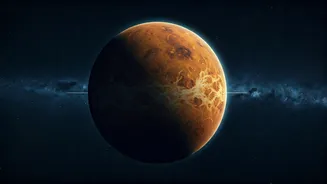
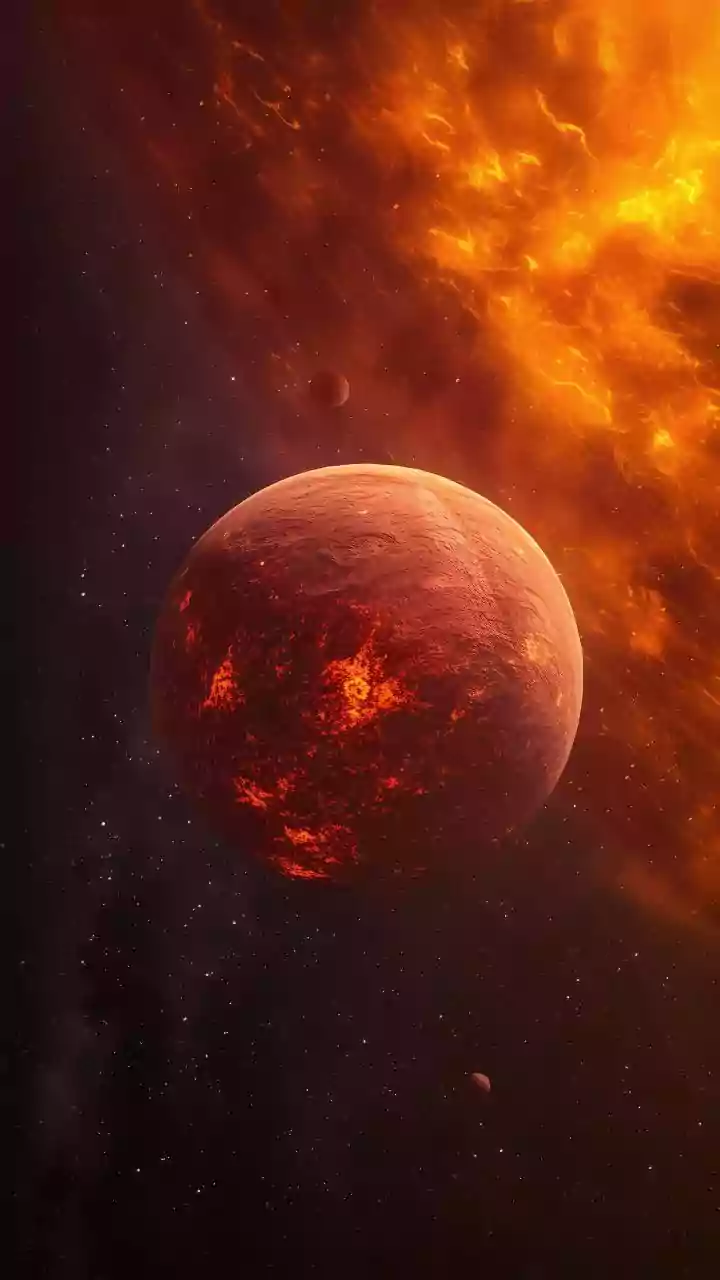
Venus is often called Earth's twin because of its similar size, mass, and composition. But the similarities end there. The conditions on its surface are a vision of hell. The temperature hovers at a consistent 465° Celsius, which is hot enough to melt lead. The atmospheric pressure is over 90 times that of Earth's at sea level—equivalent to the pressure you would feel 900 metres (or 3,000 feet) deep in our ocean. Any spacecraft or probe that has landed there has been crushed and cooked within hours, if not minutes. The bizarrely long day is not just a quirky astronomical fact; it's a direct symptom of the extreme planetary conditions that transformed Venus from a potentially habitable world into the scorching, high-pressure wasteland we see today.