








A Galaxy of Opportunity
Until recently, a career in India’s space sector almost exclusively meant a job with the Indian Space Research Organisation (ISRO). But landmark policy reforms, including the establishment of the Indian National Space Promotion and Authorisation Centre
(IN-SPACe) in 2020 and the Indian Space Policy 2023, have opened the final frontier to private enterprise. This has ignited a startup boom, with over 400 private space companies now registered in the country. The sector's value is projected to skyrocket from around $8.4 billion today to nearly $44 billion by 2033, creating a massive gravitational pull for new jobs and talent.
More Than Just Rocket Science
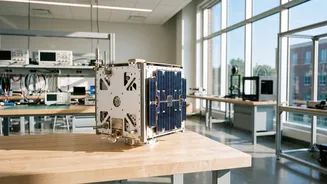
The new space race isn't just about building bigger rockets. A diverse ecosystem of companies is emerging. Firms like Skyroot Aerospace and Agnikul Cosmos are developing launch vehicles, with Skyroot becoming India's first space-tech unicorn in 2026. Others, like Pixxel and GalaxEye, focus on building satellites for Earth observation, providing crucial data for various industries. Companies such as Dhruva Space offer full-stack satellite solutions, while data analytics firms like SatSure are interpreting satellite imagery to provide actionable insights for agriculture and finance. This diversification means the job market is expanding far beyond its traditional confines.
The New In-Demand Roles
While aerospace and mechanical engineers remain crucial, the private space boom is creating a surge in demand for a much wider array of skills. Software is at the heart of modern space missions, making aerospace software engineers who are proficient in C++, Python, and embedded systems highly sought after. Satellite data analysts are needed to make sense of the vast amounts of information beamed down from orbit, using GIS tools and machine learning to tackle everything from climate change to urban planning. The industry is also creating jobs in robotics, AI, advanced materials science, and propulsion systems. This talent search extends to non-technical fields as well, with a growing need for professionals in space law, finance, and project management.
Skilling Up for a Stellar Career
This rapid expansion is creating a significant demand for skilled professionals, with some companies already facing a talent shortage. To bridge this gap, a focus on specific skill sets is essential. Core engineering degrees in aerospace, mechanical, and electronics provide a strong foundation. However, supplementing this with programming skills, data literacy, and a systems-thinking approach is becoming critical for success. The fast-paced, collaborative nature of startups also places a high value on soft skills like communication, problem-solving, and teamwork. Recognizing this need, states like Tamil Nadu are introducing policies to generate thousands of high-value jobs through dedicated 'Space Bays' and industrial clusters.
A Multiplier Effect on the Economy
The impact of the private space sector extends far beyond direct employment. Studies show that for every dollar the space sector produces, it generates a multiplier effect of $2.54 in the broader Indian economy. The growth of space-tech startups fuels ancillary industries, driving job creation in manufacturing, logistics, and IT services. This economic ripple effect is helping to build a self-reliant and globally competitive ecosystem. Prime Minister Narendra Modi has highlighted the goal of making India a global hub for space careers, attracting talent from around the world and even reversing brain drain as Indian professionals return from abroad to join this exciting new industry.