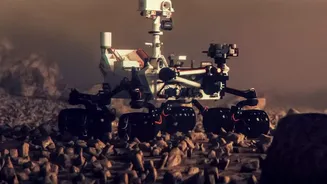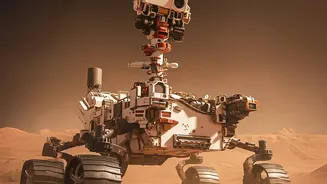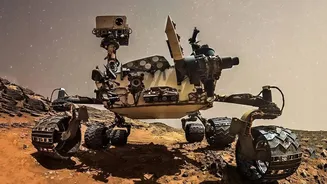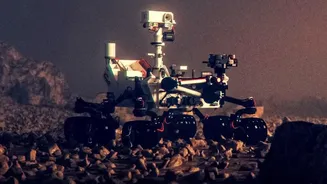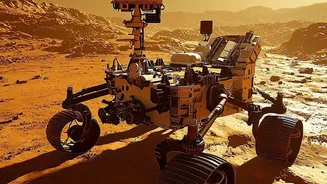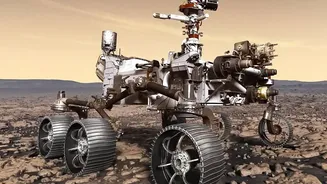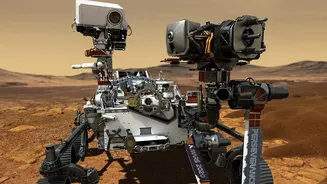




NASA is rebooting its ambitious plan to bring pieces of Mars to Earth. A new initiative, the Perseverance Sample Retrieval Architecture (PSRA), aims to solve the complex puzzle of retrieving the precious rock and soil samples collected by a rover.
What is the PSRA Plan?
The
Perseverance Sample Retrieval Architecture, or PSRA, is NASA's latest effort to solidify a workable strategy for the Mars Sample Return (MSR) mission. Announced in early November 2026, this initiative marks a fresh start for a program that has faced significant challenges, including ballooning cost estimates and shifting timelines. An independent review previously pegged the mission's cost at a staggering $11 billion with a return date of 2040, which NASA officials deemed unacceptable. The PSRA team, set to kick off its work in January 2027, is tasked with developing impartial recommendations for how to retrieve the samples, assessing mission requirements, and evaluating all possible options to make the mission more affordable and timely. It represents a critical pivot, forcing a thorough re-evaluation of one of the most complex robotic missions ever conceived.
A Treasure Trove on Mars
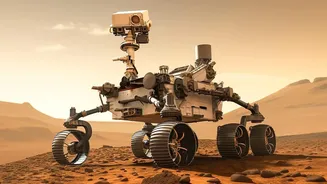
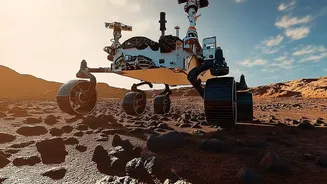
Since its landing in February 2021, the Perseverance rover has been diligently collecting a priceless geologic collection from Jezero Crater, an ancient lakebed that may hold clues about past life on Mars. The rover is equipped to drill and seal cigar-sized cores of rock and soil into 38 titanium tubes. This collection is incredibly diverse, including igneous rocks that can be used to date the planet's geologic history and sedimentary rocks from the ancient river delta that could preserve the chemical signatures of microbial life. More than half the tubes have already been filled with these irreplaceable specimens, creating a scientific treasure trove waiting for retrieval. These samples are humanity's best chance to answer a fundamental question: were we ever alone in the universe?
An Interplanetary Relay Race
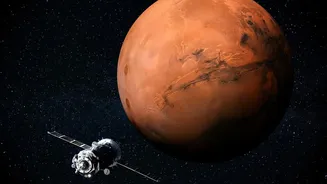
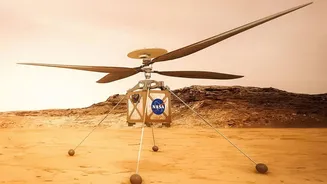
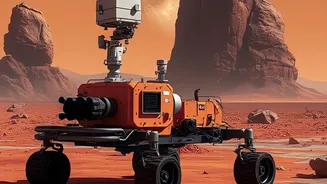
Bringing the samples home is a feat of engineering that resembles a multi-stage interplanetary relay race. The original concept, a joint effort with the European Space Agency (ESA), involved three major launches from Earth. First, a Sample Retrieval Lander would touch down on Mars. A small 'fetch rover', provided by ESA, would then scurry across the surface to collect the tubes left by Perseverance. Next, the fetch rover would load the samples into a Mars Ascent Vehicle (MAV), a small rocket that would perform the first-ever launch from the surface of another planet, placing the sample container into Mars' orbit. Finally, an Earth Return Orbiter, also from ESA, would rendezvous with the orbiting sample container, capture it, and fly it back to Earth, releasing it for a landing in the Utah desert. The PSRA will now review every aspect of this complex architecture to identify efficiencies and new approaches.
Hurdles and a New Urgency
The primary driver behind the PSRA initiative is the immense cost and complexity of the original plan. NASA has been open about the need for a more streamlined, affordable, and faster approach, even soliciting ideas from commercial partners. Beyond budgetary pressures, there is a new sense of urgency. China is moving forward with its own Mars sample return mission, Tianwen-3, which aims to launch around 2028 and return samples to Earth as early as 2031. This has been described by some as a potential 'Sputnik moment', adding a layer of geopolitical competition to the scientific endeavor. The PSRA's review will need to balance scientific goals with engineering reality and a ticking clock.
Why It's Worth the Effort
Despite the challenges, the scientific consensus is that Mars Sample Return is one of the most important space science goals of our time. For all their sophistication, robotic rovers are limited in what they can analyze onsite. Bringing the samples back to Earth will allow scientists worldwide to study them using the most powerful and advanced laboratory equipment available—instruments far too large and complex to send to Mars. These analyses could revolutionize our understanding of planetary formation, the history of water and climate on Mars, and, most profoundly, whether life has ever existed beyond Earth. The mission is also a critical stepping stone for future human exploration, testing technologies and strategies needed to one day send astronauts to the Red Planet and bring them home safely.