



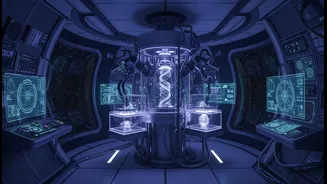



Bioastronautics: The Science of Life in Space
Bioastronautics is a specialised, interdisciplinary field focused on ensuring the health, safety, and performance of humans in the extreme environment of space. Researchers in this area study the physiological and psychological effects of space travel,
such as microgravity, cosmic radiation, and isolation. The goal is to develop countermeasures, life-support systems, and medical technologies to protect astronauts. With ISRO's Gaganyaan mission aiming to demonstrate human spaceflight capability, the demand for experts who can tackle these challenges is critical for the long-term success of India's space exploration goals. This field represents a unique intersection of medicine, biology, and engineering.
The New Fellowship: A Direct Entry Point
The most significant recent development is India's first Postdoctoral Fellowship Programme in Bioastronautics. This is a direct collaboration between ISRO's Human Space Flight Centre (HSFC) and the Sree Chitra Tirunal Institute for Medical Sciences and Technology (SCTIMST) in Thiruvananthapuram. Launched in July 2026, this two-year program is designed to train specialists from the ground up. Selected fellows will conduct research and undergo specialised training at both institutions—the HSFC in Bengaluru and SCTIMST in Thiruvananthapuram. The program aims to build a new generation of scientists and doctors dedicated to making human spaceflight safer and more sustainable. This represents the most formalised 'training matrix' for bioastronautics researchers in the country.
Who is Eligible to Apply?
The postdoctoral fellowship is highly specialised and aimed at candidates with advanced qualifications. Eligibility is open to researchers holding postgraduate medical degrees (MD), super-speciality medical qualifications, or PhDs in relevant scientific and technological disciplines. While the exact 'relevant disciplines' can be broad, they typically fall within life sciences, biomedical engineering, physiology, and related fields. The program is competitive, with only two fellows set to be selected annually, starting with the July 2026 academic session. Aspiring candidates should monitor the official SCTIMST website for detailed advertisements and curriculum information.
Broader Pathways Through ISRO
Beyond the new fellowship, post-graduates can also aim for scientist and engineer roles directly within ISRO centres like the HSFC. ISRO periodically announces recruitments through its Centralised Recruitment Board (ICRB). These positions often require a Master's degree (M.E./M.Tech) or a PhD in specific engineering or science disciplines. The selection process for these roles typically involves a written test followed by an interview. In some cases, a valid GATE score can be used for shortlisting candidates for an interview. While not exclusively for bioastronautics, researchers with relevant backgrounds in life support systems, human factors engineering, and biomedical instrumentation can find opportunities within the broader human spaceflight program. Keeping a close watch on the ISRO Careers portal is essential for these opportunities.
The Key Institutions to Watch
Several key institutions form the core of India's bioastronautics and space medicine ecosystem. The Human Space Flight Centre (HSFC) in Bengaluru is the lead centre for the Gaganyaan mission and all human-centric space activities. The Institute of Aerospace Medicine (IAM), an Indian Air Force facility also in Bengaluru, is another critical hub. IAM has a long history of aeromedical research, aircrew evaluation, and was involved in the medical evaluation for India’s first cosmonaut. The collaboration with SCTIMST, which now hosts a dedicated Centre for Space Medicine Research, solidifies the academic-research link crucial for this field. Aspiring researchers should familiarise themselves with the work and publications coming out of these three pillar institutions.