



The New Traffic Jam Is in Orbit
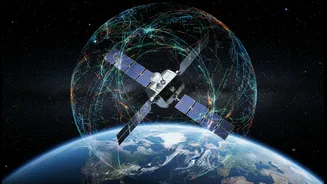
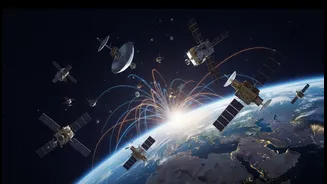
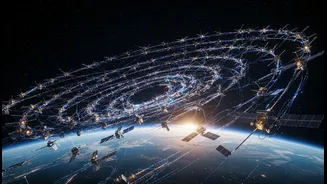
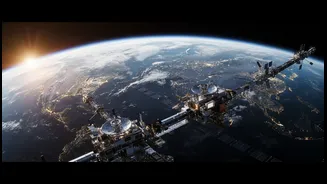
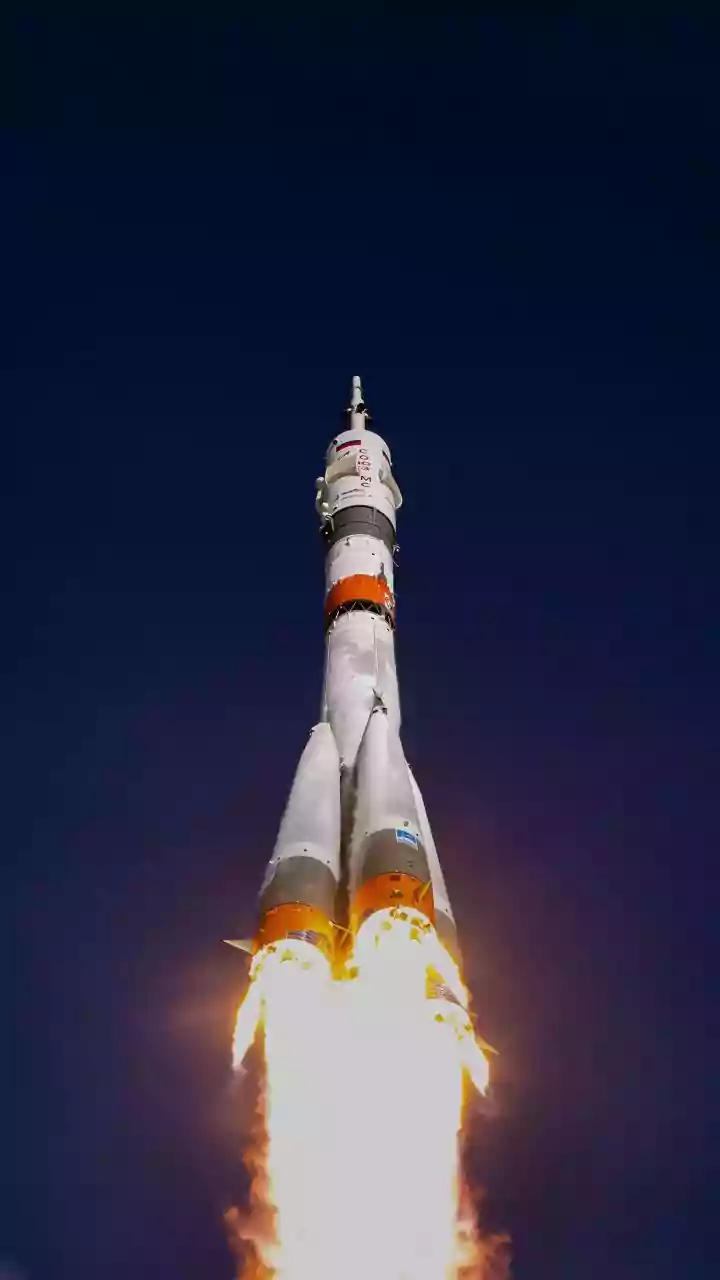
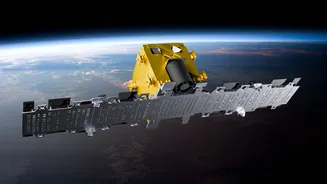
The modern space race isn't about planting flags; it's about deploying vast networks of satellites. Companies like SpaceX's Starlink, Amazon's Project Kuiper, and OneWeb are launching thousands of satellites into low-Earth orbit (LEO). As of early 2026,
SpaceX alone operates over 9,800 active satellites, with plans for tens of thousands more. These mega-constellations are designed to provide global broadband internet, connect remote communities, and power a new generation of data services. The global space economy is projected to exceed a trillion dollars by 2040, driven largely by these satellite services. This satellite boom has transformed manufacturing and launch services, but it has also created an unprecedented concentration of critical, and vulnerable, assets in orbit.
An Invisible, Ever-Present Threat
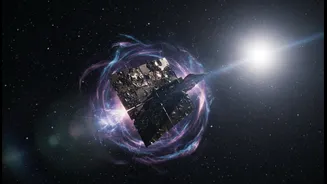
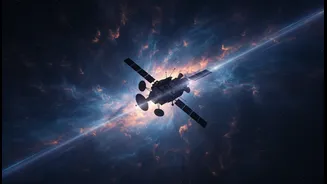
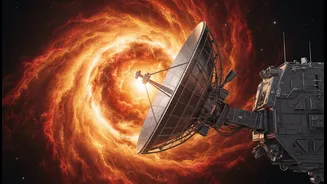
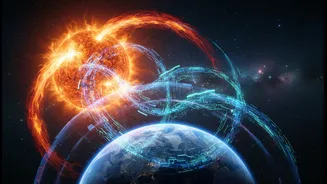
The primary danger to these constellations isn't collision, but the Sun itself. 'Space weather' refers to the stream of charged particles and radiation flowing from the Sun. This includes phenomena like solar flares, which are intense bursts of radiation, and coronal mass ejections (CMEs), which are massive eruptions of solar plasma. When this activity is directed at Earth, it can wreak havoc. For satellites, the main risks are radiation damage to sensitive electronics, surface charging that can cause electrical faults, and increased atmospheric drag. During a geomagnetic storm, the Earth's upper atmosphere heats and expands, increasing the density at LEO altitudes. This sudden, thicker atmosphere acts like a brake, causing satellites to lose altitude faster than expected.
When Satellites Falter, We All Feel It
The consequences of space weather are not abstract. In February 2022, a relatively modest geomagnetic storm caused increased atmospheric drag that led to the loss of up to 40 newly launched Starlink satellites, which were unable to climb to their operational orbit and burned up on reentry. This event was a wake-up call for the industry. Disruptions can also directly impact life on Earth. Space weather can degrade or block GPS signals, affecting everything from aviation and shipping to precision agriculture. It can interfere with high-frequency radio communications used by airlines and disrupt power grids on the ground by inducing unwanted electrical currents. As our dependence on satellite infrastructure grows, so does our vulnerability to these solar outbursts, especially as the sun enters a period of heightened activity known as Solar Cycle 25.
Why Rocket Science Isn't Enough
Building robust satellites is crucial, but engineering alone cannot solve the problem. While spacecraft can be shielded from some radiation, protecting them completely from extreme solar events is impractical and prohibitively expensive. The challenge is less about building an indestructible satellite and more about operating a fragile one in a dynamic, hazardous environment. Rocket engineers are experts at getting spacecraft into orbit, but navigating the ever-changing conditions of that orbit is a different discipline entirely. Knowing a solar storm is coming and understanding its potential impact allows operators to take protective measures, such as temporarily shutting down sensitive components or performing orbital maneuvers to counteract drag. This is not a hardware problem; it's a forecasting and operational intelligence problem.
Enter the Space Weather Forecaster
This is where the space weather expert comes in. Much like a terrestrial meteorologist, a space weather forecaster analyzes data from solar observatories and satellites to predict solar activity and its potential effects on Earth and the near-space environment. These professionals monitor the Sun for solar flares and CMEs, run complex models to predict their trajectory and intensity, and issue warnings to affected industries. Their role is to translate raw solar physics data into actionable advice for satellite operators, power grid managers, and airlines. The demand for these skills is growing rapidly, with the space weather forecasting market expected to become a multi-billion dollar industry driven by the expansion of commercial satellite operations. Government agencies like NOAA and the US Space Force, as well as private companies, are actively hiring for these roles.