
The Undying Legend of Jatayu
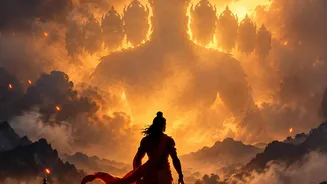
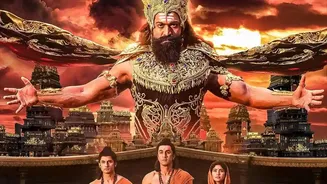
The story is one of the most dramatic moments in the Ramayana. As the demon king Ravana abducts Sita and carries her away to Lanka in his flying chariot, he is intercepted by Jatayu, an old friend of King Dasharatha, Rama's father. Despite his age, the great
bird fights valiantly but is ultimately overpowered when Ravana clips his wings. Mortally wounded, Jatayu falls to the earth, living just long enough to inform Rama and Lakshmana of Sita's abduction and the direction of Ravana's flight, providing a crucial clue in their quest. This act of selfless bravery has cemented Jatayu as a symbol of loyalty and the protection of honour. Several places across India are associated with this poignant episode, each with a unique local tradition that keeps the story alive.
Kerala's Monumental Tribute
Perhaps the most spectacular modern tribute to the legend is the Jatayu Earth's Center in Chadayamangalam, Kerala. This tourism centre is home to the world's largest bird sculpture, a colossal concrete figure of Jatayu measuring 200 feet long, 150 feet wide, and 70 feet high. Designed by filmmaker and sculptor Rajiv Anchal, the statue doesn't depict a triumphant warrior but the fallen hero, lying on his back with wings clipped, powerfully conveying his sacrifice. The site, which local lore says is the very rock where Jatayu fell, has been transformed into a major attraction. Visitors can reach the hilltop via a cable car and explore a museum and a multi-dimensional theatre inside the sculpture itself. The park also blends mythology with modernity, offering adventure sports like rock climbing and ziplining, all while promoting eco-tourism with features like rainwater harvesting and solar power.
Lepakshi: Where a Hero Was Asked to Rise
Another primary site in the Jatayu trail is Lepakshi, a historic village in Andhra Pradesh. According to regional tradition, this is where the wounded Jatayu landed. The name 'Lepakshi' itself is believed to derive from the Telugu phrase 'Le Pakshi', meaning 'Rise, Bird'—the words Lord Rama supposedly spoke to the dying hero. While the area is famous for the 16th-century Veerabhadra temple with its stunning Vijayanagara-era architecture and murals, the connection to Jatayu is a deep part of its identity. A newer, striking sculpture of Jatayu has been installed on a rocky hill, adding another layer to the town's mythological landscape. Unlike the Kerala sculpture, the one in Lepakshi often depicts an upright, alert Jatayu. The site is also home to a large footprint in the rock, which local belief attributes to Sita or Hanuman, further intertwining the location with the epic narrative.
A Pan-Indian Story
The story of Jatayu resonates far beyond Kerala and Andhra Pradesh, with several other locations laying claim to parts of his final moments. In Tamil Nadu, the Vijayaraghava Perumal temple in Thiruputkuli is revered as the place where Rama performed Jatayu's last rites, with a sacred water body named Jatayu Tirtham marking the spot. Another temple near Kumbakonam is also considered a 'Jatayu Moksha Sthalam', or a place of salvation for the great bird. Farther north, in Maharashtra, a temple near Nashik is believed by some to be where Jatayu fell, and a nearby water body is said to have been created by Rama's arrow to quench the dying bird's thirst. Each of these sites, whether a grand tourist centre or a quiet temple pond, serves as a physical anchor for the epic, turning a mythological story into a lived, regional experience passed down through generations.