


Mapping Lunar Safe Havens
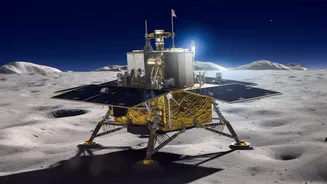
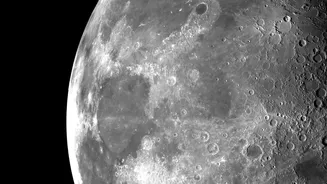
A recent study led by NASA scientists reveals a fascinating and complicating reality for future lunar exploration: parts of the Moon are not as hostile to life as once thought. Using detailed data from NASA's Lunar Reconnaissance Orbiter, researchers
modeled the environmental conditions at several candidate landing sites near the lunar south pole. The results, published in the journal Science Advances, identified specific "survivable niches" where some of Earth's toughest microbes could persist. These are not vast, thriving ecosystems, but rather small pockets, some no larger than an astronaut's bootprint, that offer just enough protection from the Moon's harsh environment.
The Moon's Cold Traps
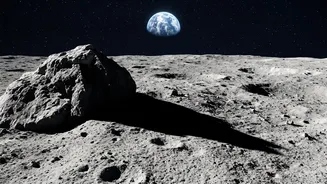
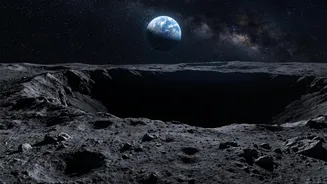
The key to this surprising survivability lies in the unique topography of the lunar poles. Unlike the Moon's equatorial regions, which were visited during the Apollo missions and are blasted by extreme temperatures and radiation, the poles are a different world. Because the sun is always low on the horizon, crater rims and ridges cast long, permanent shadows. These Permanently Shadowed Regions, or PSRs, are some of the coldest places in the solar system. While intensely cold, these areas are also shielded from the sterilizing effects of direct solar ultraviolet radiation, creating stable conditions where certain life forms might endure in a dormant state.
Earth's Toughest Travelers
So, what kind of life are we talking about? The study focused on five types of microbes known for their resilience and common presence on spacecraft. These aren't your average germs; they are extremophiles, organisms that thrive in conditions that would kill most other life. The researchers modeled the survival of bacteria like Bacillus subtilis and Deinococcus radiodurans, but a fungus proved to be the champion survivor. Aspergillus niger, a common black mold, was found to be especially resilient, with its thick walls and dark pigments offering protection against radiation. In the simulations, it was able to survive even in areas with some limited sunlight exposure.
A Challenge for Artemis
These findings have significant implications for NASA's Artemis program, which aims to land astronauts near the south pole and establish a sustained human presence. Humans are natural microbe-shedders; on average, a patch of skin the size of a pencil eraser hosts about a million bacteria. These organisms can escape from spacesuits and habitats, potentially contaminating the lunar surface. The primary concern is forward contamination: the introduction of Earth life could corrupt the pristine lunar environment. This could make it incredibly difficult for scientists to determine if any organic compounds or signs of life they discover are truly lunar in origin or just our own biological fingerprints left behind.
The Importance of Planetary Protection
This research underscores the critical importance of planetary protection, the practice of preventing biological contamination between celestial bodies. While the models show microbes could survive, they don't suggest they could thrive, grow, or reproduce, as key ingredients like liquid water are absent. Still, their persistence is enough to warrant concern. The findings might lead to stricter sterilization protocols for landers, rovers, and tools headed for these sensitive regions. It forces a delicate balance: how do we explore these fascinating and resource-rich polar regions without irrevocably altering them? As scientists have noted, our first explorations of these sites must be done with extra care, working hard to characterize the Moon's chemistry before our visits change it forever.