
The Most Dangerous Moments
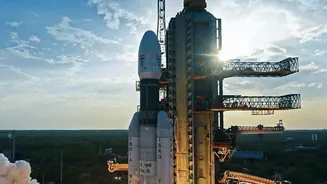
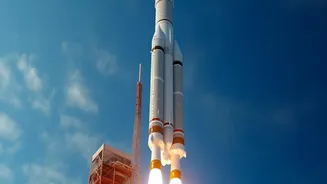
A rocket launch is a spectacle of controlled power, but the ascent phase—the first few minutes of flight—is statistically the most dangerous part of any space mission. The launch vehicle is under extreme aerodynamic pressure and structural loads as it
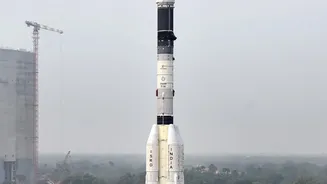
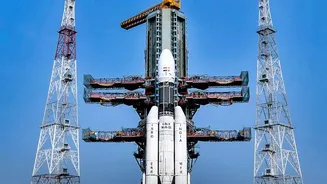
accelerates to hypersonic speeds. For Gaganyaan, the human-rated LVM3 rocket's powerful solid-fuel boosters cannot be shut down once ignited. If a critical failure occurs, there is no option to simply turn the rocket off. The only choice is to get the crew away from the malfunctioning vehicle, and do it instantly. This is where the emergency abort system becomes the astronauts' most crucial lifeline.
A Lifeboat for the Sky
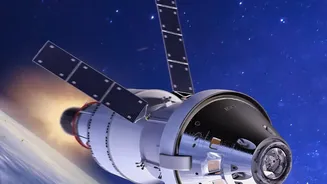
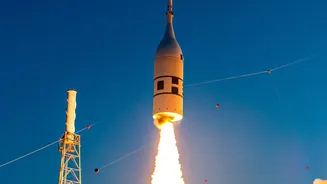
At the very top of the Gaganyaan rocket sits the Crew Escape System (CES), a specialised tower packed with its own powerful, quick-acting solid motors. Its sole purpose is to serve as a 'lifeboat' for the sky. If the rocket's onboard health monitoring system detects a catastrophic anomaly—like a loss of thrust or a structural failure—the CES is designed to activate in milliseconds. It uses what's known as a 'puller' system, where the escape tower fires its motors to literally pull the Crew Module, containing the astronauts, away from the main rocket stack. This approach is similar to the systems used on the historic Apollo and Soyuz missions.
Handling Every Scenario
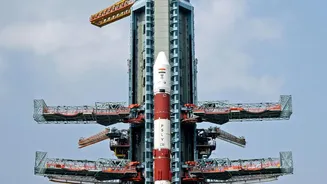
An abort can be triggered at different, perilous moments, and the CES is built to handle them. The first is a 'pad abort', where an emergency occurs while the rocket is still on the launchpad. In this event, the CES would fire to lift the Crew Module up and away from the pad, reaching a safe altitude before deploying parachutes for a landing nearby. A more complex scenario is an 'in-flight abort', which could happen during ascent. The system must be able to function at various altitudes and speeds, including the transonic phase (around the speed of sound), where aerodynamic forces are most intense. The CES is engineered to have greater acceleration than the launch vehicle itself, ensuring it can outpace any disaster unfolding below.
A Symphony of Motors and Parachutes
The Crew Escape System isn't a single motor but a carefully orchestrated set of them. It includes a high-altitude escape motor and a low-altitude escape motor, each designed for different abort profiles. It also has pitch motors that steer the capsule onto a safe trajectory away from the failing rocket's path. Once the CES has pulled the Crew Module to a safe distance, it jettisons, and a complex sequence of parachutes begins. Drogue chutes deploy first to stabilise and slow the capsule, followed by the main parachutes that ensure a gentle splashdown in the ocean, well within the physiological limits of the crew.
Proving It Works: The TV-D1 Mission
Designing such a system is one thing; proving it works is another. ISRO has subjected the CES to a rigorous series of tests. The most significant of these was the Test Vehicle Abort Mission-1 (TV-D1), conducted in October 2023. In this crucial test, a dedicated test vehicle was launched to an altitude of about 17 km, where an in-flight abort was deliberately triggered at transonic speed. The test successfully demonstrated the entire sequence: the CES fired flawlessly, separated the Crew Module, and the capsule descended under parachutes for a safe recovery from the Bay of Bengal. This mission was not a simulation but a real-world validation of the system that will protect India's future astronauts, proving the technology's readiness for the ultimate challenge of human spaceflight.