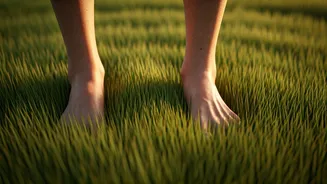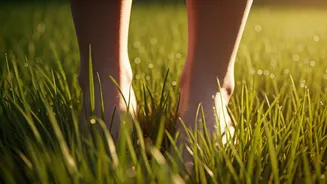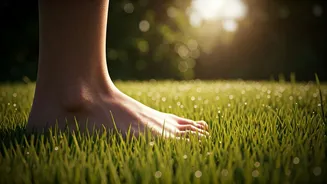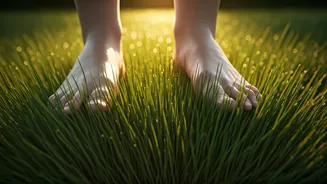






More Than Just a Walk in the Park
In our modern lives, our feet are almost always encased in shoes, walking on hard, flat surfaces. This can weaken the intricate network of muscles, ligaments, and nerves in our feet, leading to a cascade of issues that travel up the body, often contributing
to poor posture. The idea of walking barefoot, also known as 'earthing' or 'grounding', suggests that reconnecting with natural surfaces can offer benefits. While some claims about absorbing the earth’s energy are still being explored, the biomechanical advantages of barefoot walking are well-documented. It's less about magic and more about mechanics; by freeing your feet, you reawaken the body's natural foundation.
The Science of Your Soles
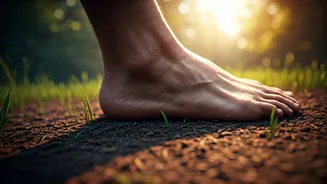
Your foot is an engineering marvel, containing 26 bones, 33 joints, and over 100 muscles, tendons, and ligaments. When you walk barefoot on an uneven, soft surface like grass, you activate these components in a way that shoes prevent. The small, intrinsic muscles in your feet have to work harder to grip the ground and maintain balance. This strengthens the arches and improves ankle stability. Furthermore, the thousands of nerve endings in your soles receive a wealth of sensory information from the ground—a process called proprioception. This heightened feedback helps your brain better understand your body's position in space, allowing it to make subtle, automatic adjustments to improve balance and alignment.
Building Posture From the Ground Up
So, how does strengthening your feet translate to a straighter spine? Think of your body as a building. If the foundation is weak or unstable, the entire structure will be compromised. Weak feet can lead to fallen arches, which may cause your ankles to roll inward. This misalignment continues up the kinetic chain, affecting the position of your knees, hips, and ultimately, your pelvis and spine. Over time, the body compensates for this poor foundation, leading to the rounded shoulders, forward head position, and lower back pain we associate with bad posture. By strengthening the feet and improving proprioception, barefoot walking helps build a stronger, more stable base. This allows your entire body to align more naturally, reducing strain on your back and encouraging a more upright posture without conscious effort.
What About the Damp Grass?
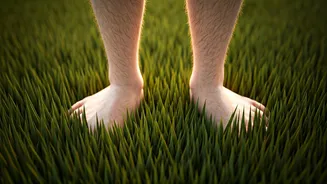
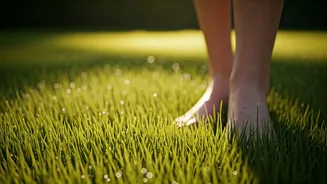
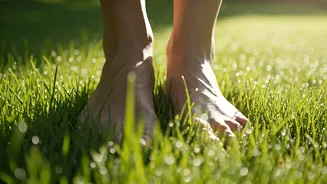
The 'damp grass' element adds another layer. The coolness and moisture provide a rich sensory experience that can be both calming and stimulating for the nerves in your feet. The softness of the grass is more forgiving on your joints than pavement, making it an ideal surface for beginners. From a wellness perspective, many people find the experience of feeling the cool, dewy earth to be mentally grounding and stress-reducing—a form of natural mindfulness. While the debate around the health benefits of 'earthing' continues, the immediate physical and mental benefits of walking on a soft, natural surface are undeniable.
Your Guide to Getting Started Safely
Ready to give it a try? Start slowly. Your feet have likely been 'asleep' in shoes for years, so they need time to adapt. Begin with just 5-10 minutes a day on a clean, safe patch of grass in a park or your garden. Always scan the area for sharp objects like glass, stones, or thorns before you start. Pay attention to how your body feels. You might notice some initial soreness in your feet or calves—this is normal as you begin to use dormant muscles. Listen to your body and don't push through sharp pain. If you have pre-existing foot conditions like plantar fasciitis or diabetes-related neuropathy, it is essential to consult with a doctor or physiotherapist before you begin. The goal is to gently re-engage with your body, not to force a change overnight.