



A Tale of Two Faces
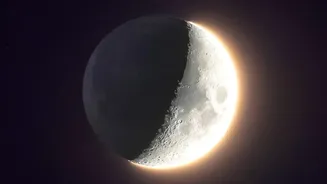
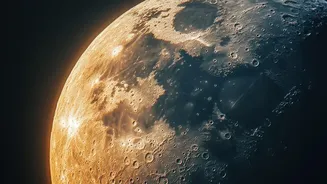
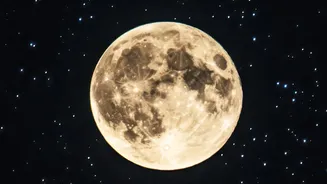
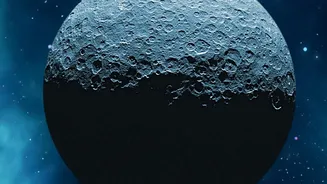
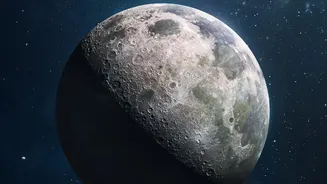
Ever since Soviet and American probes gave us our first glimpse in the 1960s, scientists have been puzzled by the Moon's dual personality. The near side, the face tidally locked to always point toward Earth, is relatively smooth. It’s dominated by vast,
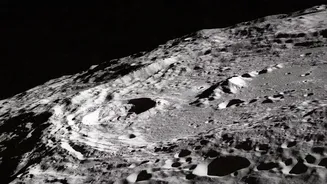
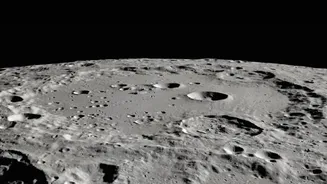
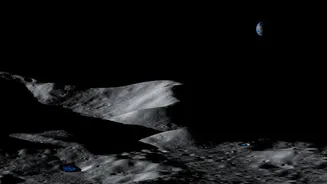
dark plains of volcanic rock called 'maria' or seas. The far side, however, couldn't be more different. It is a rugged, mountainous landscape, almost entirely covered in a chaotic tapestry of impact craters, with very few maria to be found. The crust on the far side is also significantly thicker. For decades, the question has been: why?
The Giant Impact Clue
Most theories have pointed to the Moon's violent past. The leading suspect for this asymmetry has long been a colossal impact that occurred billions of years ago. On the far side sits the South Pole-Aitken (SPA) basin, one of the largest and oldest known impact craters in the entire solar system. Stretching roughly 2,500 kilometres across, this single impact was so immense it may have played a pivotal role in the Moon's entire geological evolution. Early theories correctly guessed this event was important, but a cohesive model explaining how an impact on one side could so drastically alter the opposite side remained elusive.
A New Gravitational and Thermal Link
Recent research provides a compelling answer that connects the far side's giant crater to the near side's smooth plains. According to computer simulations, the cataclysmic impact that formed the SPA basin didn't just carve out a hole; it created a massive plume of heat that radiated through the Moon’s interior. This wave of intense heat propagated through the lunar mantle, the layer beneath the crust, creating a hemisphere-scale effect. This thermal plume was the engine that began to reshape the entire Moon from the inside out. This idea provides the crucial link between the two hemispheres.
The Journey of 'KREEP'
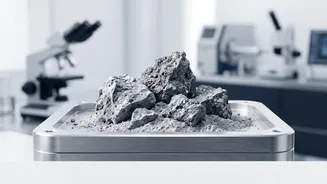
As this heat plume travelled, it carried a unique cocktail of materials with it. Scientists refer to this geochemical component as KREEP, an acronym for potassium (K), rare-earth elements (REE), and phosphorus (P). These are 'incompatible' elements, meaning they don't easily fit into crystal structures and tend to stay in the last dregs of cooling magma. The heat from the SPA impact essentially swept up this KREEP-rich material, which also contained radioactive, heat-producing elements like thorium. This material, as one scientist described it, rode the wave of heat 'like a surfer' from the far side impact zone and became concentrated beneath the crust of the near side.
Forging a New Face
The arrival of this concentration of radioactive, heat-producing elements on the near side had profound consequences. This extra heat weakened the crust from below, making it thinner than its far-side counterpart. This created a geologically active environment where magma from the mantle could more easily push through to the surface. Over millions of years, vast amounts of basaltic lava erupted, flooding the great basins and creating the smooth, dark maria that define the 'Man in the Moon' we see today. The far side, lacking this concentration of extra heat, retained its thicker crust, which was strong enough to resist widespread volcanism, preserving its ancient, cratered surface.