


An Unlikely Masterpiece
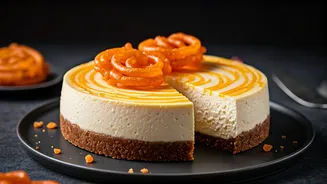
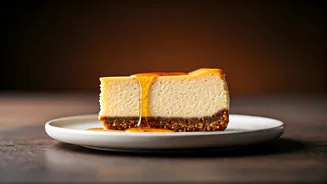
Imagine a dessert that looks, at first glance, like a classic New York cheesecake. It’s perched on a buttery biscuit base, with a smooth, pale, and invitingly creamy top. But then you see it: nestled within or sitting proudly on top, a glistening, syrupy
orb of gulab jamun. For many, the first reaction is skepticism. How can two such dominant, beloved, and fundamentally different desserts coexist in one dish? One is the epitome of Western decadence—cool, tangy, and rich. The other is a cornerstone of Indian mithai—intensely sweet, spongy, and soaked in fragrant syrup. It seems like a clash of titans, a recipe for a sweet, chaotic mess. But that first spoonful dispels all doubt. It’s not a clash; it’s a conversation.
Deconstructing the Magic
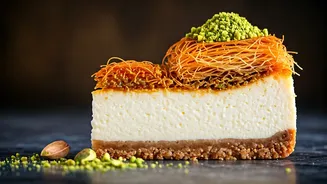
The success of the Gulab Jamun Cheesecake lies in its brilliant, almost architectural construction. The base is often a simple digestive biscuit crust, providing a crunchy, slightly salty foundation that is crucial for texture. Above it lies the star: the cheesecake layer. This isn't just any sweet cream; it’s a baked or no-bake concoction of cream cheese, which carries a distinct, gentle tang. This tanginess is the secret weapon. It slices through the formidable sweetness of the gulab jamun, providing a much-needed counterpoint. And then, the main event: the gulab jamun itself. When you cut into a slice, you find soft, syrup-laden pieces embedded within the creamy filling. Every bite delivers a symphony of textures—crunch from the base, velvet from the cheese, and a soft, yielding sponginess from the gulab jamun. The flavour profile is a journey: first the cool creaminess, then the familiar, cardamom-scented sweetness of the jamun, all rounded off by a satisfying, savoury crunch.
A Tale of Two Traditions
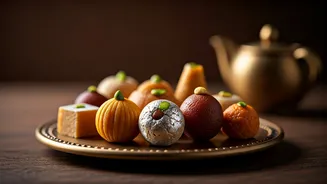
This dessert is more than just a clever combination; it's a tribute to two rich culinary heritages. The cheesecake, with its roots in ancient Greece but perfected in 20th-century New York, represents a global ideal of sophisticated indulgence. It’s a blank canvas, adaptable and universally loved. The gulab jamun, on the other hand, is deeply rooted in Indian culture. Made from khoya, deep-fried, and soaked in sugar syrup, it’s a celebratory sweet, synonymous with festivals, family gatherings, and pure, unadulterated joy. By bringing them together, the creator of this dessert didn't just mix ingredients; they braided two culinary histories. It speaks to a new kind of confidence in the Indian culinary scene—one that isn't afraid to play with tradition, reinterpret classics, and create something that is both nostalgic and boldly contemporary.
Why It's More Than a Gimmick
In an era of Instagram-driven food trends, it’s easy to dismiss fusion creations as gimmicks designed for a quick photo. We’ve all seen questionable combinations, from dosa burgers to curry pizzas. But the Gulab Jamun Cheesecake endures because it is born of a genuine understanding of flavour dynamics. It solves a problem that each dessert has on its own for some palates. For those who find cheesecake a bit bland, the gulab jamun adds a jolt of exciting, aromatic sweetness. For those who find gulab jamun overwhelmingly sweet, the tart cream cheese provides perfect balance, allowing you to enjoy more than just one. It’s a thoughtful, intelligent pairing that elevates both components, creating a dessert that is arguably better than the sum of its parts. It has moved from a novelty item in trendy cafes to a permanent fixture on dessert menus across the country, a testament to its genuine appeal.