





Start With The Walls: Look for Telltale Stains
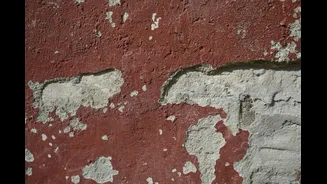
Begin your inspection by walking the perimeter of your home and looking closely at the exterior walls. Water has a habit of leaving clues. Look for dark streaks, discoloured patches, or staining, which often indicate that water is seeping behind the exterior surface.
Another key sign is paint that is bubbling, peeling, or flaking. This happens when moisture builds up underneath the paint layer, causing it to lose adhesion. Also, pay attention to any areas that have developed fungus, moss, or mould, as this is a major red flag for moisture that isn't drying out properly and could lead to decay.
Identify Efflorescence: The White, Powdery Clue
If you spot a white, chalky substance on your brick, concrete, or stone walls, you're likely looking at efflorescence. This powdery deposit is formed by salt crystals left behind after water has travelled through the masonry and evaporated. On its own, efflorescence is mostly a cosmetic issue and can often be brushed off. However, its presence is a clear signal that water is infiltrating the surface. If it reappears consistently after cleaning, it points to a persistent moisture problem that needs to be addressed, such as poor drainage or inadequate sealing, which could weaken the structure over time.
Inspect Your Balcony's Structure and Surface
Balconies are particularly vulnerable to water damage. Start by examining the surface for cracks, especially any wider than a hairline. These can be direct entry points for water. Look for signs of spalling, where chunks of concrete or stucco are chipping or breaking off; this can mean water has penetrated and is corroding the internal steel rebar. Check for any areas where water puddles instead of draining away. An often-overlooked sign is how the balcony feels underfoot. If it seems bouncy, sags, or feels unstable, it could indicate that water has rotted wooden supports or corroded steel reinforcements, compromising its safety.
Check Railings and Drainage Systems
Your balcony's railings are a critical safety feature. Push on them to ensure they are firm and not wobbly. Look for rust stains on or below railing posts and fasteners, which signal that water is getting into these penetration points. Next, examine the drainage system. The joint where the balcony deck meets the building is a highly vulnerable area. It should be sealed with metal flashing to direct water away. Check this flashing for any signs of rust, corrosion, or separation from the wall, as a compromised seal allows water to get in behind the surface. Ensure any drains or scuppers are clear of leaves and debris so water can escape freely.
Understanding Cracks: Cosmetic vs. Structural
Not all cracks are a sign of impending doom. Small, hairline vertical cracks (less than 1/16 inch) are often cosmetic, resulting from the normal curing and shrinkage of concrete. These are generally not a major concern, though they should be sealed to prevent water entry. However, certain patterns demand immediate attention. Horizontal cracks in a foundation or retaining wall are serious, as they can indicate pressure from the soil outside. Diagonal, 'stair-step' cracks that follow the mortar joints in brickwork often point to uneven settling of the foundation. Any crack that is wider than 1/8 to 1/4 inch, is actively growing, or shows one side as being higher than the other should be evaluated by a professional.
When to Call a Professional
A thorough visual inspection can reveal a lot, but some issues require an expert eye. You should call a structural engineer if you discover large, expanding cracks (especially horizontal or stair-step ones), a balcony that feels unstable or is sagging, or walls that appear to be bulging or leaning. Persistent water damage signs that reappear despite your cleaning efforts also warrant a professional diagnosis to find the root cause. While it may seem like an extra cost, hiring a professional for a structural assessment is a small price to pay to prevent a potential catastrophic failure and ensure the long-term safety and stability of your home.