



The Engine of Affordability
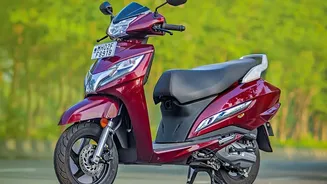
The primary driver behind the dominance of two-wheelers is simple economics. For a vast majority of Indians, cars remain a significant financial leap. The initial purchase price of an entry-level motorcycle or scooter is a fraction of that of the cheapest
car. This affordability extends to running costs; two-wheelers offer vastly superior fuel efficiency, with many commuter models delivering between 50 to 70 kilometres per litre, a crucial factor when fuel prices are a constant household concern. Furthermore, maintenance, insurance, and the cost of spare parts are all significantly lower. This combination makes them the most financially accessible and practical personal mobility solution for millions of middle-class and lower-middle-class households.
Built for Urban Gridlock
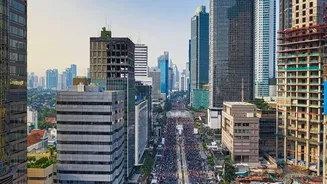
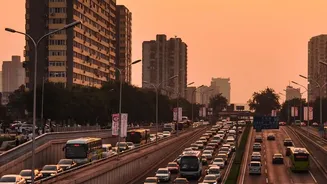
Indian cities are often a complex maze of old, narrow lanes and unplanned development, coupled with modern, traffic-clogged arterial roads. In this environment, the compact size and agility of a two-wheeler are not just a convenience but a necessity. Their ability to manoeuvre through dense, slow-moving traffic, filter between larger vehicles, and access constricted spaces is a key advantage. While a car might be stuck in a jam for extended periods, a scooter or motorcycle can often find a path forward, drastically reducing commute times. Parking is another major urban challenge where two-wheelers excel; they require minimal space, an invaluable trait in cities where finding a parking spot for a car can be an expensive and time-consuming ordeal.
Solving the Last-Mile Puzzle
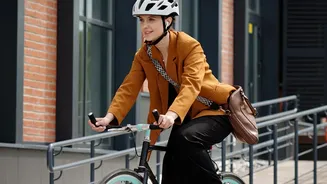
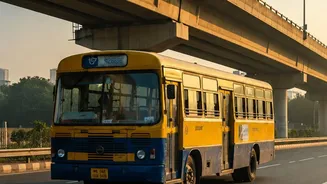
Even as cities like Delhi, Mumbai, and Bengaluru expand their metro rail networks, a persistent problem remains: last-mile connectivity. Commuters often find that while the metro can cover the bulk of their journey, getting from their home to the station and from the destination station to their office is a significant challenge. Existing public transport options like buses can be unreliable or overcrowded, and other alternatives may be unaffordable for daily travel. Two-wheelers perfectly bridge this gap. They provide a flexible, on-demand solution for these short-distance trips, integrating seamlessly with mass transit systems and making public transport a more viable option for a larger number of people.
The Backbone of the Gig Economy
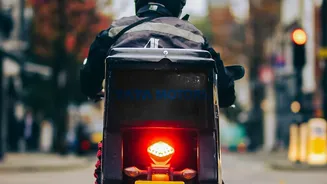
The explosion of the gig economy—powered by food delivery apps, e-commerce platforms, and hyperlocal courier services—is inextricably linked to the two-wheeler. These services rely on a massive, mobile fleet capable of making quick, point-to-point deliveries in congested urban environments. Motorcycles and scooters are the perfect vehicles for this work: they are low-cost to operate, nimble enough to navigate traffic, and can be easily parked for quick drop-offs. This symbiotic relationship has not only fueled the growth of the delivery sector but has also created employment for millions, further cementing the two-wheeler's role in the urban economic fabric. Projections indicate this sector could add millions of two-wheelers to the roads in the coming years.
The Hidden Costs of Convenience
Despite their clear advantages, the heavy reliance on two-wheelers comes with significant downsides. From a safety perspective, riders are far more vulnerable in accidents than occupants of a car. More pressingly, the environmental impact is substantial. Two-wheelers are a major source of urban air and noise pollution. Studies have shown that emissions from motorcycles, particularly older models that are poorly maintained, can be disproportionately high, contributing significantly to hazardous PM2.5 levels in cities. While newer emission standards like BS-VI aim to mitigate this, the sheer volume of two-wheelers on the road means their collective environmental footprint remains a critical challenge for urban planners and public health.