




Why Humid Weather Is Pest Paradise
High humidity, especially during the Indian monsoon, creates a perfect breeding ground for many common plant pests. The constant moisture allows fungal diseases like powdery mildew to thrive and encourages populations of sap-sucking insects to explode.
On balcony plants, you're most likely to encounter pests like aphids, mealybugs, spider mites, and whiteflies. These pests feed on plant sap, weakening your plants, causing yellowing leaves, and leaving behind a sticky residue that can attract other problems like sooty mould.
The Gardener's Ally: Understanding Neem Oil
Neem oil is a natural extract from the seeds of the neem tree (Azadirachta indica), a plant native to India and revered for centuries. Its power lies in a compound called Azadirachtin. This isn't a harsh chemical that kills instantly; instead, it works in multiple clever ways. It acts as an antifeedant, making leaves unpalatable to pests. It also disrupts their life cycle, interfering with their hormones, preventing them from maturing and reproducing. For soft-bodied insects like aphids and mealybugs, the oil can also work on contact by coating and suffocating them.
The Safe & Non-Scorching Ratio
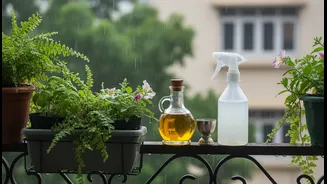
The single biggest mistake gardeners make with neem oil is using a concentration that is too high, which can burn or scorch plant leaves. A safe, effective, and non-scorching ratio for general preventative care and for treating mild infestations is simple to mix. For a standard 1-litre spray bottle, use the following recipe: 5 ml of 100% cold-pressed neem oil; 1-2 ml of a mild liquid soap (like a gentle dish soap or castile soap); and 1 litre of warm water. The soap is crucial; it acts as an emulsifier, allowing the oil and water to mix properly, as they won't on their own. Always use a fresh batch; the mixture loses its effectiveness after about 8 hours.
Step-by-Step Mixing and Application
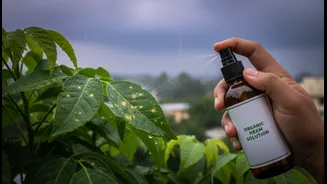
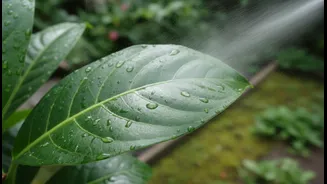
Getting the application right is just as important as the mixing. First, start with warm water in your spray bottle. Add the liquid soap and shake gently to dissolve it. Then, add the neem oil and shake vigorously to create a milky, uniform solution. The best time to spray is in the late evening or very early morning. Applying neem oil in direct, hot sunlight is a primary cause of leaf burn. Before treating the entire plant, always perform a patch test: spray a small, inconspicuous leaf and wait 24 hours to see if there is any negative reaction. If the leaf looks fine, proceed with spraying the entire plant. Be thorough, ensuring you cover the tops and, most importantly, the undersides of all leaves, as this is where pests love to hide. Don't forget the stems and the surface of the soil.
Frequency and When to Be Cautious
For preventative care during humid months, a light spraying every 10 to 14 days is sufficient. If you have an active infestation, you will need to be more diligent, applying the spray every 5 to 7 days until the pests are gone. While neem is widely considered safe, some plants can be sensitive. Plants with delicate, thin, or hairy leaves—such as certain herbs like basil and parsley, some ferns, and young seedlings—may be more susceptible to damage. This is why the patch test is a non-negotiable step. Also, avoid spraying plants that are already stressed from underwatering or recent transplanting.