






What Are Perovskite Tandem Panels?
For decades, silicon has been the undisputed king of the solar panel world. But now, a new contender is emerging: perovskite. Perovskite isn't a brand, but a class of materials with a specific crystal structure. What makes them so exciting for solar energy
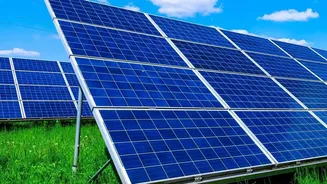
is their incredible ability to absorb light. A tandem solar panel takes the best of both worlds by layering a thin, semi-transparent film of perovskite on top of a traditional silicon cell. This combination creates a powerful, dual-layer device that can capture more energy from sunlight than either material could on its own. This innovative approach is pushing solar technology beyond its previous limits.
The Power of Two Layers
The magic of tandem panels lies in how the two layers work together to harvest more of the sun's energy. Sunlight is made up of a spectrum of different colours, or wavelengths, of light. The top perovskite layer is specifically 'tuned' to absorb the high-energy parts of the spectrum, like blue and green light. The remaining lower-energy light, such as red and infrared, passes through the perovskite and is then captured by the silicon layer underneath. In a standard silicon-only panel, much of that high-energy light is wasted as heat. By splitting the job, the tandem cell converts a much wider range of the solar spectrum into electricity, dramatically increasing its overall efficiency.
A Leap in Solar Efficiency
This dual-layer approach results in a major jump in power conversion efficiency—the measure of how much sunlight is converted into usable electricity. While conventional silicon panels are approaching their practical limit of around 24-25% efficiency, perovskite-silicon tandem cells are shattering records. Laboratory prototypes have already surpassed 34% efficiency, and just this month, Indian manufacturer GREW Solar announced a partnership with Caelux to produce tandem modules aiming for efficiencies of over 29%. For a homeowner, higher efficiency is a huge win. It means a panel can generate significantly more power from the exact same amount of roof space. This makes solar a viable option even for homes with limited or partially shaded roofs.
The Impact on Your Power Bill
The connection between higher efficiency and lower bills is direct and powerful. A more efficient solar panel system generates more kilowatt-hours (kWh) of electricity over the course of a year. Every kWh your panels produce is one less you have to buy from your utility company. This translates into substantial savings on your monthly power bills. Furthermore, because you get more power per panel, you might be able to meet your home's energy needs with a smaller, less expensive system. Research suggests a highly efficient tandem panel could produce electricity at the same lifetime cost as a standard silicon panel, even if the upfront price is higher, leading to a quicker return on your initial investment.
The Road to Your Roof
So, when can you install these next-generation panels? The technology is moving from the lab to the factory floor. The biggest historical challenge for perovskites has been durability, as early versions could degrade when exposed to heat and moisture. However, recent breakthroughs in material science and encapsulation are rapidly solving these stability issues. Companies like Oxford PV have already begun commercial distribution, though initial supplies are focused on the commercial sector. Indian manufacturers are also gearing up, with partnerships targeting commercial production around 2028. While not yet a standard off-the-shelf option for most residential installers, industry experts believe perovskite tandem panels will become a mainstream, premium choice for homeowners within the next few years.