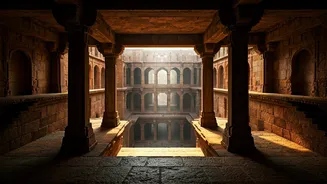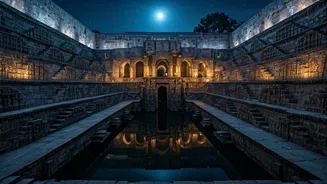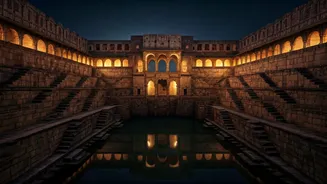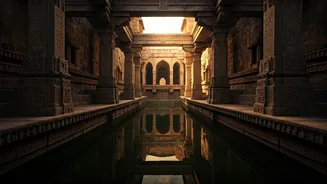





Why Stepwells Are Better After Dark
Stepwells, or 'baolis' and 'vavs', are more than just historical water sources; they are subterranean architectural marvels, designed as places of community, refuge, and worship. During the day, they are fascinating. But as the sun sets, a different kind
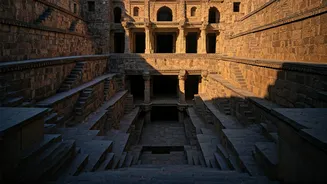
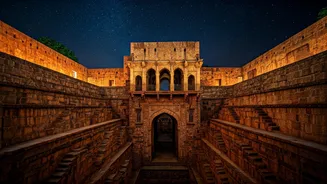
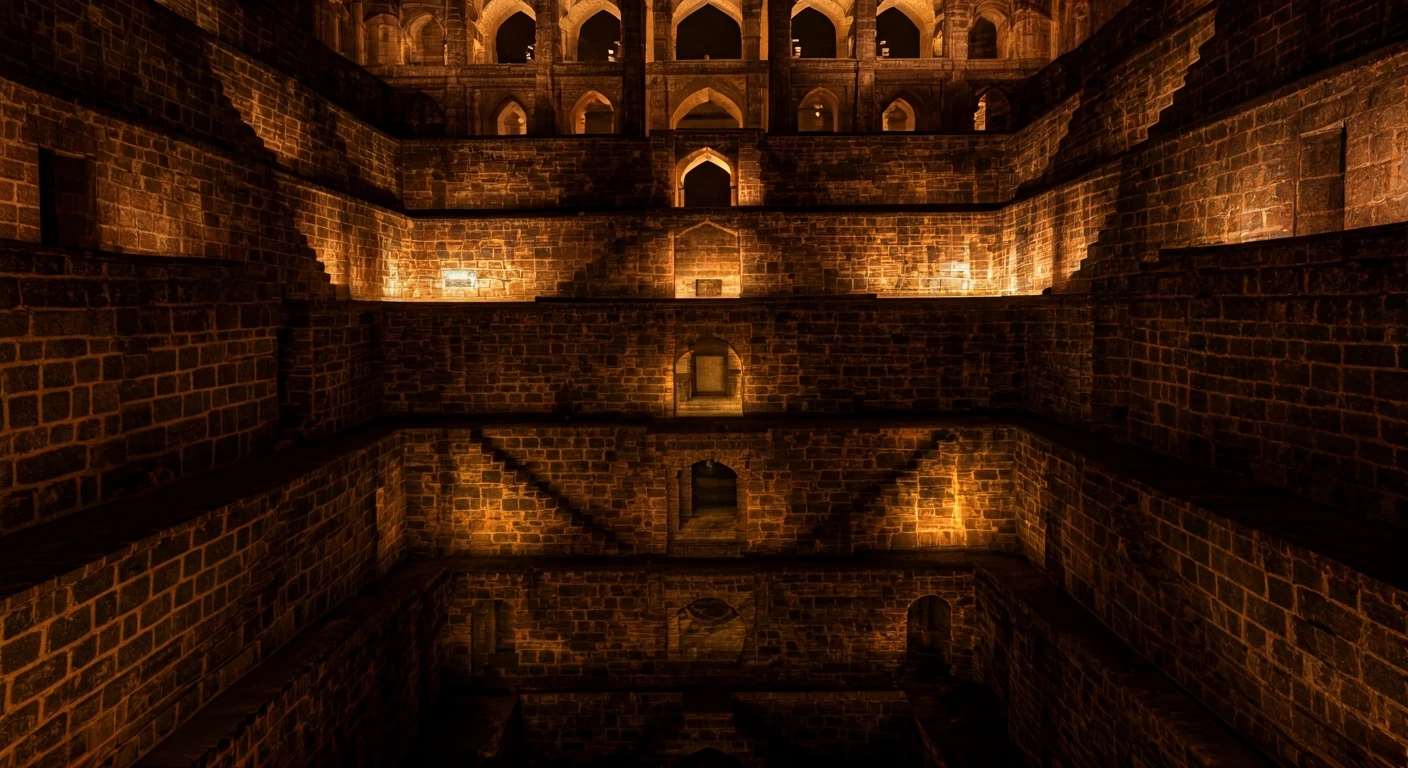
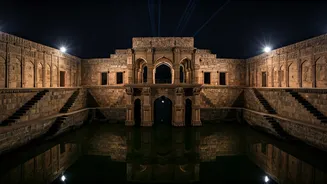
of beauty emerges. The harsh sunlight gives way to soft, dramatic shadows that accentuate the geometric precision and intricate carvings. The oppressive heat is replaced by a cool, calm atmosphere. The crowds thin out, leaving you with an intimate, almost spiritual connection to centuries of history. While a literal 'midnight crawl' is rare due to visiting restrictions, experiencing these sites at dusk or during special illuminated evenings offers a glimpse into this enchanted world.
The Geometric Dream: Chand Baori, Rajasthan
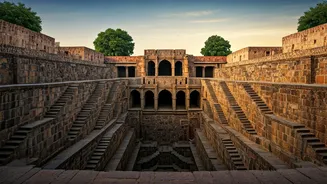
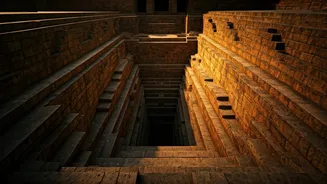
Located in the village of Abhaneri, Chand Baori is one of the world's most visually stunning stepwells. Its 3,500 narrow steps, arranged in perfect symmetry, descend 13 stories into the earth. Visiting as evening approaches is a photographer’s dream. The setting sun casts long, dramatic shadows across the terraces, creating a mesmerising Escher-like pattern of light and dark. The sheer scale and geometric perfection feel even more profound in the quiet of dusk. While the well itself closes to visitors in the early evening, the nearby village and the views from the perimeter as the light changes offer a truly unforgettable experience. It's less of a 'crawl' and more of a contemplative farewell to the day.
The Queen's Legacy: Rani ki Vav, Gujarat
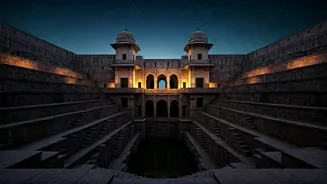
A UNESCO World Heritage Site, Rani ki Vav (the 'Queen's Stepwell') in Patan is not just a well, but an inverted temple. It's a breathtaking showcase of Maru-Gurjara architectural style, with over 500 principal sculptures and a thousand minor ones lining its seven levels. While public access at night is generally reserved for special occasions and festivals like the Rani ki Vav Festival, it’s during these times the monument truly comes alive. The structure is often magnificently illuminated, highlighting the exquisite details of the carvings depicting deities, celestial beings, and daily life. Seeing this subterranean palace lit against the night sky is a once-in-a-lifetime experience. Always check the Gujarat Tourism website for information on special events and evening illuminations before planning your visit.
The Urban Oasis: Agrasen ki Baoli, Delhi
Tucked away amidst the skyscrapers of Connaught Place, Agrasen ki Baoli offers a sudden, stunning drop into history. This 60-meter-long, 15-meter-wide stepwell is a popular spot for city dwellers seeking a moment of peace. Its protected status means visiting hours are strictly enforced (typically until 6 PM), so a true 'midnight' visit is off the cards. However, the best time to go is the last hour before closing. As the city's evening rush begins outside, a sense of tranquility descends inside the baoli. The changing light filters down the stone archways, and the sound of bats awakening for the night adds to the famously eerie atmosphere. It’s the perfect way to experience the contrast between ancient and modern Delhi.
The Intricate Jewel: Adalaj ni Vav, Gujarat
Just outside Ahmedabad, the Adalaj stepwell is a five-story deep masterpiece renowned for its intricate fusion of Hindu and Islamic architectural motifs. Its octagonal landing areas are a testament to the skill of its 15th-century builders. The well was designed to be a cool retreat from the arid climate, a quality that is most appreciated in the late afternoon and early evening. As the day's heat dissipates, the vav becomes a wonderfully cool and serene space. The play of light and shadow on its carved pillars, beams, and friezes becomes softer and more pronounced. It’s an ideal spot for quiet reflection, allowing you to trace the intricate patterns with your eyes and imagine the centuries of travellers who sought refuge in its depths.