



A Packed Launch Calendar
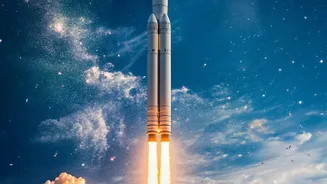
The Indian Space Research Organisation (ISRO) has announced an ambitious plan to conduct seven missions, with the next launch scheduled within two months. According to ISRO's chairman, this high operational tempo is a clear indicator of the agency's expanding
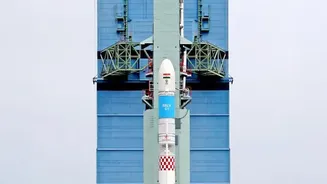
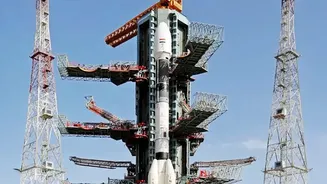
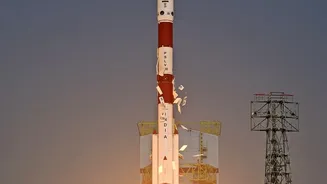
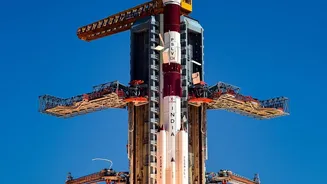
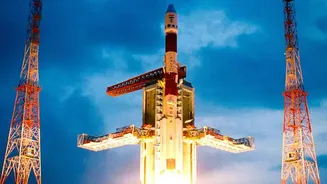
capabilities and readiness to meet diverse national and commercial demands. The missions will leverage ISRO's full fleet of launch vehicles, including the reliable Polar Satellite Launch Vehicle (PSLV), the heavy-lift LVM3, and the agile Small Satellite Launch Vehicle (SSLV), showcasing a versatile launch capacity. This packed schedule includes a mix of crucial national projects, technology demonstrators, and commercial satellite deployments.
The Crown Jewel: Gaganyaan Takes Flight
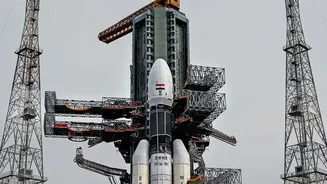
Central to this series of launches is the first uncrewed flight of the Gaganyaan mission, India's prestigious human spaceflight program. This mission, designated G1, is a critical test of the human-rated LVM3 rocket and the orbital module designed to carry Indian astronauts, known as 'Gaganyatris', into space. The capsule will carry a humanoid robot named Vyommitra to simulate human functions and test the life support systems. This flight is a monumental step towards India becoming only the fourth nation in the world to have an indigenous capability to send humans into orbit, with the first crewed mission slated for 2027.
Beyond Human Spaceflight: Science and Security
While Gaganyaan captures the headlines, the upcoming schedule is packed with other significant missions. These include several satellite launches for Earth observation, communication, and navigation. One of the key missions is the NASA-ISRO Synthetic Aperture Radar (NISAR) satellite, a landmark collaboration between the two space agencies designed to monitor changes in Earth's land and ice surfaces in unprecedented detail. Another important flight is the Technology Demonstration Satellite (TDS-01), which will test new technologies like electric propulsion systems for future satellites. These missions underscore ISRO's focus on using space technology for scientific research, climate monitoring, and enhancing national infrastructure.
A New Era: The Rise of Private Players
This surge in ISRO's activity is happening in parallel with a historic boom in India's private space sector. Since the government opened up the sector in 2020, the number of space startups has skyrocketed from just a handful to over 400. Companies like Skyroot Aerospace, which recently achieved a successful orbital launch with its Vikram-1 rocket, are proving that private firms can now manage end-to-end missions. This growth is fostered by government initiatives and new institutional frameworks. NewSpace India Limited (NSIL), ISRO's commercial arm, is tasked with commercializing space technologies, while the Indian National Space Promotion and Authorisation Centre (IN-SPACe) acts as a single-window agency to facilitate and regulate private participation.
Building a Robust Ecosystem
The expansion is not just about launching rockets. It's about building a self-sustaining ecosystem. To support the increased launch frequency, ISRO is set to commission a second spaceport at Kulasekarapattinam in Tamil Nadu within the financial year. This new facility will be optimized for smaller launch vehicles, making it more efficient to launch small satellites and freeing up Sriharikota for larger, heavy-lift missions. The rise of private industry is also creating high-tech jobs and even encouraging experienced scientists to move from government agencies to agile startups, channeling valuable expertise into commercial growth. This synergy between the state-run agency and private enterprise is crucial for India's goal to significantly increase its share of the global space economy, projected to grow from about $8.4 billion to $44 billion by 2033.