



The Sky’s Natural Searchlight
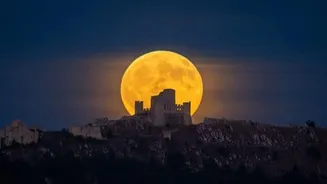
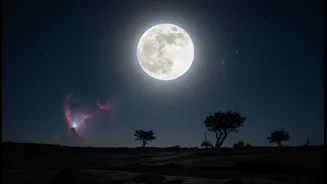
On the surface, it seems simple. The Moon, especially when full, is incredibly bright. It’s the second-brightest object in our sky after the Sun. This intense light doesn't just stay on the Moon; it floods the entire night sky. Think of it like trying
to see distant streetlights while someone shines a torch in your face. The Moon is that torch, and its powerful glare simply overpowers the faint light arriving from distant stars, galaxies, and nebulae. On a dark, moonless night, an observer in a good location might see around 3,000 stars with the naked eye. During a full Moon, that number can drop to just a few hundred.
The Science of Skyglow
The problem isn't just the Moon's direct brightness, but how its light interacts with our atmosphere. Earth's atmosphere is full of tiny particles and molecules of air. When moonlight hits these particles, it scatters in all directions. This process creates a diffuse, ambient glow across the entire sky, known as "skyglow." This lunar skyglow reduces the contrast between celestial objects and the background sky, making faint objects blend in and effectively disappear. Even at a dark-sky site, a full Moon can make the sky as bright as that of a city centre, completely washing out the subtle details of the cosmos.
What Exactly Gets Hidden?
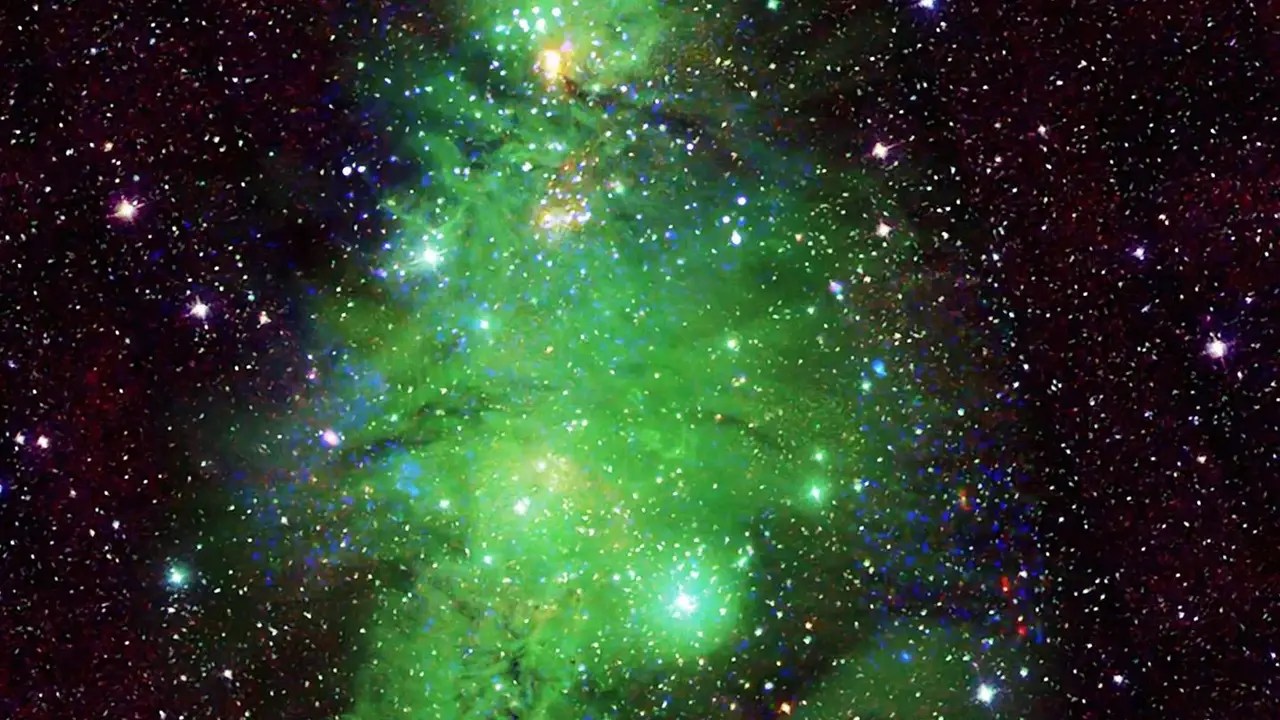
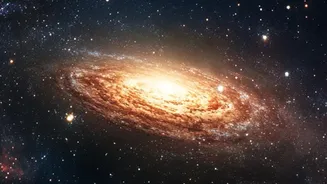
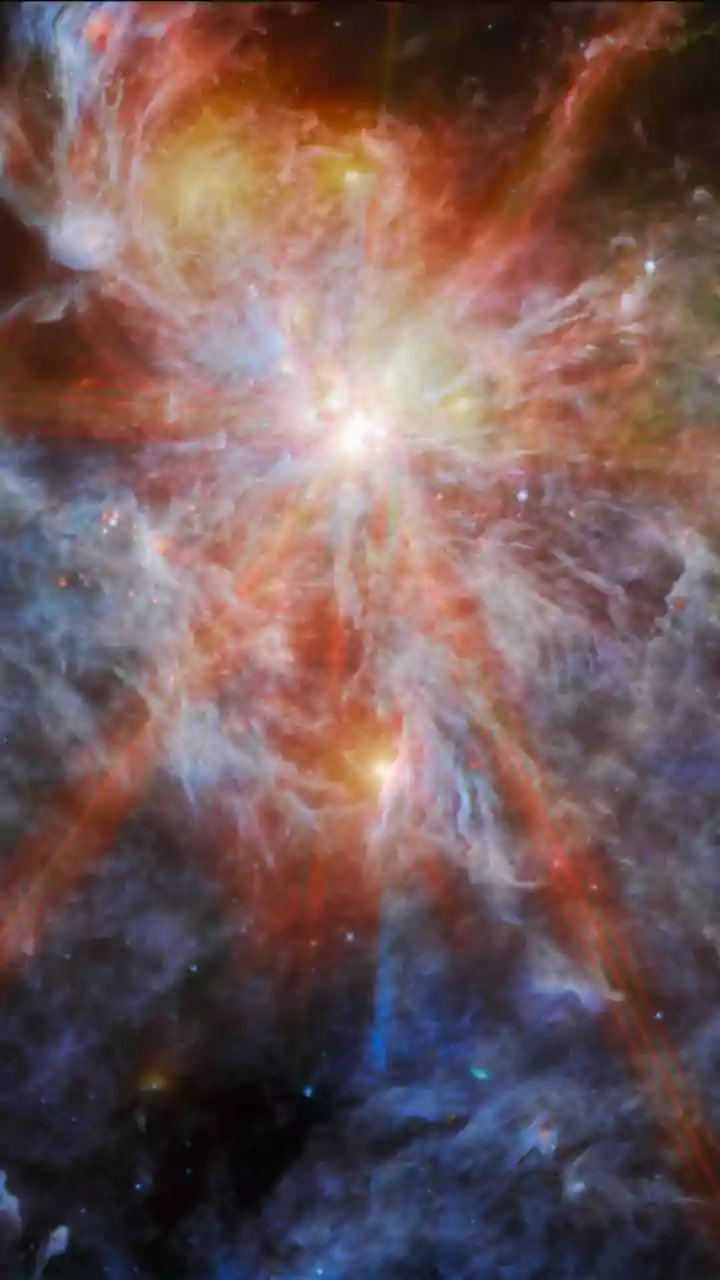
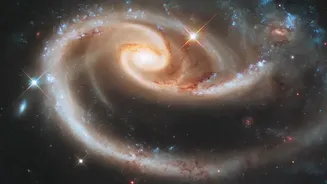
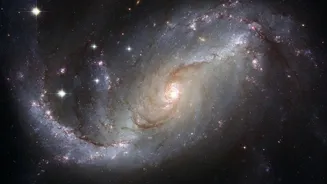
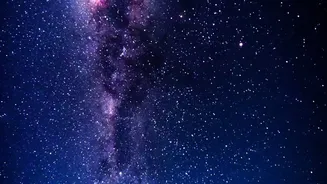
While bright planets like Jupiter and Saturn, along with prominent constellations, remain visible, the Moon's light is devastating for fainter targets. These are often the most spectacular deep-sky objects that amateur astronomers and astrophotographers cherish. Faint nebulae, which are vast clouds of gas and dust where stars are born, become nearly invisible. Distant galaxies, each containing billions of stars, fade into the brightened background. Even meteor showers are affected; a bright Moon during the peak of a shower like the Perseids can reduce the number of visible meteors from dozens per hour to just a handful. The delicate, glowing band of our own galaxy, the Milky Way, is one of the most prominent casualties, being completely washed out by a full Moon.
How Our Eyes Adapt (or Fail To)
Our eyes have a remarkable ability to adapt to darkness. This process, called dark adaptation, can take 20 to 30 minutes, during which our pupils dilate and our retinas become much more sensitive to low light levels. This is essential for seeing faint objects. However, the bright light from the Moon can disrupt or even prevent full dark adaptation. Your eyes adjust to the overall brightness of the sky, making it impossible for them to reach the level of sensitivity needed to detect the faintest celestial whispers. For serious stargazers, this means that even after the Moon sets, its lingering glow in the upper atmosphere can affect viewing for an hour or more.
Planning for the Perfect View
So, what's a stargazer to do? The key is timing. The best time for viewing faint objects is during the New Moon phase, when the Moon is not visible in the night sky. The week before and after the New Moon also offers many hours of dark, moonless skies. If you must observe when the Moon is out, strategic planning can help. For example, during a first-quarter Moon, the Moon sets around midnight, leaving the rest of the night dark for deep-sky viewing. During a last-quarter Moon, you can observe in the evening hours before the Moon rises around midnight. By understanding the Moon's phases and its position, you can still find windows of darkness to explore the universe.