





The Sun’s Daily Journey
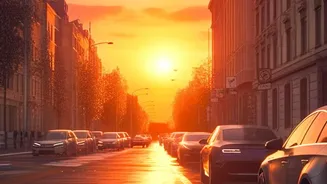
The fundamental reason for this moving refuge is the sun's path across the sky. In the Northern Hemisphere, the sun rises in the east and sets in the west. For a street that runs east-west, its southern side will be drenched in sunlight for most of the day,
while the northern side remains largely in shadow. Conversely, on a street that runs north-south, the western side will be shaded in the morning, but the eastern side will get the relief in the afternoon as the sun moves across the sky. This predictable astronomical pattern dictates the most basic rhythm of our cities, determining which storefronts bake in the afternoon sun and which apartment balconies offer a cool evening retreat.
Not All Shade Is Created Equal
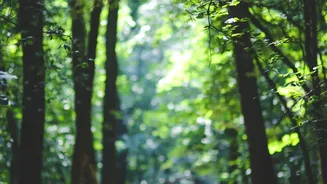
However, the simple presence of a shadow is only part of the story. The quality of shade matters immensely. The cool, dappled shade beneath a large, leafy tree feels drastically different from the sharp, stark shadow cast by a glass-and-concrete skyscraper. Trees provide cooling in two ways: by physically blocking sunlight and through a process called evapotranspiration. As trees release water vapour from their leaves, they actively cool the air around them, acting as nature's air conditioners. In contrast, buildings and paved surfaces absorb solar radiation and slowly release it back as heat, meaning the air in a building's shadow can still feel warm. A shaded sidewalk can feel up to 8°C cooler than one exposed to the sun, a difference that has a significant impact on pedestrian comfort.
Our Cities as Heat Islands
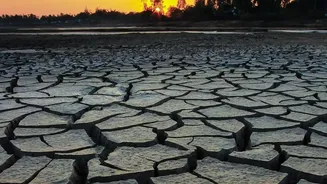
This daily cycle of heating and cooling plays out on a much larger scale across our cities, contributing to what is known as the Urban Heat Island (UHI) effect. Cities, with their dense concentrations of asphalt, concrete, and buildings, absorb and retain more heat than surrounding rural areas with more vegetation. This can make urban centres several degrees hotter, a problem that is intensifying across India. The lack of green cover, the heat released from vehicles and air conditioners, and the way tall buildings trap heat in "urban canyons" all contribute to this phenomenon. The simple search for a strip of shade is a personal response to this massive environmental challenge, which has serious implications for public health, energy consumption, and overall livability.
Designing for Thermal Comfort
Understanding how shade moves and works is crucial for creating more comfortable and sustainable cities. Urban planners and architects increasingly focus on strategies to mitigate extreme heat and improve what they call "pedestrian thermal comfort." The most effective solution is also the most natural: planting more trees. Strategically placed street trees can cool the air, reduce exposure to direct sun, and make walking a more pleasant experience. Other design choices, such as the orientation of buildings to minimize sun exposure on east and west-facing walls, using lighter-coloured, more reflective materials for roofs and pavements, and creating shaded walkways, can all help turn down the temperature on our streets.