



Sailing on Sunshine
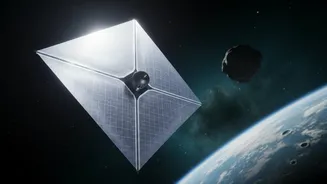
The concept of a solar sail sounds like science fiction, but the physics are surprisingly straightforward. Light, though it has no mass, is made of particles called photons that carry momentum. When countless photons from the sun strike a large, reflective
surface in the vacuum of space, they transfer their momentum, giving the surface a tiny, continuous push. Over time, this gentle but constant acceleration can propel a spacecraft to incredible speeds, far greater than what is achievable with a conventional rocket that provides short, powerful bursts of thrust before coasting. Think of it like a sailboat on the cosmic ocean, where the wind is the endless stream of sunlight. This method completely eliminates the need for heavy onboard propellant for propulsion, which is often the single heaviest component of a deep space probe.
The Navigation Game-Changer
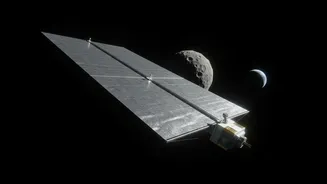
While the idea has been around for a century, the recent breakthrough lies in making solar sails a practical and precise method of navigation. Early concepts were effective at moving in a straight line away from the sun, but true exploration requires steering. The innovation comes from advanced control systems that allow the spacecraft to 'tack' against the sunlight, much like a sailboat zig-zagging against the wind. By precisely changing the angle of the sail relative to the sun, operators can direct the thrust, allowing the probe to change its trajectory, spiral inwards towards the sun, or increase its orbital distance. Recent technology demonstrations, such as NASA's Advanced Composite Solar Sail System (ACS3), are testing new lightweight composite booms and deployment mechanisms to create larger, more efficient sails that can be controlled with greater accuracy. This leap from a simple accelerator to a fully navigable system is what unlocks its potential for complex missions.
A New Era for Asteroid Probes
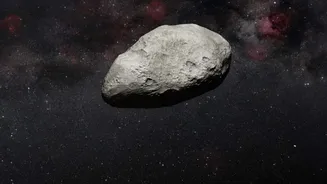
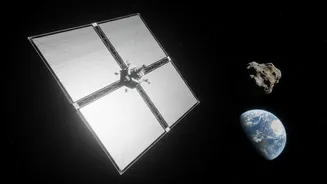
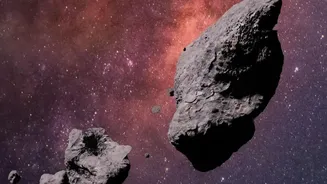
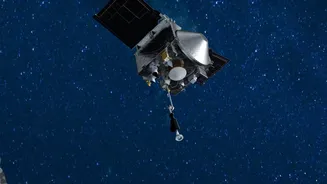
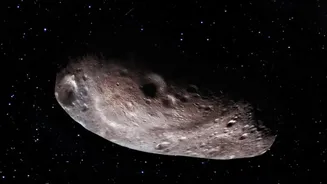
This technology is particularly transformative for missions to Near-Earth Asteroids (NEAs). These small, fast-moving objects are scientifically valuable for understanding the formation of our solar system and crucial for planetary defence. However, chasing them down with conventional rockets is expensive and difficult. Solar sails offer an elegant solution. Missions like NASA’s NEA Scout, a small CubeSat designed to fly by an asteroid using an 86-square-meter sail, have demonstrated the viability of this approach. Although communication was lost with NEA Scout after its launch, the mission paved the way for future designs. Because a solar sail probe doesn't carry fuel for its main journey, it can be much lighter and cheaper to launch. This continuous, low-thrust propulsion is ideal for matching the orbit of an asteroid, allowing for slow, careful flybys to gather high-resolution imagery and data.
Beyond Lighter Payloads
The implications extend far beyond simply saving money on fuel. Eliminating the primary propellant frees up mass and volume for more scientific instruments, increasing the value of each mission. Furthermore, it enables entirely new mission profiles that are impossible with chemical rockets. A solar sail craft could potentially visit multiple asteroids in a single mission, altering its course over months or years using only sunlight. Projects like the Berkeley Low-cost Interplanetary Solar Sail (BLISS) even envision fleets of tiny, 10-gram autonomous spacecraft capable of visiting thousands of NEAs. This shift opens the door to a more sustainable and ambitious era of space exploration, making it more accessible to private companies and countries with smaller space programs. From providing early warnings for space weather to scouting asteroids for resources, the applications are vast and game-changing.