







From Bones to Genomes
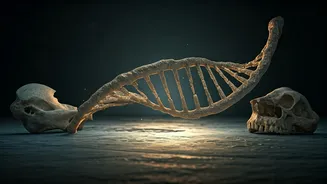
The key to this new chapter in history lies in a field called paleogenomics. Scientists are now able to extract and sequence fragments of ancient DNA from the remains of people who died hundreds or even thousands of years ago. Teeth have proven to be
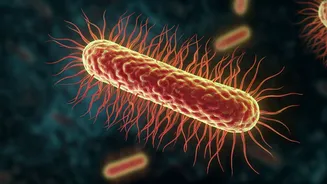
a particularly valuable resource. The dense dental pulp can preserve the genetic material of pathogens that were in a person's bloodstream at the time of death. By carefully reconstructing these genetic fragments, researchers can identify the exact strain of a bacterium like Yersinia pestis, the microbe that causes plague. This allows them to create a family tree of the pathogen, tracking how it evolved and moved across the globe with its human hosts.
Solving the Black Death’s Origin
One of history's most persistent questions has been the precise origin of the Black Death, the pandemic that wiped out as much as 60% of Eurasia's population in the mid-14th century. While historical records pointed to its arrival in Europe via trade ships in 1347, its starting point was long debated. Genetic research provided the stunning answer. By analyzing human remains from two 14th-century cemeteries near Lake Issyk-Kul in modern-day Kyrgyzstan, scientists found the ancestral strain of the Black Death. Tombstone inscriptions had noted a mysterious "pestilence" in 1338 and 1339, years before the plague ravaged Europe. DNA analysis confirmed these individuals died from a strain of Y. pestis that sits at the very base of the evolutionary explosion that led to the Black Death, effectively identifying it as the source strain.
A Much Older and Different Enemy
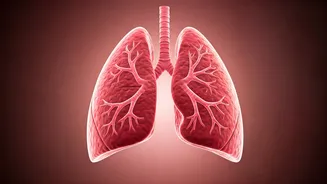
The genetic updates go far beyond the Black Death. Scientists have discovered that plague is much older than previously thought, tracing it back at least 5,000 years to the Bronze Age. However, these ancient versions of Y. pestis were different from the one that caused the Black Death. Genomes recovered from Bronze Age skeletons across Eurasia lacked a key gene, ymt, which allows the bacterium to be transmitted effectively by fleas. This means the earliest plagues were likely spread person-to-person, possibly causing lung infections (pneumonic plague), rather than the flea-borne bubonic plague famous for its swollen lymph nodes. The genetic mutation that enabled flea transmission, turning the plague into a far more efficient killer, appears to have evolved later, sometime before 3,000 years ago.
The Human Factor and Modern Lessons
This genetic detective work isn't just about the bacteria; it's also about us. Studies on the DNA of Black Death victims and survivors have revealed that people with certain genetic variants were more likely to survive. One study found that individuals with two copies of a protective version of a gene called ERAP2 were about 40% more likely to survive the plague. This shows how a single pandemic could dramatically reshape the human gene pool. However, this evolution comes with a trade-off. Some of the same gene variants that offered protection against the plague are today associated with an increased risk for autoimmune diseases like Crohn's disease. This demonstrates the complex and lasting impact of ancient diseases on modern human health.