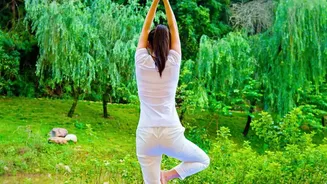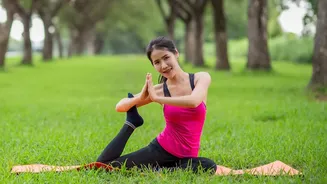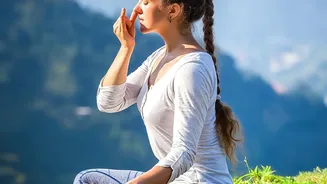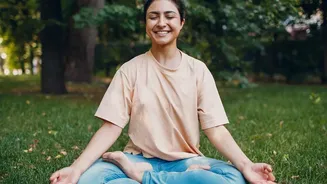





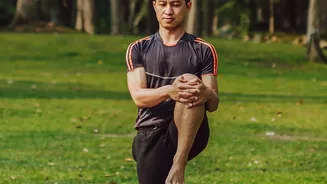
In a world that often rewards intensity, the gentle combination of slow breathing and the Apanasana yoga pose offers a powerful, measured path to wellness. This simple practice calms the mind, soothes the body, and improves overall well-being.
Understanding the Measured Approach
A 'measured
fitness approach' prioritizes consistency and mindfulness over grueling intensity. It is about tuning into your body's needs rather than pushing it to its limits. This method is not about forgoing results; instead, it focuses on achieving sustainable wellness by integrating gentle, restorative practices into daily life. Slow, conscious breathing combined with foundational yoga postures like Apanasana is a perfect example. This pairing demonstrates that profound physical and mental benefits can be achieved through deliberate, calm movements that reduce stress, improve function, and build a stronger mind-body connection without the need for high-impact exertion.
The Power of Slow, Comfortable Breathing
Most of us breathe shallowly, especially when stressed, using only the chest and activating the body's 'fight-or-flight' response. Slow, comfortable breathing, often called diaphragmatic or belly breathing, is the antidote. This technique involves using the diaphragm, a large muscle at the base of the lungs, to take deep, full breaths. This simple act has profound effects, primarily by activating the parasympathetic nervous system, also known as the 'rest-and-digest' system. Scientific evidence shows that slowing your breath can lower your heart rate and blood pressure, reduce levels of the stress hormone cortisol, improve oxygen delivery to your cells, and enhance mental clarity. It is a powerful tool for managing anxiety, improving focus, and promoting an overall sense of calm.
Introducing Apanasana: The Wind-Relieving Pose
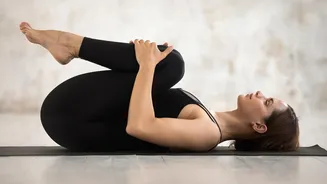
Apanasana, often translated as 'Wind-Relieving Pose' or 'Knees-to-Chest Pose', is a gentle, supine posture accessible to almost everyone. In Sanskrit, 'Apana' refers to the downward flow of life force energy, responsible for elimination. True to its name, the pose is renowned for its ability to massage the abdominal organs, which can help relieve gas, bloating, and constipation. Beyond its digestive benefits, Apanasana is a highly effective stretch for the lower back, releasing tension that often accumulates from prolonged sitting. By gently decompressing the lumbar spine and stretching the hips and glutes, it provides significant relief and promotes relaxation.
How to Practice Apanasana with Conscious Breathing
Combining the pose with intentional breathing amplifies its restorative effects. Find a comfortable spot where you can lie down on your back. Follow these simple steps:
1. Lie flat on your back with your legs extended. Take a few natural breaths to settle in.
2. On an exhalation, slowly draw both knees in toward your chest.
3. Wrap your hands around your shins or clasp your opposite elbows, gently hugging your knees. Keep your head and shoulders relaxed on the floor, tucking your chin slightly to lengthen the back of your neck.
4. As you inhale, focus on breathing deeply into your belly, allowing your knees to move slightly away from your chest.
5. As you exhale, gently draw your knees closer to your chest, feeling a light compression on your abdomen and a release in your lower back.
6. Continue this slow, rhythmic movement for 5 to 10 deep breaths, synchronizing each movement with your breath. After your final exhalation, release your legs back to the floor and rest for a moment, noticing how your body feels.
The Combined Benefits for Mind and Body
When slow breathing and Apanasana are practiced together,
their individual benefits are magnified. The gentle rocking motion created by your breath gives your abdominal organs a soothing massage,
supporting healthy digestion. Simultaneously,
the focus on the breath calms the fluctuations of the mind,
making the practice a form of moving meditation. This synergy helps to dissolve physical and mental tension,
making it an excellent practice to relieve stress after a long day or to prepare the body for a restful night's sleep. It improves spinal flexibility,
eases tension in the hips,
and calms the nervous system,
offering a holistic reset with minimal effort.