







Decoding the New Payment Rule
Starting October 15, 2026, a new rule introduces a Merchant Discount Rate (MDR) on certain Unified Payments Interface (UPI) transactions. Specifically, a 0.4% charge will apply to person-to-merchant (P2M) payments valued over ₹2,000. This MDR is a fee
that merchants pay to payment processors and banks to facilitate a digital transaction. Crucially, the government and the National Payments Corporation of India (NPCI) have clarified that this charge is to be borne by the merchant, not the customer. So, while you won't see an extra fee on your bill, this change affects the cost dynamics for businesses, making your choice of payment method more significant than ever.
What Exactly is MDR?
Think of the Merchant Discount Rate as a processing fee. Whenever you use a digital payment method like a credit card, debit card, or now, certain high-value UPI transactions, the merchant pays a small percentage of the transaction amount to their bank, the card network, and the payment gateway. This fee covers the cost of infrastructure, technology, and fraud protection that makes digital payments seamless and secure. For years, UPI transactions had a zero-MDR policy to encourage adoption. The new rule aims to create a sustainable financial model for the ecosystem that processes billions of transactions monthly.
UPI for Large Purchases: Pros and Cons
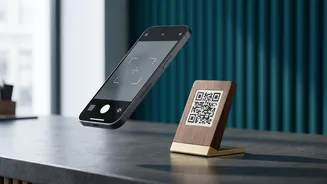
Even with the new rule, using UPI for a large payment remains simple and, for the consumer, free. The money is debited directly from your bank account, which promotes spending discipline. However, there are limitations. Most banks cap daily UPI transfers at ₹1 lakh, though higher limits exist for specific categories like insurance payments. The primary drawback is the relatively weaker protection against fraud or faulty products compared to credit cards, which offer robust chargeback mechanisms. While UPI remains free for consumers, there is a risk that some merchants might try to indirectly recover the MDR cost, although this is officially discouraged.
The Case for Using Your Card
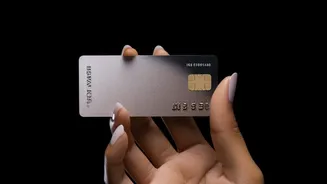
For big-ticket items like electronics, travel, or furniture, credit cards offer compelling advantages. The most obvious benefits are reward points, cashback, and access to a 30-45 day interest-free credit period. Card payments also come with stronger consumer protection, including liability protection and the ability to dispute charges. Moreover, cards often provide options to convert large purchases into Equated Monthly Instalments (EMIs). The downside is the higher MDR for merchants, which typically ranges from 1.5% to 2.5% for credit cards. This higher cost is already factored into the business model, but it's a key reason why some smaller merchants may prefer UPI or cash.
How the Costs Compare for Merchants
The new 0.4% MDR on UPI transactions over ₹2,000 is still significantly lower than the fees for card payments. For a transaction of ₹10,000, a merchant would pay a ₹40 fee for UPI. The same payment on a credit card could cost them anywhere from ₹150 to ₹250. This is a crucial distinction. The introduction of the UPI MDR is meant to help payment companies maintain the system, not to make UPI as expensive as cards. For high-value transactions, the UPI MDR is also capped at ₹300 for payments of ₹75,000 or more, making it a predictable cost for merchants on very large sales.
The Verdict: Which Should You Choose?
The best choice depends on your priority. For discipline and simplicity, UPI is excellent, as the money leaves your account immediately. It's ideal for payments where you don't need additional protection or rewards. For large, planned purchases, a credit card is often the smarter financial tool. The rewards, purchase protection, and ability to manage cash flow by paying later can offer significant value that outweighs the simplicity of UPI. The new MDR rule doesn't change this fundamental dynamic for consumers, but it does level the playing field slightly for merchants by attaching a small cost to high-value UPI transactions that was previously absent.